




ICE cancels plans for mega detention center near E | RSS.com
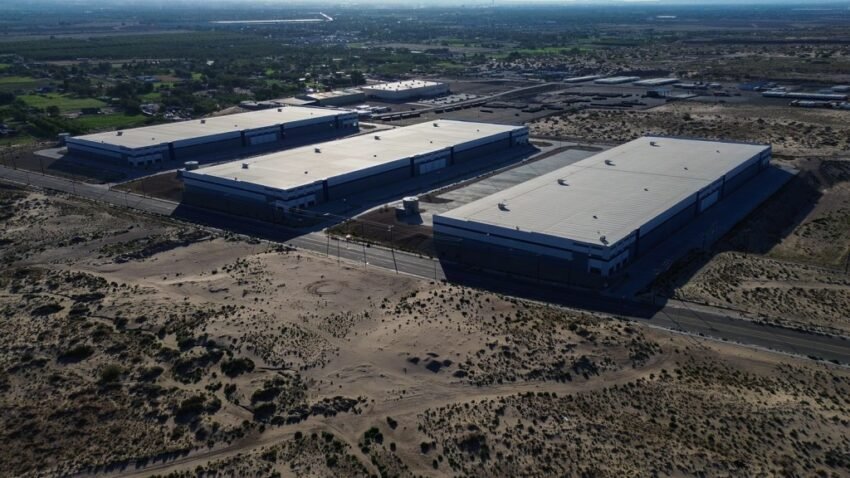
Diego Mendoza-Moyers: Today: The Trump administration this week backed off of a plan to convert three warehouses in the Lower Valley into the nation’s largest immigrant detention center.
But why? And what happens next to the three big facilities that the government spent over $100 million on, and may now look to sell.
El Paso Matters Editor Cindy Ramirez will join me in a moment to talk about her reporting on the government’s plans for the warehouses and what could come next.
First, this El Paso Matters podcast episode is brought to you by our podcast title sponsor Tawney, Acosta and Chaparro, truck crash and injury attorneys. Their team of local, seasoned trial attorneys are ready to help if you’ve been injured in a crash.
And you can sign up for our newsletter or read our free reporting at elpasomatters.org, where you can also learn about and register for our 9.15K run that’s coming up on September 19th.
Cindy, thanks for joining me.
Cindy Ramirez: Thank you for having me.

Diego: So, Cindy, can you tell us what happened this week with this warehouse complex in Socorro and just a little bit of history about those facilities and the plans?
Cindy: Sure. So, about last year and early this year, former DHS Secretary Kristi Noem had a plan to create, like, this sort of mass detention and deportation where part of that plan was to create a network of mega detention centers, one of which was going to be in El Paso. And that would have been in the city limits of Socorro, just off of I-10.
DHS bought three warehouses over there that were part of a complex of an industrial area that they were going to turn into a detention center to house up to 8,500 people. About last – I think it was about in June, the plans changed so that it was no longer going to be the mass detention, but include some detention and some training facilities, maybe some DHS offices. But this week, on Tuesday (Aug. 11), Representative Veronica Escobar announced that those plans have been scrapped.
Diego: How come?
Cindy: That’s, like, the big question. DHS and ICE have not responded to comments to answer that question, specifically.
We think that, of course, now that Secretary Noem is no longer with DHS and under the deputy director now, there’s been a change in some plans for the mass detention. And, so, we don’t know exactly what happened. But we know that there was a lot of pushback from the communities who were concerned about water, safety, and then, of course, just all of the different complaints that have arisen from these immigrant and human rights organizations about the treatment of migrants in the detention center. So, it might depend on who you ask.
Diego: Yeah. One thing that I learned from your story that was interesting is the DHS had purchased, I believe, 11 warehouse complexes around the country, again, for, like you said, kind of a network of detention facilities. And they’ve sold now nine of them, right? So, they’ve really backed off of this plan, not just here, but elsewhere.
Cindy: Correct. So, the Socorro facility would be the ninth one that they sold back. So, some of them have gone back into the General Services Administration, which is the agency that handles kind of, like, these properties that the government is no longer going to use. And some of them, they have said that they weren’t going to use, but maybe haven’t been sold or haven’t gone back to the GSA.

Diego: Yeah. And I wonder – you alluded to some of the community concerns and things like that. Can you just talk through that a little bit more? I think there was quite a bit of pushback from local church groups, right? I mean, I think the bishop has spoken out about this. So, I just wonder if you can talk a little bit more about the pushback as well as some of the infrastructure concerns as well?
Cindy: So, I’ll talk first about some of the human rights concerns.
We know that other facilities across the nation, including Camp East Montana in El Paso, have had a vast number of reports about all kinds of human rights violations. And, so, there’s that concern.
In the community of Socorro, in particular, there’s three Catholic churches that have been working with the community to kind of voice their concerns over the inhumane treatment of detainees, but also just about resources.
And what we’ve been reporting was that these churches were working with EPISO, which is the El Paso Interreligious Sponsoring Organization. That organization has long worked to bring resources to the communities in the outskirts of El Paso County, including colonias. So, providing water and wastewater services.
And, so, when the news of this facility possibly coming online reached our community, there was a quick action to say, “Wait a minute, we’ve worked really hard to bring these services And it took us 20 years to do so. And now we’re gonna have this big facility that’s gonna come and maybe tap into our limited resources?”
And, so, that was kind of, like, the impetus. So, it was infrastructure, as you said, but also human rights concerns.
Diego: Yeah. And this was interesting because it kind of touched my beat of utilities and environment, I guess, and water.
I think it may have been a month or two ago, I went down to the Lower Valley Water District to talk to the general manager about – this was zoned as this, I think, a cold storage facility for some of the nuts in the area, pecans or pistachios. And, so, it’s a much different level of utilities required to accommodate a cold storage facility versus a place holding 8,500 people, right? A much different level of usage.
And, so, the general manager of the Lower Valley Water District said, “Yeah, I mean, when we supply water to this, we supplied it under the assumption that there wouldn’t be a great level of water usage,” right? And then there’s other issues with the water pressure down the line and all sorts of infrastructure issues. It’s a small utility, the Lower Valley Water District.
And one other thing that was interesting when I was looking into this was talking to El Paso Water, which Lower Valley Water District gets all of its water through a kind of unique wholesale contract with El Paso Water.
And, so, I go talk to EP Water, who are kind of like the big boys, right, compared to Lower Valley Water District. And they’re saying – Gilbert Trejo, the chief engineer of EP Water, told me “People are talking about a detention facility here in nine months. How? We haven’t even started the engineering work to contemplate how we would pump so much more water through the pipes and build new infrastructure and pump stations and so forth to accommodate this facility and serve it.”
So, anyway, sometimes I think we forget about these physical limitations that can prevent turning something – just building a big prison, essentially, out of nowhere. It was interesting to learn about the physical limits that can kind of prevent something like that.
I wonder, too, Cindy, can you just talk for a second about the local feeling about this facility? Because, obviously, you talked to – or you talked about a lot of the communities that were pushing back against this in the church groups. But there were also people who said, “Hey, maybe this will create some jobs,” right? Like, there was a little bit of thought in that area that, “Oh, maybe this could bring some kind of benefit to Socorro.” Is that right?
Cindy: Oh, definitely. I think – and it might do so, temporarily. I mean, whether it’s, in this case, it would have been, like, retrofitting the warehouses to accommodate kitchens and restrooms and showers and things that a typical warehouse might not have, at least not for 8,500 people.
And, so, it would have maybe created some temporary construction jobs. It might have also brought in some contractor jobs to serve as guards at the detention center, for example. And we’ve kind of seen that already, like at Camp East Montana. I don’t know how many of those are local, but we do know that the companies that are hired to run the detention centers then hire a lot of people locally, whether it’s someone fresh off the street or somebody that had some kind of law enforcement experience, maybe a retired DHS officer of some kind.
So, yeah, there was certainly that kind – and that might bring some income revenue to the community.
Diego: Would the city of Socorro realize some tax revenue from this facility?
Cindy: Not much because it would be a federal facility and they don’t pay taxes. So, it wouldn’t actually create any tax revenue. And that was one of the concerns, because part of what the city of Socorro was doing was building these industrial warehouses, these areas, or attracting businesses, developers to do so to increase the commercial tax base in the region, which is really what you want to do. You want to put that tax base on commercial versus residential. And, so, buying one of those properties and it takes it away from an industrial or commercial developer.
Diego: Just kind of another side issue there. Appreciate you touching on that.
OK, so one thing that’s really fascinated me too about this whole story is the real estate angle, right? And so did the sale because – well, just talk us through this. I think that DHS purchased the warehouses for north of $120 million. That was a lot more than it was appraised at, right?
Cindy: Correct. I think the sale price was $123 million. They bought it, or DHS bought it from a Kansas City-area developer that owned that complex. And it was actually valued at $11 million. So, that’s 10 times more.
Diego: Do you have any speculation or any ideas on why the purchase price was so inflated compared to the appraisal price? And, to be fair, I mean, usually properties are – like, a sales price usually exceeds the appraisal price. But not by that much.
Cindy: Not by that much. I think part of it is certainly that DHS had the money for it. The One Big Beautiful bill that was approved last year gave billions of additional allocations to DHS and, specifically, for ICE and, specifically, for detention centers.
So, aside from the regular allocation that they would get, I believe that they received $75 billion in supplemental funding over four years. And $45 billion of that was specifically for detention space.
So, they had the money. And it was available. They wanted to move fast to do this. And they just put whatever money was available out there.
Diego: Yeah. So, OK. All right. Appreciate the history of kind of how we got here. And now these plans are scrapped.
So, what happens now with this warehouse complex? Is the federal government, it seems like they’re going to put it up for sale, right? Just curious what your expectations are going forward as far as what happens at this facility? Will the government net back $123 million in the sale? I just wonder what you think about going forward what’s going to happen?
Cindy: I think the easy answer is probably not, in terms of what they’re going to net back. The GSA will put it up for sale. I believe it may already be. And, so, we’ll see what developer comes back and tries to buy that up and see what price that they get for it. They might take into consideration that at one point it was set for $11 million. I don’t know between that and $123 million, it probably has to come in somewhere in the middle.
Diego: Yeah. And then are there plans for other facilities in the region, right? Like, is this a case where, OK, DHS is moving off of this really massive 8,500 person detention facility, but they’re going to do other projects or open other facilities elsewhere?
I just kind of wonder generally what the plan is? Or is ICE just moving off of this whole sort of mass detention initiative?
Cindy: I think with Kristi Noem no longer leading that initiative, that acting ICE director David Venturella, who was in El Paso last month or two months ago, might have another plan in mind. We don’t know the details. But one of the things that Congresswoman Escobar said at her press conference was that she wouldn’t rule out the possibility that something else would happen, whether that’s expanding current space or coming up with a different plan that isn’t “mega detention center”.
But the plans to continue doing this rapid deportation and mass detention, I don’t think that goal or that plan has changed. Just how do they execute it?
Diego: And then, before I get to my last question, one thing I did want to ask, you had an interesting quote in your story from Bishop Mark Seitz where he sort of alluded to the idea that community organizing and communities getting together and saying, “This isn’t something we want” influenced the direction of this project and influenced the cancellation of it, I guess.
I just wonder what you thought of that? Do you think that’s a fair assessment of this situation, that the community responded and so the government in this case listened?
Cindy: I don’t know that was a deciding factor. But I would say that definitely anytime a community speaks up, people listen. As I said, I don’t know that the government would have said, “Oh, they don’t want it, we’re getting out of here.” But I think it certainly plays into, at least, the perception of DHS being cooperative with the community, whether that was the actual reason or whether that had actual influence, we don’t know.

Diego: But it was just interesting, maybe an idea of, “Hey, it doesn’t hurt, right, if a community doesn’t want something to speak out against it,” I guess.
OK, last thing here, Cindy. I just wonder if you can talk about Camp East Montana? You’ve referenced it. What’s going on there, right? Because I don’t – as I understand it, the scrapping of these plans at Socorro doesn’t really impact Camp East Montana, is that right?
Cindy: Not at the moment. So, that opened in August of 2025 and it has a capacity for up to 5,000 detainees. The average daily number of detainees has been at about 2,000, 2,400 I think has maybe been the highest in the last couple of months. So, there’s certainly some space there.
There might be now that they’re not doing the Socorro warehouse complex, maybe they’ll expand this. We don’t know that. But that’s not going anywhere. They recently actually renewed or extended a contract for the operator for, like, another year. So, that’s as far as we know that it will continue to operate.
Diego: And can you just give us some insight into the conditions at Camp East Montana? You’ve reported on this a little bit, right?
Cindy: We’ve reported on it a lot. And it has been, like, a national story. It started probably with the Washington Post initially reported that the ICE inspection itself had found a lot of things wrong with the facility even before it opened. We don’t believe that they were fixed. They went ahead and opened.
Over the last year, there’s been major reports from groups like the ACLU and others that have had interviews with a lot of the detainees and then they come back and compile all of the interviews and talk about the stories that they hear and then the conditions that they see when they visit these.
And, so, there’s been physical abuse, sexual abuse, lack of medical care, not getting access to lawyers or family members to get to call them and things like that. So, a lot of human rights violations, allegations. But also there was also a follow-up report by the Office of the Inspector General for ICE that also pointed out some deficiencies that haven’t been fixed. And, so, they have a lot of organizations and lawmakers have called for it to close. DHS has said no.
Diego: Yeah. And a few deaths there as well, right?
Cindy: Oh, at least three, correct.
Diego: Yeah. Well, we’ll leave it there, Cindy. I just wanted to have you come in and kind of explain to us the situation in Socorro and the situation with Camp East Montana and certainly highlight a lot of your really intensive immigration reporting. I would also urge listeners to go listen to your reporting or read your reporting, I should say, on these minor migrants in court without representation and just kind of some of the really unfortunate situations going on here as it relates to immigration.
But, anyways, we’ll leave it there, Cindy, on the Socorro facility. And I guess one thing to keep an eye on going forward is what happens with those facilities, who buys them and at what price will be something to keep an eye on.
Cindy: And what comes next in their whole plan to continue detention and deportation?
Diego: Yeah, cool. Well, thanks for your time, Cindy. Appreciate it.
Cindy: Thank you. Appreciate it.
The post Podcast: DHS scrapped its 8,500-person Socorro detention center plan. What happens to the warehouses now? appeared first on El Paso Matters.
Read: Read More