




Never miss an episode. Subscribe to the El Paso Matters Podcast on YouTube, Apple Podcasts or Spotify.
This episode was recorded Aug. 13, 2026.
Read the transcript
Diego Mendoza-Moyers
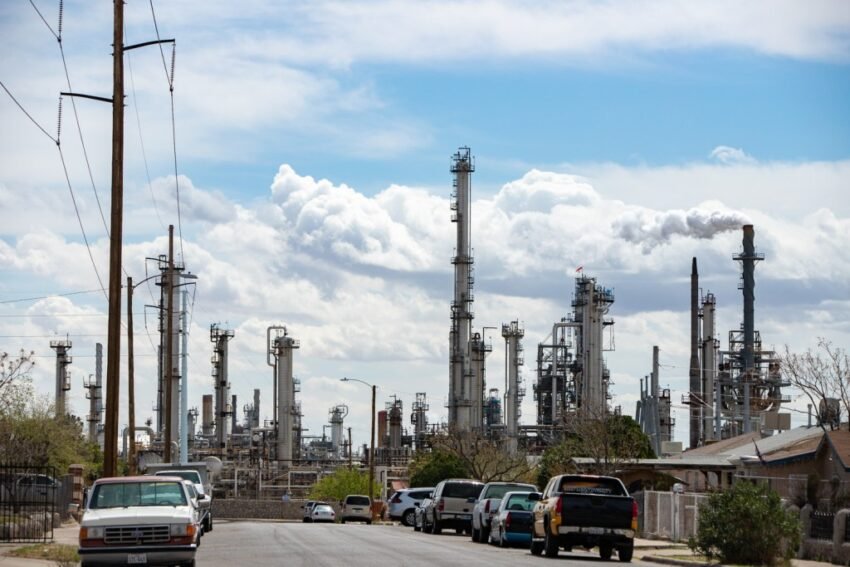
About two weeks ago, between the evening of Tuesday, Aug. 4, and Friday, Aug. 7th, the refinery in South-Central El Paso that’s owned by Marathon Petroleum belched out more than 15 tons of various pollutants that wafted into nearby neighborhoods. Residents reported horrendous odors that were so intense that they forced some people to flee their homes.
Naturally, questions, concerns and outright anger have followed. What the heck went wrong at the refinery that allowed hydrocarbons as well as carcinogenic chemicals to leak into the city’s air? And how have Marathon and environmental regulators responded?
The Texas Commission on Environmental Quality published reports showing the refinery emitted thousands of pounds of petrochemicals like propylene and isobutane, almost two tons of carbon monoxide and other chemical pollutants that are hard to pronounce. The refinery also emitted 14 pounds of butadiene, a highly toxic carcinogen.
In an emailed statement, a TCEQ spokesperson told me that the agency reviews these pollution events against criteria set by state law to determine if the event was avoidable and assess whether or not operators took measures to minimize emissions.
“Based on the results of an investigation of a reportable incident the TCEQ may pursue enforcement actions when appropriate against regulated entities which may include the assessment of a penalty.
In a statement Marathon shared with me, the company said “safe and reliable operations are core principles of Marathon Petroleum, and we never want our operations to negatively impact our neighbors. We are sorry for the disturbance residents experienced.”
The company also said “we are also investigating the Aug. 4 event, reviewing the cause, and identifying any appropriate corrective actions. Our trained professionals work every day to operate this refinery safely, reliably, and in compliance with environmental requirements.”
Marathon listed several actions it took on Aug. 4, including setting up air monitors as far as Downtown and submitting reports to environmental regulators. The company also said that, while the odors in nearby neighborhoods were “undoubtedly strong,” Marathon said its air monitoring team did not detect levels indicating a health risk.
What comes next is unclear. The TCEQ will talk to Marathon and review the pollution event. TCEQ may issue a notice of enforcement with some kind of punishment or fine. But, as of now, we don’t know if TCEQ will determine if enforcement of some kind is warranted.
I also have to mention the central role the refinery plays in El Paso, where it employs over 400 workers and processes as much as 133,000 barrels of crude oil daily. The refinery receives crude oil via pipeline from the Permian basin, and it converts that crude into lots of petroleum products, like gasoline for your vehicle as well as jet fuel.
The refinery produces a portion – though not all – of the gasoline El Pasoans fill their vehicles with at local gas stations. It’s also among the city’s largest taxpayers and consumers of water.
Also, the multi-day pollution event earlier this month was the fifth emissions event that the refinery has reported to TCEQ in the last year. The scale of pollution was much larger in the event this month, but even back in March, the refinery emitted over two tons of propane, according to a TCEQ database.
And our City Council this week called on TCEQ to set up a public meeting with Marathon to answer questions and listen to community concerns. Other elected officials such as Congresswoman Veronica Escobar and council Representative Josh Acevedo have issued statements and sent letters demanding answers and transparency from Marathon.
For its part, Marathon said it’s been working with the city over the last year to establish a system that could “call and inform residents of events at the refinery – even when health risks are not involved.” Marathon also said it expanded its 24-hour community hotline to be able to handle more incoming calls.
And you might hear the argument that the city grew around the refinery and that the refinery was here first as an argument to diminish concerns about the environmental impact the refinery has on our city. But what does that matter? A sophisticated, multi-billion dollar company’s refinery should be held to the highest standards possible, and we can’t accept pollution dumps just because a refinery has been situated somewhere for a long time.
At the same time, we don’t have firm evidence of health impacts on residents or whether Marathon violated any regulations or laws. A local law firm, Tawney, Acosta and Chaparro, said this week it wants to hear from affected residents to potentially pursue legal action.
Marathon told the TCEQ that the pollution it reported was measured at the source – which was a leaking tank within the refinery complex – and the estimates don’t reflect ground-level concentrations in adjacent neighborhoods.
In a moment, County Commissioner David Stout, who represents the area where the refinery is located, will talk through his experience learning about this pollution event, how Marathon responded and what to know about the county challenging the renewal of Marathon’s air permit in the coming months.
First: you can sign up for our newsletter or read our free reporting at elpasomatters.org, where you can also learn about and register for our 9.15K run that’s coming up on Sept.19th.
On to our conversation.

Commissioner Stout, thanks for joining me.
David Stout: Glad to be here. Thank you for inviting me.
Diego: Yeah. So, can you just lay out, from your perspective, what happened with the Marathon refinery last week and just kind of your experience with that and what you saw and heard?
David: Yeah, just something that should be of concern to everybody in this community happened, right? And you know, I was pretty much about to get to bed, like, around 10:30, 10 o’clock, 10:30 on Tuesday evening. And I had just finished making dinner, eating dinner, and then I turned on my phone and I saw on FitFam reports of strong odors in the area of the refinery.
Diego: Which you represent.
David: Which I represent, exactly. And I saw one report and then I saw more coming in, talk of people being nauseous, having to leave the area. I’m, like, “Oh my goodness, this is pretty bad.”
And, so, I texted VJ Smith, the government and community affairs liaison, who I have is my main point of contact at the refinery. I later found out that he had not contacted Rep. Acevedo or, I think, any other local elected officials to try to help get the word out about, like, “Hey, there’s something going on. People might need to evacuate the area.” Because I think some of the folks got really sick after breathing in what was emitted into the air.
But he responded to me very quickly, kind of boilerplate type language I think that he sent to the media and to everybody else. Which was, “Yes, we’ve received reports of the odors.” Not that “We know that something’s going on, that we know that there was a leak somewhere in the refinery.” But “we’ve received reports about the odors from the neighbors and we have people out in the neighborhood setting up monitoring. The monitoring up to this point has not shown any levels of anything that could be dangerous for anybody’s health.”

Diego: And that’s what he told you the night of?
David: That was the night of, right. And, so, didn’t hear anything else after that. The next morning, I got up. I was at Ascarate for a groundbreaking ceremony and no updates from him at all. And, so, I reached out to him again at about 10:30. And he kind of said the same thing. There was some term of art that he used, some type of incident, operational incident, and very vague, right? No description of really what had happened.
Something about – didn’t describe the chemicals exactly, but there was some vague kind of description that he used to say that something did leak. And again, that they had done monitoring and that there was nothing to be of concern. There was nothing of concern, right? And this is at 10:30, right? And, so, I’m just, like, “OK.” And then I followed up and I said, can you please, like, elaborate as to what this means? And he said, “No, we don’t do that unless it’s in a filing.”
Diego: Which is a common practice for the refinery. The typical answer, if you reach out to them, is “We don’t comment on refinery operations.” That’s what Marathon says, typically.
David: Yeah. And, so, it was just no help at all, right? And people still complaining about feeling sick the next day. You know, just, I mean, terrible – just felt terrible.
And, so, on Thursday, we see the TCEQ reports come out and its 862 pounds of sulfur dioxide were released over 24 hours. Oh, and by the way, at 10:30 on Wednesday morning, he had said that everything had been taken care of. It was, like, hunky dory. Like, it was taken care of, basically.
Diego: So, after he said that, there was another release of pollution, right?
David: According to the TCEQ, the sulfur dioxide was released over 24 hours. And, so, it started at close to 7:50 p.m. on Tuesday, and then until 7.50 p.m. on Wednesday. And, so, over that 24 hours, 862 pounds of sulfur dioxide was reported, right? And, so, at 10.30 in the morning on Wednesday, that’s nine hours, nine-and-a-half hours probably before, according to the TCEQ, that the incident had finished.
And, so, I feel very misled by Mr. Smith and him texting me and saying “The situation, it’s contained,” basically, right?
And, so, you read the report even further and it talks about, I think, that’s 3,590 times over the permitted limit for sulfur dioxide. It can cause breathing problems. It can cause issues with asthma. It can damage plants and trees, acid rain. Also in the second report, on Tuesday from between 7:10 and 9:23, there were 19 pounds of 1,3-butadiene and 8,897.9 pounds of propylene, or almost four-and-a-half tons in those two hours that were emitted.
Diego: Just chemical dumps into the neighborhood, essentially.
David: The release was triggered when an FCC (fluid catalytic cracking unit) experienced a process upset and shut down. Both of those chemicals have emission limits of 1.25 pounds per hour, so way over the permitted limit. And they can cause, it says, breathing in high concentrations can cause headache, drowsiness, fatigue, vertigo, unconsciousness, coma, respiratory depression and even death.
And, so, after reading that, I was just – I was livid. I was livid. And I put out a press statement that day just lambasting the refinery because it was necessary. And pointing out that this is exactly why we need to hold this refinery accountable and continue forward with the county’s contested case hearing that we have against them.
Diego: Yeah. And I want to get to that.
I’ll just, to put it in perspective, that much sulfur dioxide is like a power plant running at full operation for months kind of dumping that level of pollution. So, it’s quite a bit. And then propylene and some of the other harmful chemicals, not something you want to be dumping in residential areas.
But so, I wonder, Commissioner, we’re here about a week later since that happened. And I’m just wondering if you’ve gotten any clarity on the cause or the effect of that pollution?
David: No. The last correspondence or anything that I received from VJ Smith was after I had sent out the press statement.
I don’t know if he purposefully sent it to me or maybe he did. But it was a pretty eye-opening email that I think he sent to his attorneys, and disrespectful and, I think, condescending email, basically saying, “Oh, according to the rhetoric in this press statement,” basically, and I’m paraphrasing, but “according to the rhetoric that Stout put out in this press statement, doesn’t seem like they want to negotiate anything with us.” And let’s see what some other dude, I don’t know, over there has to say about it, probably one of their attorneys or something like that. So, basically threatening, in my opinion, me and talking about a negotiation and I don’t want to negotiate with them regarding things that are going on with the case.
Diego: And you think he sent that to you mistakenly?
David: I don’t know. I was carbon copied on it. So, I think he did send it to me on purpose. But it was pretty disrespectful, irreverent, and condescending and threatening. And I do not appreciate that at all.
Diego: Yeah, I want to get into this a little bit more. But you’ve been in office for 10-plus years, I think, right? And, so, what has your relationship been like with the Marathon Refinery?
And we have to remember, like, it’s one of the biggest taxpayers in the city and county. It’s a big employer. And I think a lot of the gasoline and fuel products we all use every day comes from there. And, so, I just wonder what has been your perspective and relationship with the refinery over the years up to now?
David: In the past, when there have been flaring incidents, for example, I feel like I’ve gotten better responses or better information more quickly. Even more them taking the initiative instead of me having to discover something’s going on on FitFam or on the news or something like that.
And I even responded to him and I said – the first night I said, or maybe the next morning, on Wednesday morning, I texted him and I said, “Look, thanks for the information. I just want you to know that I would really not have to find out about these things through a second or third party.” And he said, “OK, I’ll take that into consideration or take that under advisement.” But, since then, we’ve had literally no communication from Mr. Smith at all.
They did put out a calendar invite and they sent us an invitation to their community meeting that they had scheduled for today. And we responded to that: “Yeah, we’d like to go.” But I got news yesterday that that had been canceled. And, so, I think there were maybe some other folks that weren’t going to be able to go and they said, “Hey, is there a way you can set it for some other, some other time.” But I’m looking, I’m looking for the text right here.
Diego: But in general, you’ve had a working relationship with the refinery and Marathon over time?
David: Yeah, I mean, I’ve gone to their cap meetings, those many times. In the past, when Senator Rodríguez was in office, I think that’s kind of when my relationship started with them when I worked for Senator Rodríguez. And then when I got elected and I’ve been to a number of hearings that have taken place, when the TCEQ comes into town.
And, I get it, they are a large employer. I think, like, 4 or 500 jobs over there. And they’re high paying jobs, engineers and things like that. The type of jobs that we kind of look for in El Paso, right? And we don’t want to be considered the low-wage town, right?
Diego: And critical infrastructure, right?
David: Critical infrastructure. And they make the argument that the city kind of grew around them instead of them being put into the middle of the neighborhoods. And they do a lot of charitable giving to different organizations.
Sometimes I’ve gotten frustrated when I’ve seen, like, the past executive director of El Pasoans Fighting Hunger at these hearings kind of saying, “Hey, don’t put (Marathon) down because they help us out.” But that doesn’t mean, in my opinion, that you get away and that you can greenwash and you can throw this stuff under the rug when this type of thing happens. To me, it doesn’t matter the amount – it doesn’t matter if you do millions and millions of dollars of charitable giving. That does not mean that you can mess with people’s health like this.
Diego: Yeah, and we’ll get to the permit in a second. I’m curious to talk to you about that. But do you have any sense on what could be – could Marathon face a fine? What punishment could there be? And then also, like, do we have any clarity on the health outcomes and the neighborhood adjacent to the recovery?
David: Yeah. So, I know that the Semperando Esperanza group is asking folks who felt sick or that were affected, they have a sign-up sheet or document that they’re trying to get people to give them their testimonies and document what happened to them, right? And I think that’s important.
I think this kind of also underscores the importance of the health impact study that the county did with UTEP. We did a first phase of that with some of the money that I was able to get the commissioners court to set aside for that. But to complete the whole study, it’s hundreds of thousands of dollars more.
It’s, basically, it’s a health impact study of folks in, like, the Chamizal area, South El Paso, South-Central El Paso, to try to put in to show through data that a lot of the decisions, development, economic development decisions that have been made in this community, how they have really negatively affected people’s health in that area, right? So, it’s not just the refinery, it’s the trucks on BOTA, which is another important project.
Diego: The Bridge of the Americas.
David: The Bridge of the Americas, which is another important project that they’re about to go through a renovation. And my office worked really hard with neighborhood associations and people in that area to push the GSA to take the trucks off, which they’re going to –
Diego: And go rerouted around the city, so there’s not polluting diesel trucks in the heart of the city, neighborhoods.
David: Right, exactly. The widening of I-10 – first of all, the laying of I-10 back in the ’60s, and then and then now the widening project, right, is something that I’ve fought against since the beginning.
Diego: Recycling fires and –
David: Recycling fires and the recycling plants close by the EPISD bus hub, which I also went and testified at EPISD and asked them not to put that there. And, so, I’ve, throughout my 10 years as a commissioner, I’ve really tried to make it a point to help raise awareness about all of these negative environmental impacts that our development is having on this community. It seems like it’s just every – this community has just borne the brunt of so many of those negative impacts.
Diego: All clustered south of I-10.
David: All south of I-10. Heavily Hispanic neighborhoods, right? And, if you look at heat maps, when it comes to all of the other social determinants of health and economic status and all of these things, it’s the poorest, most underprivileged neighborhoods in El Paso County. And they continue to just be, in my opinion, taken advantage of and not taken into account.
Diego: Yeah. And I think this refinery episode was the latest event there.
I wonder, just one thing that I was curious about, we saw after this whole event happened again on FitFam sort of black smoke billowing from the refinery the next day. I just wondered —
David: Yeah, more flaring the next day.
Diego: So, did you get any clarity on that or it’s just kind of normal, routine stuff?
David: No. At that point, after the very tiny amount of feedback that I got and then the kind of negative email that I received, I just was, like, “I don’t think I’m going to waste my time trying to reach out to VJ anymore.”
Diego: Do you expect a fine to come down maybe from TCEQ for Marathon, or we’ll just have to see?
David: I don’t know exactly what the repercussions could be. I know that Congresswoman Escobar is asking the EPA to look into it, also the TCEQ. I would hope that some repercussion would come about that. I know that the refinery has been fined for being a bad actor in the past, and they had to pay out a multi-million-dollar fine, I think, to the EPA for another incident that took place there a number of years ago.
And I really hope that they talk to the community and at least do what the community is asking them, right? I think the Sambrando Esperanza folks are working with the Corbin Sambrano neighborhood with some of the other neighborhood associations there and they’re asking for having meetings with neighbors and discussing the concerns and what happened. Like, let’s have some transparency here. Let’s at least talk about what was wrong and say, “Hey, we had an incident. We screwed up. And this is what we’re going to do to try to remedy, mitigate this from happening in the future.”
I mean, create a system that alerts people, right? That lets people know, “Hey, there’s something going on. You may want to get out.” A phone number that they can call 24-7. A lot of people complained about the fact that they were making calls to the refinery They weren’t getting through, or if somebody did answer, they would be like, “We have an emergency,” and they would hang up on them or something like that, right? No information at all.
Monitoring and reports, right? Like, especially within the fence line, right? Air quality monitors in the neighborhoods, especially those that read carcinogens and that are released by the refinery. And again, working with the residents on reducing the impact on their health and on their peaceful enjoyment of their homes, right?
Diego: Sure. So, looking forward, I just want you to kind of discuss a little bit the contested case hearing over the refinery’s air permit, right? And it’s sort of the permit that allows for or authorizes a certain level of pollution, right, that is deemed to be sort of safe, right? But essential to their operation. There’s going to be certain emissions, I guess.
And, so, we were just talking about this, like, I think it was early 2024 that I was at a hearing where this was sort of discussed and the idea of challenging the renewal of this permit. So, it’s been multiple years and I think you’ve been kind of one of those sort of people in the community that’s led the push to, I guess, challenge this permit. I don’t know if that’s the right word. But sort of go, “Hey, no, let’s not just rubber stamp this. Let’s sort of make them justify and explain why they deserve a renewal, maybe get some concessions or something like that,” right?
But just kind of talk about the renewal and sort of a little bit of history and then where we’re at now.
David: So, they, periodically, I can’t remember how often, they have to apply for – maybe every 10 years, something like that – they have to apply for a permit. Or if they want to emit higher levels, right? And, so, we became aware of this permit request in 2023 when they filed it. And as we started looking at it, we thought, “Well, they’re asking for higher emissions.” According to them, they’re not asking for higher emissions, but our assessment was that they are and that they should have had a public hearing.
They’re supposed to have public hearings if they’re going to be asking for higher emissions, right? And, so, we requested that. I think that may have been the one that you went to in 2024. But we saw it as a great opportunity to try to hold them a little more to account about what’s going on there.
And just the fact that, to me, you’re not being a good community partner when you’re trying to slip this stuff under the radar and you’re not being forthcoming and you’re trying to twist the truth and say, “Oh, well, we’re using a different methodology. We’re not really emitting more.” And I’m very thankful to the commissioners court for indulging me or obliging me in my request to hire an outside counsel.
So, we’ve spent tens of thousands of dollars on a lawyer, outside counsel, an expert, an environmental expert. So, an administrative law attorney, because we don’t have experts within our county attorney’s office in administrative law. It was first a local attorney, and then he’s retiring. And, so, we have another one. His name is Mr. Friedman. And we hired them and asked them to help us file this case, right?
And it’s been a long process. The TCEQ finally ruled that El Paso County has standing and we argued that we have standing and we can file this case because we own Ascarate Park. And Ascarate Park, obviously, is within very close proximity to the refinery and it’s a place where people are out there exercising and breathing in the air and all the pollutants that are being put out by the refinery. Whether they’re biking, fishing, golfing, swimming, you name it, pickleballing.

Diego: Even when it’s 100 degrees out, you go over there, people still out there.
David: They love the park. And this is kind of unprecedented. I don’t think the refinery has ever had to go through a contested case hearing in the history of their existence. And, so, it was a 3-0 unanimous decision.
There was another public hearing that was held recently where folks were able to go and testify and talk about why they would like the case to go forward. And then the refinery didn’t make it public, but they appealed, right? And not a lot of people know that, but they appealed the decision to give us standing. And right around the same time that this was going on, the period that the TCEQ had to answer whether or not they were going to give them the chance to appeal expired, right? So, basically that just means they didn’t answer, they didn’t give them an appeal, and, so, the process moves forward.
Diego: And El Paso County has standing?
David: And El Paso County has standing. And, so, as far as I’m concerned, we’re moving forward with the contested case hearing. It’s going to be a long haul still going forward. I think the preliminary hearings for the contested case are going to take place in October. Once that occurs, then it’ll be another 120 days and then there’ll be more hearings. And then I think after that, 180 days for the final decision to come out about the permit and whether or not it’s going to be upheld.
Diego: So, it could be a year or more from now maybe before we get clarity on that?
David: Yup.
Diego: So, talk to me about, like, your goals here? And I suppose we should acknowledge you probably won’t be in office, right? But I guess I shouldn’t say your goals, but maybe the ideal outcome here? What are you hoping is the product of this effort to achieve and, El Paso County has standing, we got this contested case hearing, what do you hope the outcome is?
David: Yeah, I think what the community is asking for at the bare minimum, right? More monitoring. Maybe, again, being more transparent. I think through the contested case hearing, it’s kind of like a trial, right? So, our attorney will present evidence and findings and there will be testimony and such. And the refinery will do the same.
So, I think, hopefully we’ll have a lot more information about their operations and kind of what’s coming out, like what’s going on there. Because I think a lot of, like, what may be emitted, we don’t really understand. We don’t get that level of transparency, right? So I think transparency is important.
I would love to see the health impact study finished and funding for that. Possibly some reparations, right? Maybe even for the neighborhood. But I really want to defer to the folks that live in the neighborhood before I say what exactly what we think we should be getting.
Diego: I guess what would you say to somebody who says, “Shut the refinery down, shouldn’t be here, it’s too bad for human health”?
David: I think it’s a long shot. I mean, I don’t want to give anybody false hopes or expectations, right? I think even rejection of the permit request is a long shot, maybe. But, I would love to see – I mean, they need to be more transparent in this case. I know they’re a multi-million dollar company and maybe it’s just, like, pocket change for them. But it’s an action through which I think they need to go. It’s a process through which I think this community needs them to go to understand what’s going on there and for them to be better community partners.
Diego: Yeah, it sounds like this is an opportunity to sort of maybe light a fire under Marathon, if you will, or sort of show, “Hey, look, there are people in the community that are upset” and the TCEQ has said that, “Hey, they have standing, let’s hear what they have to say,” right? I say them, but the county. But, really, it seems like it’s an opportunity to kind of shed greater light on the refinery, its operations, and maybe get Marathon to be a little more responsive to the community and things like that?
David: And I say it’s a long shot, but, at the same time, we thought that, like, even getting the contested case hearing was a long shot. So, I think this community and the county should definitely push full steam ahead because you never know. You never know. I mean, I think this was the process through which ASARCO’s closing may have started, was through some similar process with the TCEQ and a contested case hearing.
Diego: So you wouldn’t mind seeing the refinery shut down?
David: I mean, I don’t know about shutting it down outright. That’s a difficult weight to put on a balance, right? But maybe there’s a process by which they can relocate their operations and you don’t miss out on the infrastructure that we talked about earlier, the jobs that we talked about earlier. Because, I mean, it is dangerous to have this refinery in the middle of neighborhoods.
Diego: Yeah. And just one of the last things here. I mean, you mentioned the cost to hire the attorney. You think that’s money well spent for the county?
David: Yes, I do. I think it is money very, very well spent. I think this community deserves answers. And in the grand scheme of things, and the budget that we have in the county and the amount of money that is actually spent in precinct 2 when we’re talking about discretionary funding that the county has.
I mean, 60 to 70% of our budget is spent on unfunded mandates, programs and services that the state tells us we have to provide, but they don’t give us money for. So, we really have, maybe 30% of our budget that’s actually “discretionary” that we get to choose kind of how it’s spent, right? And Precinct 2 is all within the city limits and it’s been very difficult for me to jockey for funding to be spent in my district.
Diego: As opposed to the areas of the county outside the city.
David: Right, because all the growth is on the Eastside and some on the Westside and there’s huge infrastructure projects that are taking up a lot of the spending, right? I mean, and we have colonias, still over 300 colonias in El Paso County, people that don’t have access to water or sewage and things like that that I think we need to obviously spend money on.
But I also make the argument that there needs to be more equity when it comes to spending within the precincts. Because El Paso Precinct 2 is all within city limits. And, so, a lot of times my colleagues will say “Those types of services that we provide are already provided by the city.” But they all pay the same level of taxes, whether it’s sales tax or property tax. If you’re a property owner, you’re paying whether you’re in the city limits or whether you’re outside of the city limits to the county. And I’ve heard the county judge and other folks say that it doesn’t matter where you live in the county, you should have the same level of services. And I don’t necessarily agree with that because they’re only paying 45 cents on a $100 valuation if they’re living outside the city limits as opposed to 80 cents to the city and 45 cents to the county.
So, I mean, if you live outside of the city limits, in my opinion, you shouldn’t expect to have the same level of services as you do within the city limits, right? We have few assets, county assets, within the city limits. Ascarate Park, the Coliseum.
And, for me, this is really a drop in the bucket when it comes to spending on the people in Precinct 2. And the Coliseum and Ascarate Park are really regional assets too. It’s not like it’s one neighborhood park. People from all ZIP codes in El Paso County come in and benefit from the use of those two assets, right? And, so, this is, like, one issue where this is a kind of neighborhood-specific spending that I really think is important for Precinct 2 to have.
Diego: Yeah. So, we’ll wrap up here, Commissioner Stout. Again, I appreciate your time. I guess, what would your message be – I think we all are aware, like, it’s a pretty widespread thing in El Paso and awareness of like, “Man, there was a huge dump of pollution from the refinery.” I think it really spooked a lot of people and raised a lot of questions.
And, so, I just wonder, like, what’s your message to people who are going, “Man, like, what’s the deal with this? Like, help us government,” right? “Protect us from industrial pollution.” What would you tell a concerned citizen who brought this up to you?
David: Yeah, I mean, it’s really important. Something that I talk about a lot is co-governance, right? I mean, you have somebody like a county commissioner that’s kind of on “on the inside”, but you also need support from the community for some of these things, right?
So if you’re a community member and you’re affected by this, or even if you weren’t affected and you’re just pissed off about it because you should be, write to your commissioners and tell them “Even if Stout leaves and we don’t have his voice anymore, you all need to continue to move forward with this process and hold the refinery accountable.”
We need the concessions, reparations for the community closest by. We need the transparency and accountability. Those are, I think, all things that everybody should be asking for when it comes to the refinery. And we need more voices. We need more community members telling us and the city too.
I mean, the city can also write letters. The city can also come more effusively to the fight, right? And, so, hopefully they’ll push them. I know that Rep. Acevedo has been doing some work recently because of what’s happened. But more of the City Council, the mayor, everybody else needs to get involved too.
Diego: Yeah. We’ll leave it there, Commissioner Stout. Again, I appreciate you taking your time to kind of talk through your perspective on this. Again, pretty alarming event. And, so, I’ll sure be curious to continue following the contested case hearing and just see what outcomes can come and see if the refinery maybe offers any kind of response to the situation.
David: Yeah, thank you for the opportunity to talk about it. And if people want to want to help, my office is open. My email is commissioner2@epcounty.com. Send us your information and we’ll get you in.
Diego: Cool. Thanks for that.
David: Thank you. Yeah.
Disclosure: Tawney, Acosta and Chaparro Personal Injury Lawyers is our podcast sponsor. Financial supporters play no role in El Paso Matters’ journalism. The news organization’s policy on editorial independence can be found here.
The post Podcast: After refinery releases 15 tons of pollution, who’s holding Marathon accountable? appeared first on El Paso Matters.
Read: Read More