



By Eduardo Diaz
It takes me 30 minutes to walk from my home in Sunset Heights to the Paso del Norte Bridge. On the way I traverse Segundo Barrio and skirt Chihuahuita, two historic working class neighborhoods that butt-up against an embanked and highly militarized Río Grande. I go to Ciudad Juárez regularly, usually for an exhibition opening, museum-related meeting, for a great meal, or to visit friends.

I am among the many thousands who cross, both ways, on any given day.
Since leaving my post at the Smithsonian Institution in December 2023, I often wonder how things will play out with the development of the National Museum of the American Latino. The placement of the museum had been stalled for five years and eight months until the recent vote by the Smithsonian’s Board of Regents to site the new museum at the institution’s Arts and Industries Building, located on the National Mall in Washington, D.C.
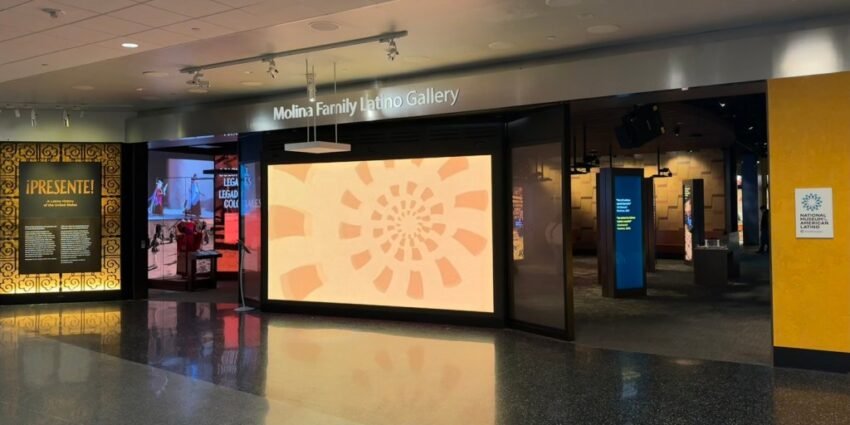
The National Museum of the American Latino was authorized in December 2020. In June 2022, the national museum opened the Molina Family Latino Gallery, operating it as the provisional museum. The gallery is located at the National Museum of American History.
The New York Times’ Robin Pogrebin reported on the regent’s approval of a permanent National Museum of the American Latino site in a story Aug. 31.
I am quoted in Pogrebin’s story as approving of the vote and suggesting that locating the new museum at Arts and Industries created an opportunity for the Smithsonian to take a different approach in creating a national museum, one that could resonate more directly with the kinds of intended constituents residing in Segundo Barrio and countless other Latino neighborhoods and rural communities around the country and in Puerto Rico.
The chances of a working-class family from Segundo Barrio traveling to the National Mall to visit a new Latino museum, particularly in today’s economy, are pretty slim. The build-it-and-they-will-come model does not work well in the here and now among a good number of key Latino demographics.
A first step in nationalizing the National Museum of the American Latino would be to operationalize its Museo Móvil project. This museum-on-wheels initiative would deliver educational service to urban barrios and rural communities with minimal museum access.
National Museum of the American Latino staff has already conducted focus groups in 49 cities and towns across 22 states testing the idea, receiving encouraging feedback. A listening session was conducted in El Paso in spring 2023.
One can imagine a large commercial vehicle pulling into the Walmart parking lot in Caldwell, Idaho, and setting up shop for a bit. (Walmart is already a multi-million-dollar supporter of the National Museum of the American Latino.) Caldwell is a city of almost 78,000, located in the agricultural southwestern part of the state. It is not surprising, then, that 36% of its population is multigenerational Latino.
Simultaneous to launching Museo Móvil would be the development of a hub-and-spoke model for the museum proper. Arts and Industries would house the hub, with National Museum of the American Latino leadership formalizing collaborative operating agreements with Latino and Latino-serving institutions strategically located around the country (the spokes).
Formulation of the location strategy would be guided by geography, geo-demography, local and regional histories and cultures, and thematic priorities.
For example, on a national scale it is obvious that the U.S.-Mexico border is of primary interest, and concern. Life on la frontera is often misunderstood, subject to racist stereotypes, pegged as mysterious and dangerous, and considered somehow un-American.
I envision a permanent, ongoing relationship between the national museum and the El Paso Museum of History and the adjoining Mexican American Cultural Center leading to joint research, development of exhibitions and correlative public and educational programs, expanded and shared collections, vast online content, publishing, and training programs for emerging museum professionals.
These programs could initiate in situ and then make the rounds to other spoke institutions, eventually arriving at the mother ship on the National Mall.
There is inherent value in telling the story of the El Paso/Juárez border region to audiences in the Bronx, New York, and Hialeah, Florida.
I can see a similar collaborative agreement between the National Museum of the American Latino and HistoryMiami yielding programs about Latino history and culture in South Florida, which then similarly make the rounds nationally, delivering pertinent cultural and educational value in their wake.
Much is made of the divisions within and among different Latino communities in this country. Opportunistic politicians and ill-intentioned influencers dwell on and feed off of these perceived divisions, harming many of our people in the process.
Culture, arts and the humanities are socially and culturally essential to community development. Activating a decentralized model for a new national Latino museum will stir the imagination, drive innovation, and provide much-needed educational service and, in doing so, help stitch together our diverse and dispersed communities. It is an approach worth trying by the nation’s museum.
Eduardo Díaz is the former director of the Smithsonian Latino Center and former Interim Director of the National Museum of the American Latino. He lives in El Paso.
The post Opinion: A mobile, decentralized Latino museum could reach communities nationwide appeared first on El Paso Matters.
Read: Read More