



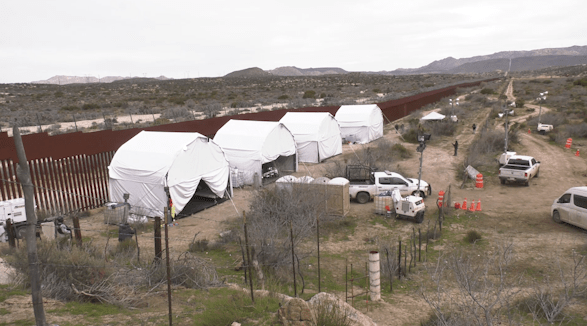
SAN DIEGO (Border Report) — Without much fanfare last week, Mexico’s Institute of Migration, INM, set up a camp in the mountains about 65 east of the San Diego-Tijuana region, where members of Mexico’s National Guard will be housed.
The camp was put up in an area known as Jacume south of the border.
On the U.S. side, the area is known as Jacumba, California, which in recent months has become the busiest place for unlawful crossings in the region, according to Tijuana’s Migrant Affairs Office.
“It wasn’t easy setting up camp here,” said David Tejeda Padilla, head of Mexico’s Institute of Migration in Baja California. “There are few roads, no cell service and no internet so we can use our databases to check migrants’ documents.”
He said soldiers who have been deployed to the area will act as a deterrent and make arrests.
They will patrol a 7-mile stretch of the border where there are several gaps in the barrier — openings used by migrants and smugglers.
“It’s people who obviously intend on crossing the border,” Tejeda Padilla said.
After being detained, migrants will get water, food and basic care before being sent to Tijuana to places such as the bus station, he said.
“The best solution is to be here,” he said. “We discovered the best way to stop these crossings is to set up camp right at the fence.”
Tejeda Padilla told Border Report his office has a mandate from Mexico City to keep migrants from getting to the U.S.
“The main reason is that we don’t want the border to be closed, it would devastate the Tijuana-San Diego economy.”
As a way to stem illegal migration, President Joe Biden has asked Congress to provide him with the authority to shut down the border if the number of migrants reaches certain numbers in the future.
This legislation remains stuck in Washington.
Nevertheless, the threat is there according to Tejeda Padilla.
“They have shut down PedWest a couple of times because of the high number of crossings, that has a big impact on our border.”
PedWest is one of two pedestrian crossings at the San Ysidro Port of Entry.
After being shut down due to the pandemic for almost three years, it closed again to process only asylum-seekers with appointments.
It was closed down again late last year to move officers to the field to assist in the apprehension of migrants between ports of entry.
Read: Read More