



AUSTIN (Nexstar) — More than $55.2 million was spent on this year’s primary election in Texas, up nearly $30 million from 2020.
Races for the Texas House of Representatives took up 57% of all non-presidential primary spending with $31.7 million, according to a new report from Ad Impact, which tracks campaign finance.
Brian Smith — professor of political science at St. Edward’s University — said the presidential election, runoff potential and inflation are all factors contributing to the increased spending.
“Here in Texas we saw Donald Trump get involved, the governor get involved…because you saw these big names, along with it came big money from all different kinds of places.”
Republican leaders’ success in going after their own
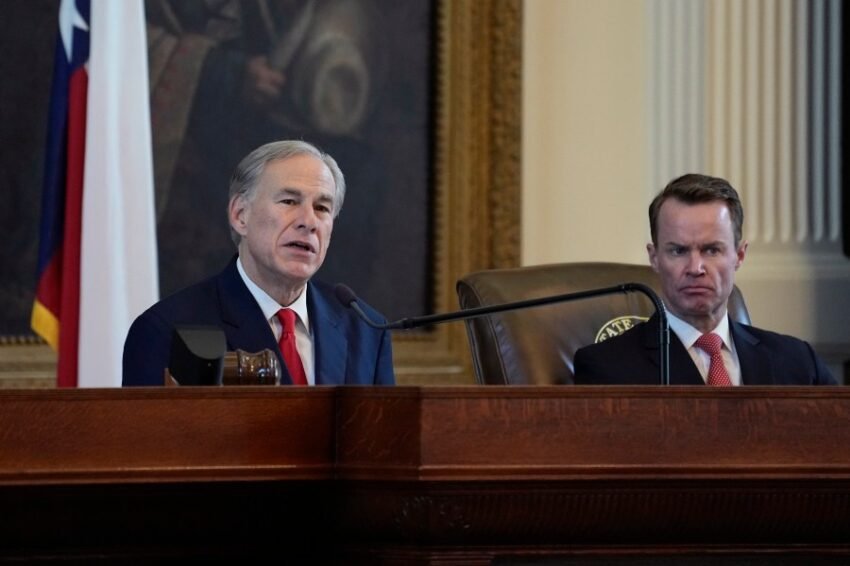
Many of the races center around separate revenge tours by Gov. Greg Abbott and Texas Attorney General Ken Paxton. Both, along with Lt. Gov. Dan Patrick, targeted dozens of Republican primary House races in which they claimed the incumbents weren’t conservative enough and were disloyal to the party.
The governor spent $3.9 million on ads for House races alone.
Abbott is aiming to defeat a group of mostly rural Republicans who voted against his priority legislation — education savings accounts — which was rejected by the lower chamber during the fourth special session. Paxton is seeking to unseat the Republican representatives who voted to impeach him.
Both were successful in many of the races they got involved in. Nine Republican incumbents lost their seats and eight more were pushed into a runoff election from the March 5 primary. Eleven chose not to run for re-election.
One of those incumbents who lost was Rep. Hugh Shine, R-Temple. He was challenged by Hillary Hickland, who won over the endorsements from Abbott, Paxton, Trump and Patrick.
Although Shine outspent Hickland, he attributes his loss largely to money spent by the state’s Republican leaders on advertisements in his district, as well as ads from political action committess in support of so-called school choice.
“It seems as though in my case, I was running against the governor and some other statewide officials and all the money they were spending and not not a candidate that was on the ballot,” Shine said.
The conservative group School Freedom Fund spent the most on advertising, pumping $4.3 million into candidates who support the measure that would allow Texas parents to get taxpayer-funding accounts to use toward private school tuition for their children.
“All that money could have been spent and be used for better purposes than what we saw this was all about retribution,” he said.
Hickland refutes Shine’s assertions, touting her victory based on her ground game and policy positions.
“My community, they were ready for change…we knocked on thousands of doors and whenever I would interact with the voters, they were overwhelmingly positive,” she said. “So then it became instead of anti-status quo, it became for Hillary Hickland.”
She attributes that largely to her support of an education savings account program, which Shine voted against.
“Dark money is a buzzword,” Hickland said. “To attribute it all to money is really disingenuous. And I think it’s a little bit insulting to parents and voters to think that we don’t see what’s going on.
Who funds these PACs?
The American Federation for Children, a school choice advocacy group, has been dumping cash into state elections across the nation over this issue. Its super PAC — the AFC Victory Fund — spent nearly $461,000 on ads before the primary in Texas, according to nonprofit research group OpenSecrets.
AFC Victory Fund spent $23,224 on ads targeting Shine. The PAC spent the most on Rep. Glenn Rogers, R-Graford, who lost his primary.
But the sources of PACs are difficult, political experts note. Texas has fewer limits on campaign contributions compared to federal election laws. Most state offices do not have contribution limits in Texas, although candidates do have to report all of their contributions to the Texas Ethics Committee.
“This is money that’s generally legal,” Smith said. “It is difficult to check because there are ways of moving the money around through different organizations, but we know that it’s being spent and you can usually track down the donor.”
Hickland pointed out that candidates are prohibited from coordinating with PACs, saying the ads run against Shine surprised her.
Top-ranked spending in Texas House primary races
Texas Speaker of the House Dade Phelan’s effort for re-election was the most expensive of all the House races, totaling $3 million. David Covey, who’s endorsed by Paxton and Trump, forced House District 21 to a runoff.
East Texas House District 11 was second in Super Tuesday spending at $2.5 million, featuring incumbent Travis Clardy and challenger Joanne Shofner. The two candidates will also head to a runoff on May 28.
Spending Shine’s district ranked as the third-most expensive House primary, where $2.3 million was spent.
“We kept hearing this is a fight for the soul of the Republican Party. And the soul of the Republican Party, at least in the primaries, wasn’t free,” Smith said.
Campaigns for Congressional House seats were the runner-up in Super Tuesday spending at $9.6 million. Colin Allred and Roland Gutierrez’s battle for the Democratic U.S. Senate nomination took $7 million.
Allred — who had a sizeable amount of cash on hand going into the race — won the primary and will face off against incumbent Republican Sen. Ted Cruz in November.
Read: Read More