



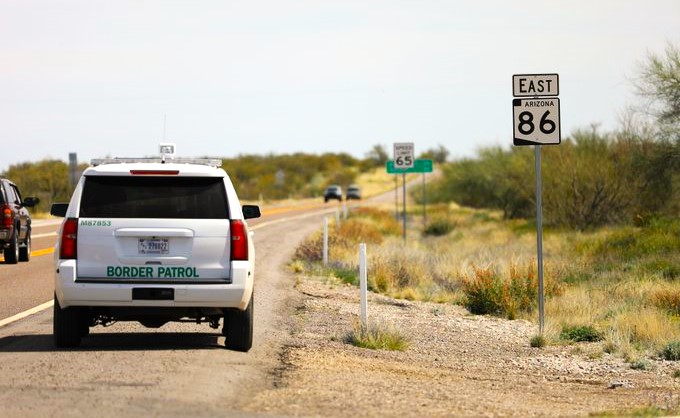
EL PASO, Texas (Border Report) – The heat not only kills migrants crossing the desert in summer, but also threatens the health of federal law enforcement and the effectiveness of tools they use to protect the border.
That’s why a group of bipartisan House members have filed a bill requiring U.S. Customs and Border Protection to assess the dangers of extreme weather on its staff, vehicles, sensors, cameras and other technology, and to present a mitigation plan to Congress.
Senators have filed a companion bill under the umbrella of the Border Weather Resiliency Act. The act already passed the Senate’s Homeland Security and Governmental Affairs Committee.
“Law enforcement personnel along the border constantly face extreme weather conditions, including dangerously high temperatures,” said U.S. Rep. Tony Gonzales, R-Texas, the bill’s co-sponsor in the House. “Additionally, our bill will help CBP make smarter investments in border technology and infrastructure so their officers and agents can be safer in the line of duty.”
The bill’s co-sponsor in the House is U.S. Rep. Greg Stanton, D-Arizona.
“Along the Arizona border, temperatures can soar well into the triple digits in the summer months. This prolonged extreme weather doesn’t just wear down border security infrastructure and technology – it can put the safety of officers and agents at risk,” Stanton said.
A member of the U.S. Border Patrol’s BORTAC special forces unit keeps watch on a desolate portion of desert in Arizona, near the border with Mexico. (CBP file photo)
He vowed to work with lawmakers on both sides of the political aisle to make sure the act becomes law.
Senate co-sponsors – Texas Republican John Cornyn and Arizona independent Kyrsten Sinema – made a similar vow.
“We are identifying real solutions to mitigate the risks of extreme weather impacting our CBP personnel and the infrastructure that keeps our communities safe and fuels our economy,” said Sinema, chair of the Senate Border Management Subcommittee and member of the Senate Homeland Security Committee.
Cornyn emphasized lawmakers are concerned about working conditions of federal law enforcement on the Canadian border, as well.
“CBP officers and Border Patrol agents put their lives on the line every day in weather conditions ranging from grueling heat waves, historic downpours to freezing temperatures,” Cornyn said. “With a record number of crossings in recent years stretching resources thin, (CBP) must identify ways to better protect officers and agents from harsh weather conditions at the border, and this bill would direct them to do just that.”
Read: Read More