



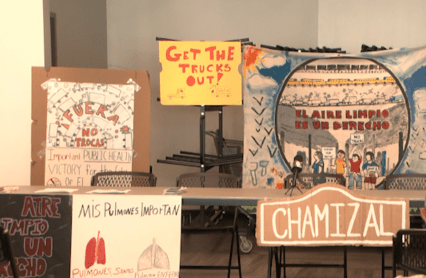
EL PASO, Texas (KTSM) — The Environmental Protection Agency (EPA) awarded a $500,000 grant to a local nonprofit organization, La Mujer Obrera, on Thursday, Oct. 24, to monitor air quality in El Paso’s Chamizal neighborhood.
Cecilia Aguilar, the project manager for La Mujer Obrera, said the grant will help the community collect data, which they hope to use in creating a community action plan to address health, socioeconomic, and environmental issues caused by pollution in the area.
For decades, Chamizal neighborhood residents have raised concerns about how toxic waste has impacted their health.
Community leaders and residents continue to advocate for solutions.
The following are aspects leaders are taking into consideration:
Danger to children
Hilda Villegas with Familias Unidas de Chamizal emphasized the risk to children in the area, referencing a preliminary study by the University of Texas at El Paso (UTEP) that found high levels of lead at Douglas Elementary School.
“When we talk about exposure to children, they’re more susceptible because they don’t understand that it’s lead and that it’s harmful. They pick up the dirt, they put it in their mouth. They’re constantly exposed to it,” Villegas said.
She also mentioned the neighborhood’s proximity to industrial hazards including a rail yard and cardboard recycling factories, which have been known to catch fire.
Air monitoring begins
Aguilar said the funds from the EPA will allow them to begin monitoring the air quality in the area.
“We will be deploying monitors in the Chamizal community to see what it’s like in one area and another area, from block to block,” Aguilar said.
She added that the monitoring is just the first step in addressing the environmental injustices that have burdened the neighborhood for years.
“It’s also going to help us organize with the community to put together an action plan with different strategies to help better the air quality and the quality of life of the residents,” Aguilar said.
Next steps
Aguilar expects the air monitoring to begin in early December. While the project is in its initial phase, it is projected to last three years with the goal of using the collected data to push for action from various agencies and government entities.
Read: Read More