



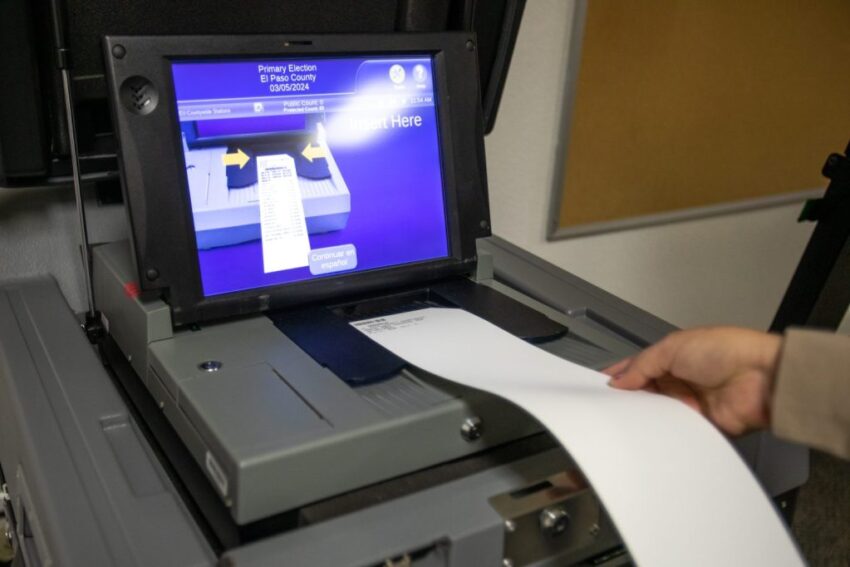
The majority of U.S. elections are conducted using electronic machines with multiple security measures to safeguard the voting process and election integrity.
But what if you want to track your ballot and make sure it’s counted? Here are a few easy ways to check.
How can I track my ballot?
County Elections Departments: Counties report voter history to the secretary of state within 30 days of the election. The electronic voter rolls are available at county elections websites and can be found by looking up your voter registration information. In El Paso, you can find that HERE.
Texas Secretary of State: You can download a voter report from the state agency’s website that will show who voted. Records on who a person voted for are not public and not included in the report.
Voting by mail: If you voted by mail, you can check the status of your mail-in ballot online by visiting the ballot tracker on the Texas Secretary of State site. Military and overseas voters can check their ballot status HERE.
Remember, early voting runs through Nov. 1 and Election Day is Nov. 5. From Monday, Oct. 28, to Friday, Nov. 1, the El Paso County Elections Department will have nine polling places open to 9 p.m. Additionally, voters can find your nearest voting location and waiting times at the polls at epcountyvotes.com.
What security processes are in place before, during and after an election?
Paper-backed voting systems have made a comeback among growing cybersecurity concerns, aging voting machines and changes following the 2020 election, the Texas Tribune reports.
Texas Secretary of State Jane Nelson, the chief election officer of the state, in a news release said many security measures are in place before, during and after the election process.
Among other measures:
All voting systems are publicly tested before the machines are used; background checks are required for all personnel that prepare, test or service voting system equipment; and multi-factor authentication is required for access to the statewide voter registration database.
No voting system is ever connected to the internet at any point; all voting systems are sealed and locked with devices containing unique serial numbers; and election workers at the polling place must confirm that there are zero votes cast at the opening of voting and at the end of voting.
Post-election audits (partial manual count) are required for all elections that use paper ballots; the state’s Elections Division Audit Program conducts in-depth reviews and examinations of election records; and penalties for election fraud make illegal voting a felony.
What kind of security measures are at polling sites?
Security at the polls has also increased since the 2020 elections, according to the Poynter Institute, citing a Brennan Center for Justice survey of local election officials. Poynter, a nonprofit nonpartisan news organization, teamed with PolitiFact for its report on what election officials have done to mitigate violence and protect their staff and workers since the last presidential election.It’s worth noting that neither cellphones nor guns are allowed at polling sites. Texas Penal Code specifically prohibits bringing a firearm onto the premises of a polling place, with the exception of peace officers regardless of whether they are on duty, notes the Texas Secretary of State. Open carry laws do not apply or change the laws regarding guns at polling sites.
The post How to track your ballot and what to know about election security appeared first on El Paso Matters.
Read: Read More