



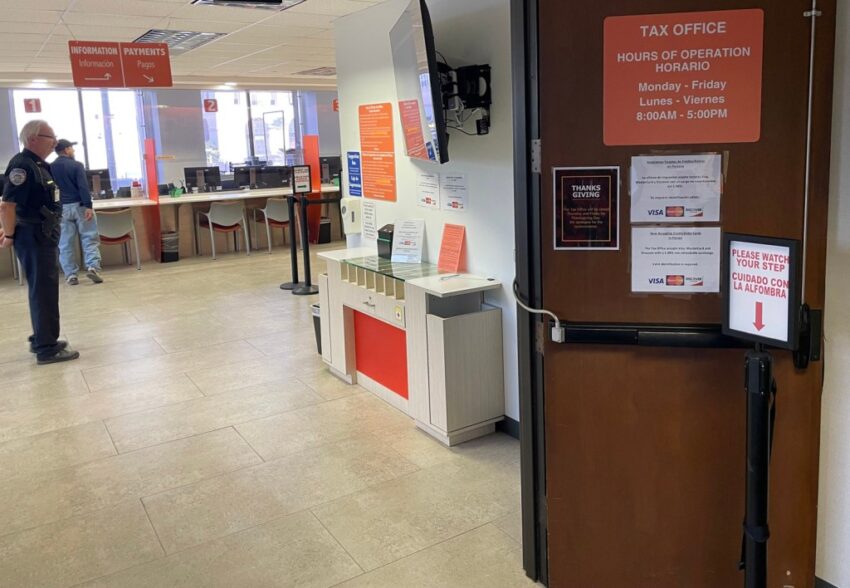
The two runoff candidates for El Paso mayor both say that El Pasoans pay among the highest property taxes in the state and nation.
“We have some of the highest taxes in the state, we’re number six in the country with taxes,” businessman Renard Johnson said at a recent candidate forum.
“El Paso has the third highest residential property rate among the 50 largest cities in America,” District 1 city Rep. Brian Kennedy says on his campaign website.
Complaints about property tax bills – including assertions that they’re much higher in El Paso than elsewhere – are common in traditional media and social media. But statements that suggest El Pasoans pay higher taxes than other cities, especially in Texas, are incomplete or misleading at best.
That’s because the claims focus solely on tax rates and ignore the second, equally important part of the equation that determines your property tax bill: the taxable value of the property.
According to the National Association of Realtors, the median home price in El Paso is significantly lower than in eight of Texas’ 10 most populous counties.
WATCH NOW: Mayoral forum hosted by El Paso Matters / FitFam El Paso
As a result, average property tax bills in those eight large counties are 27% to 119% higher than in El Paso, according to data from the Tax Foundation, a nonpartisan research group. Their research shows the median residential median property tax bill for each county in the United States, meaning half the residential bills in that county were higher and half lower.
Only Hidalgo County, in South Texas, has a lower median home price and a lower median property tax bill than El Paso among the state’s largest counties.
The Tax Foundation notes that Texas has one of the highest effective property tax rates in the country, largely because it doesn’t levy a state income tax and relies on property taxation to fund many government services. So local property tax bills in Texas are among the highest in the country. State income taxes in Texas, of course, are the lowest.
El Paso Election 2024: Everything you need to know for Dec. 14 runoff
In Texas metro areas, most property owners pay property taxes to city and county governments, and school districts. In some areas, property taxes also go to districts providing health, water and higher education services.
An important component of the impact of taxes is income levels. A $5,000 tax bill is a bigger deal to someone making $50,000 a year than it is for someone making $500,000 a year.
In addition to having significantly lower home values than most other heavily populated Texas counties, El Paso County also has lower income levels.
LEARN MORE: How are my property taxes calculated? 7 things to know about the complicated process
El Paso’s median household income – meaning half make more and half make less – was just over $55,000 in 2023, the most recent year available. The eight large counties with higher property tax bills than El Paso have income levels that are 21% to more than 100% higher than El Paso; Hidalgo County’s income level is about 11% lower.
Calculating the median property tax bill as a percentage of median household income shows that property taxes in populous Texas counties generally consume about 6% of a typical family income. El Pasoans – on average – pay slightly below that.
Few, if any, people would say they’re undertaxed. It’s little consolation to someone paying their El Paso property tax bills in the coming weeks to know that people elsewhere in Texas pay much more.
But in a state with a longstanding policy of heavily relying on property taxes for funding government services, El Pasoans don’t face a tax burden that’s greater than other Texans who live in and around big cities. If anything, El Pasoans pay less in property taxes than other Texans who live in large metropolitan areas.
The post Are El Paso property taxes among the highest in Texas? This analysis might surprise you appeared first on El Paso Matters.
Read: Read More