




El Paso’s mayor and half of City Council expressed concerns about the rate increase El Paso Electric proposed Monday that would lift average residential bills by more than $22 per month.
The pushback from a majority of the city’s elected officials sets the stage for a back-and-forth negotiation between the utility and the city in the months ahead. The council can vote to approve or reject a rate proposal, although the final decision lies with the Public Utility Commission of Texas.
Virtually every stakeholder expects El Paso Electric to negotiate the rate hike with the city, business groups and consumer advocates in front of the Public Utility Commission and ultimately settle at a lower rate increase with less impact on customer bills compared with the initial proposal.
“There’s a lot of sticker shock with that amount. The $22 to $23 is a lot for El Pasoans. And I think that this is why we need to intervene in the case” District 2 city Rep. Josh Acevedo said of the proposed increase to the average residential bill. “What we can do is play a good role and bring that number way down.”
Other City Council representatives echoed Acevedo’s concerns.
“The proposed $22 or $23 is really a significant burden, in my opinion,” District 6 city Rep. Art Fierro said in an interview.
“We’re here to be stewards of and make sure that we defend and take care of the ratepayers and taxpayers of the city of El Paso,” he said. “And, so, we really need to make sure that we hold El Paso Electric’s feet to the fire when it comes to rate increases.”
District 1 city Rep. Alejandra Chavez, who took office earlier this month, said in a statement that the utility’s proposed rate increase “would place an undue burden on our community.”
“While reliability from El Paso Electric is critical for our community – and we recognize the good work they have done in maintaining this – affordability is just as important,” Chavez said. “This issue is serious and warrants careful evaluation to ensure we balance reliability with fairness for El Paso residents.”
LEARN MORE: El Paso Electric proposes solar farm
Hours after El Paso Electric unveiled the rate hike proposal Monday, Mayor Renard Johnson said he was concerned about how much it would raise household power bills.
“I am deeply concerned about this proposed increase, as it could place a substantial burden on all El Pasoans. The preliminary estimates are significant,” Johnson said in a statement. “I will take every necessary step to ensure that our residents’ interests are protected throughout this process.”
City Reps. Deanna Maldonado-Rocha, Cynthia Boyar Trejo, Ivan Niño and Lily Limón didn’t respond to questions about the proposed electric rate increase. Each of the representatives who didn’t respond were elected in November and entered office earlier this month.
Who regulates El Paso Electric?
The Public Utility Commission of Texas is the main regulator overseeing El Paso Electric and the other regulated utilities in the state. El Paso’s city government, however, has “original jurisdiction,” which gives it quasi-regulatory authority over what El Paso Electric does within the city limits.
If City Council rejects El Paso Electric’s rate increase proposal, then the utility would appeal the decision to the PUC, which has ultimate authority over whether the power company can raise rates. The state’s PUC is led by five commissioners who were appointed by Gov. Greg Abbott.
“If the city of El Paso rejects our rate case, and says ‘No, no increases,’ that’s why it’s also filed with the PUC, because we still get consideration,” James Schichtl, a vice president with El Paso Electric, said in an interview. “For us, we treat the PUC as an appellate court.”

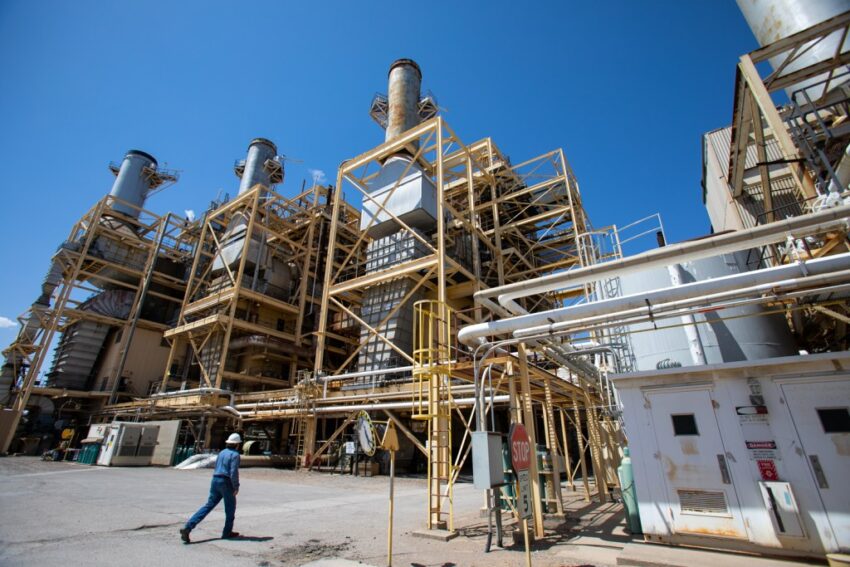
Since the end of 2020, El Paso Electric said it has spent $1.55 billion on a range of capital investments – such as the Newman 6 gas-fired generating station – and also on replacing wooden power poles with steel poles, upgrading aging power plants and building new substations to serve power as El Paso sprawls out further, among other investments.
Now, the utility wants to raise rates so it can recover the money it spent over the last four years.
The PUC determines the profit margin monopoly utilities are allowed to make, and it also approves or rejects rate hike requests. Texas utilities are required to conduct a rate review at least every four years.
Monopoly utilities in Texas make money by spending on capital investments, such as power plants or substations. Then, utilities ask regulators to let them set rates to recoup from customers the money the utility spent on capital assets, plus the predetermined profit margin.
El Paso Electric says it needs to collect an additional $85 million from customers annually to pay off the capital investments the utility has made since its last rate hike in 2021, plus a profit margin of 10.7%. If its rate request is approved as is, El Paso Electric said the average residential customers’ bill will rise from about $106 per month today to around $129 monthly.
City Council representatives said that El Paso Electric has largely been a good partner of the city and has reliably kept the lights on for customers across its service territory. Figures from the U.S. Department of Energy show the utility’s customers experience fewer – and shorter – power outages than the state and national averages.
Still, lifting household bills by up to $23 per month – or $276 a year – “is very high in terms of a rate increase,” said Daniel Tait, a research and communications director with the Energy and Policy Institute, a nonprofit that advocates for expanding renewable energy and often opposes utility rate hikes.
“I would expect that to come down a little bit. But I think El Paso Electric, or any other utility for that matter, is expecting less than they’re asking for,” in rate increase proposals, Tait said. “It’s kind of this known song and dance.”
El Paso Electric is also asking regulators to boost its authorized rate of return – called its “return on equity” – up to 10.7% from 9.35% currently.
The average return on equity that regulators authorized for electric utilities was 9.6% in rate cases decided in 2023, and 9.54% in 2022, according to S&P Global.
“What we’re really saying here, at 10.7 (percent), is that’s profit above and beyond the average profit for the industry” in 2023, Tait said. “If they got 9.6 (percent) they would still be very profitable, right?”
In a statement issued Monday, District 8 city Rep. Chris Canales said El Paso Electric’s rate request is “concerning, especially when they include a significantly increased profit margin or ‘return on equity.’”
Canales, however, pointed out the city played a role in negotiating El Paso Electric’s last rate increase in 2021 to $1.80 per month for residential customers, down from nearly $12 per month in the utility’s initial proposal.
“As always, I will do my fiduciary duty to El Pasoans to ensure that any and all rate proposals are reviewed with the utmost care and diligence to protect the best interests of our residents,” he said.
Schichtl, the utility’s vice president, said the 10.7% rate of return El Paso Electric is requesting is in line with what other utilities also initially ask for in rate increase proposals, before the authorized rate of return gets whittled down during negotiations.
Even before a potential rate increase, there’s already a big gap in El Paso between the need among residents for help paying utility bills and the funding that’s available.
Texas receives only enough funding to help 2% of the low-income residents who qualify for utility assistance, said Laura Ponce, executive director of Project Bravo, a nonprofit organization that provides bill assistance among other community programs. In 2023, Project Bravo distributed $5.7 million of utility bill assistance to nearly 7,500 families.
Project Bravo doesn’t offer open enrollment for utility assistance because of the huge demand, so it’s first-come-first-serve and the nonprofit can accept a maximum of 1,400 applications per round. After opening the window for the public to apply for assistance Jan. 6, Project Bravo maxed out and received 1,400 applications within one day, she said.
“The number of people that we can help is determined by the utility bills that we get. The bigger the utility bills, the less people that we can help. The lower the utility bills, the more people we can help,” Ponce said.
“When the temperature gets hot and you have that rate increase, then the bills are going to be super high,” she said. “If the temperatures are low and we have that rate increase, you may not see it as much.”
Kelly Tomblin, El Paso’s Electric’s CEO, said the investments the utility has made in recent years were essential to modernize the electricity system in the Borderland. Beyond adding new sources of electricity to replace half-century old gas-fired power plant units, the utility has pushed to update its technology, deploy state-of-the-art smart meters and harden infrastructure.
“Being cheap, not raising rates ever, that’s real easy,” Tomblin said Monday during a news conference at the utility’s headquarters Downtown. “Guess what I’ll do? We won’t replace wood poles that present a fire hazard with steel poles that cost more. We’ll (hire) people that are not the best in their game. We won’t have substations that tell us when something’s overloaded.”
Tomblin said stakeholders can intervene in the months ahead and make their case that the utility’s rate increase should be smaller than proposed. But the rate hike, she said, is worth customers paying for to ensure the reliability of electricity in El Paso for the long-term.
“This is a lengthy process where everyone gets a chance – the city, the employers, so many people – get a chance to argue that we got it wrong,” Tomblin said.
“If we didn’t think it was worth it, we wouldn’t be here,” she said, “because we know you’re going to hate us.”
The post City Council reps criticize El Paso Electric rate hike proposal, setting stage for negotiation appeared first on El Paso Matters.
Read: Read More