



EL PASO, Texas (Border Report) – Border business leaders braced for a White House announcement this Saturday that could prove catastrophic for consumers, border jobs and future investment.
President Trump on Friday was still poised to impose 25 percent import tariffs on Mexico and Canada, and a 10 percent levy on China, his spokeswoman said, according to NBC.
The tariffs are meant to send the North American trade partners and the Asian competitor a message they are not doing enough to stem the flow of fentanyl into the United States.
The announcement was met with some disbelief and much apprehension in Mexico, whose leaders believe they have substantially assisted the U.S. in stemming the flow of migrants to the border.
Sources in Juarez had little to say about the illicit drug issue, but emphasized the tariffs will hurt consumers and threaten jobs on both sides of the border.
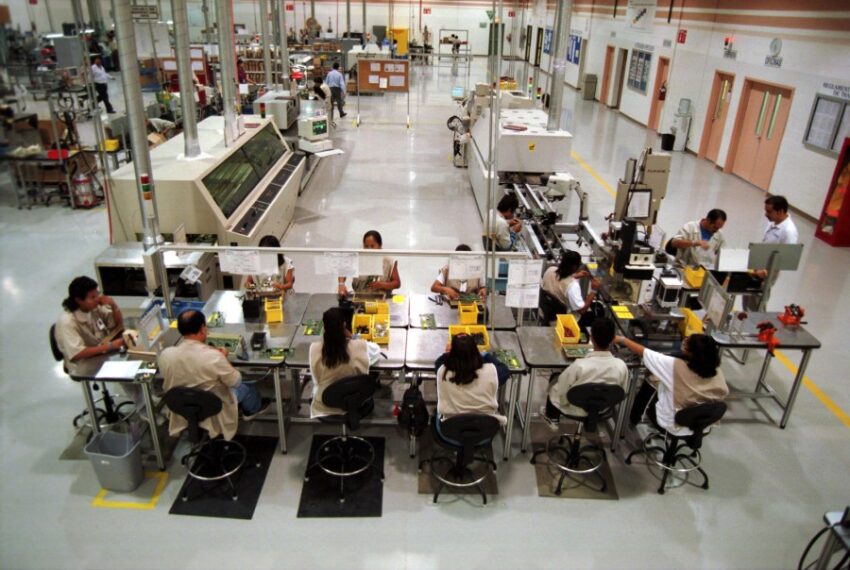
The maquiladora industry sustains more than 300,000 jobs in Juarez, mostly in the assembly of car parts, computer boards and electronic components that are exported daily to the United States. Should those exports be included in the tariffs, the factories will have to find savings in the short term and could consider relocating their production facilities elsewhere, Juarez officials told Border Report.
“There is a lot of uncertainty. That is bad for investment,” said Thor Salayandia, president of the Border Business Bloc and board member of the National Chamber of Industry. “Our economy depends on maquiladora jobs – 60 percent of our formal employment and $59 billion a year in exports is tied to that. All of that is on the table.”
U.S. consumers will feel the pinch when manufacturers pass on the cost of the tariffs in the form of higher prices for cars and other goods assembled in Mexico, he said.
Juarez Chamber of Commerce President Elizabeth Villalobos said a few maquiladoras were already contemplating moving operations to southern Mexico or to other countries due to higher labor costs in Mexican border cities. The threat of U.S. tariffs could accelerate that process and increase unemployment.
Further, the tariffs will force the Mexican government to retaliate with tariffs on U.S. products exported to Mexico and that could hurt food prices, she said.
“Even those of us who don’t work in maquiladoras, who are not about to buy a car, will feel it because we all have to eat Monday through Sunday, on holidays and even on Christmas,” Villalobos said.
Jerry Pacheco, president and CEO of the New Mexico-based Border Industrial Association, said he expects cross-border industry to continue working through the tariffs. However, planned expansions and future investment could be compromised.
“That’s the worst-case scenario, but Trump could come out tomorrow and say, ‘I’m imposing tariffs on Mexico and Canada, but they won’t be effective until June.’ That would give everyone wiggle room to negotiate,” Pacheco told Border Report on Friday. “Or he could come out and say, ‘I’m only going to put tariffs on certain products.’ We have to wait and see what he does.”
The best U.S. consumers can hope for is the tariffs won’t include components made in Mexico that American industries use, he said.
“People are assuming, ‘Tariffs on 100 percent of all Mexican exports.’ I don’t necessarily buy that. I think it’s going to be on specific industries,” Pacheco said.
 Read: Read More