



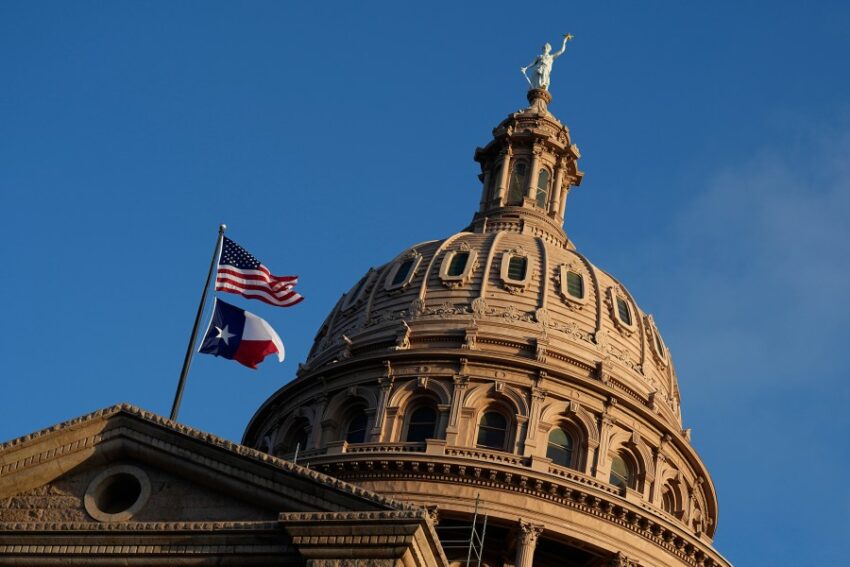
EL PASO, Texas (KTSM) — The Texas Legislature may be getting poised to provide long-needed financial relief to public schools across the state.
On Thursday, Feb. 20, the Texas House introduced several bills – most notably House Bills 2 and 3 – which could set aside $7 billion in state funds for public education, and $1 billion to fund an education savings account program (ESA).
HB 2 would see the state’s funding formula for public schools change, after remaining stagnant since 2019.
The bill proposes that the state increase how much funds it provides public schools per student by $220. Currently, school districts receive a basic allotment of $6,160 per student. This would increase that number to $6,380.
Ysleta ISD Superintendent Xavier De La Torre, however, said that the increase is underwhelming as they hoped for $400 more, and added that it won’t help his or neighboring districts eliminate their financial challenges.
“It’s certainly not enough. It’s not going to move the average teacher compensation in Texas out of 30th place (in the country),” De La Torre said.
Just over three months ago, El Paso ISD moved to close eight schools over two years to deal with its finanical issues.
This week, Socorro ISD decided to lay off hundreds of teachers and staff to mitigate their deficit as well, and YISD has had to adopt a budget deficit in back-to-back years.
Because YISD adopted a $17 million budget deficit for the 2024-25 school year, De La Torre said they’re contemplating taking out a “gap” loan to fund payroll demands in August – one of two months where school districts don’t receive installments of money from the state.
“Under normal circumstances, we would simply go into the unassigned fund balance, the reserve, where we would have enough cash to cover that month and then pay ourselves back the following month when we get revenue from the state,” De La Torre said.
“It’s sort of the perfect storm — no money from the state, inflation up 20 to 25%. And there have been some decisions made in Austin that were unexpected and unanticipated relative to special education funding, that withheld $7 million from the Ysleta Independent School District,” De La Torre said.
Still, De La Torre said that HB 2 came with several provisions that could greatly benefit them and other school districts in El Paso.
“There are proposals that students with special needs would get additional funding. Students who are emerging bilingual or English language learners would get additional money. And students who are socio-economically disadvantaged – poor – would get additional money. So when you think about those three baskets, El Paso and specifically Ysleta Independent School District, has a very high percentage of students that require support around special needs. One out of every three of our students are English learners, and eight out of every 10 students are poor,” De La Torre said.
Overall, De La Torre is optimistic that HB 2 has kickstarted discussions at the state level of increasing public education funding, as he believes it could eventually help them and other public school districts to improve their financial challenges.
HB 3, the other key education bill being considered, would fund and create an education savings account (ESA) program, allowing families to use these funds to enroll in private schools or for other educational expenses.
Nathan Cunneen, Texas state director for the American Federation for Children (AFC) – a national organization that advocates for school choice, especially lower-income families – believes both public and private education could thrive together with state funding.
“There’s almost 30 studies done by academic, peer-reviewed research that show that when public schools are exposed to school choice competition, they get better and public school students get better. This is not a us-or-them sort of arrangement where it’s public school versus private school. This is about putting students first, and the data shows that all schools do better as a result,” Cunneen said.
Cunneen said that because HB 3 stipulates that students who would be part of the education savings account (ESA) program would receive only 85% of what public schools receive for each student from the state and federal government, it would incentivize the state to continue increasing funding for public schools.
“Kids don’t all learn the same. Not every kid is the same, and assigning students to schools based on their zip code does not always guarantee that they’re going to get what they need to succeed in their education. What school choice and education savings account does is give families the option to pursue other opportunities if their assigned-to public school isn’t working out for them,” Cunneen said.
De La Torre doesn’t believe the approval of a state-funded ESA program will have a huge detrimental effect on El Paso school districts compared to bigger cities like Dallas or Houston, because there aren’t large private schools here that could take away large amounts of students from their schools.
While De La Torre said he welcomes the competition with private schools in the area, and believes they could both thrive in El Paso with state-funding, he is wary that at some point down the line an ESA program could take away from public schools.
“Everything I’ve read from all the states that have already experimented with educational savings accounts or vouchers, the investment has had to increase significantly. From 1 billion before you know it, five years down the road, it costs $3 billion and so on and so forth. At some point, it could redirect money from your traditional public school system to these private schools,” De La Torre said.
 Read: Read More