



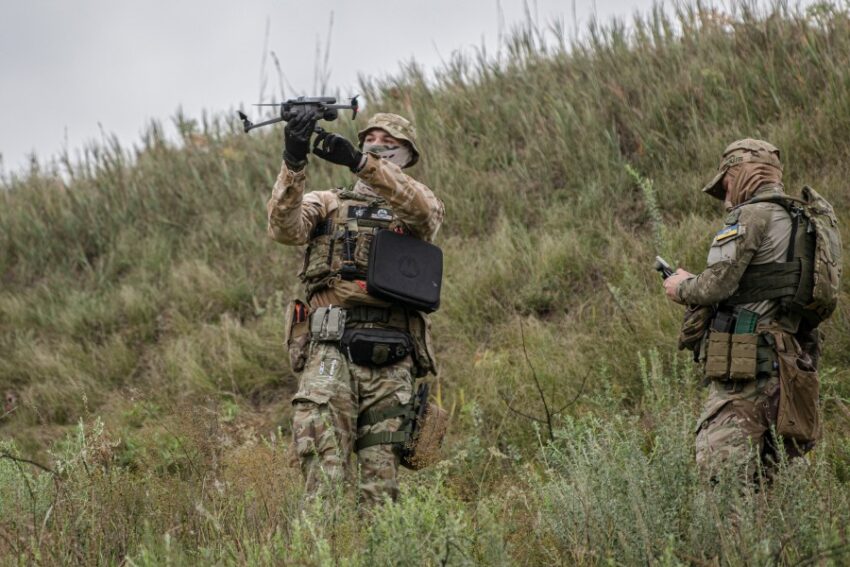
EL PASO, Texas (Border Report) – The war in Ukraine opened Pandora’s box when it comes to using drones in combat. The low-cost, remotely guided flying contraptions can drop explosives from the sky or come down and literally blow up in an enemy combatant’s lap.
Now some in the United States are worried if the newly designated Foreign Terrorist Organizations that are the Mexican cartels haven’t been taking notes and preparing to strike at U.S. service members on border duty.
Cartels already are using drones to track border agents across the international boundary, according to El Paso’s interim Border Patrol chief. And they have been used to drop drugs in U.S. neighborhoods just across the border from Mexico in West Texas and Southern Arizona.
Several GOP House members earlier this month sent a letter to the Trump administration expressing such concerns and demanding to know what’s the plan to counter the threat. Arizona state lawmakers a month earlier filed HB 2733, which would exempt peace officers from liability for shooting down within 15 miles of the Mexican border drones they suspect are being used for criminal activity. The bill last week cleared a Senate committee.
Arizona Attorney General Kris Mayes called the bill “critical” to border security. “(It) will help law enforcement combat drug traffickers and international criminal drug rings,” she said on X. “HB 2733 gives Arizona sheriffs and local law enforcement the ability to disable the drones the cartels use to smuggle dangerous drugs across our border.”

In Mexico, the cartels have dropped grenades from drones on rivals and this year used them to attack Mexican National Guard troops in the northern border state of Chihuahua. But, are they getting ready to use them against the Border Patrol and the U.S. military?
An international security firm says they could – if they feel sufficiently threatened by the Trump administration and the Mexican government.
“There are multiple concerns over drones; there few, if any effective countermeasures. Shooting them out of the skies isn’t viable (because of) risks of collateral damage – bullets flying to all kinds of places,” said Michael Ballard, director of intelligence for Virginia-based Global Guardian.
The Foreign Terrorist Organizations might have a clear first shot from across the border, but the repercussions to the offending cartel will be severe. Both governments would come after them, all guns drawn.
“Is it counterproductive for the cartels to be doing this? It depends on how much pressure the U.S. places on them,” Ballard said. “They’ve been labeled FTOs, there’s some level of mostly financial pressure […] but if this escalates, if (the U.S.) is going to carry drone strikes in Culiacan targeting the Mayitos or the Chapitos (gangs) of the Sinaloa cartel, the cartels may say, ‘They’re coming after us with drones, let’s do the same thing.’”
That scenario is already playing out in Haiti.
A specialized police task force on March 1 struck the stronghold of Haiti’s most notorious warlord, the Miami Herald reported. Hours later, Jimmy “Barbecue” Cherizier reportedly released a video saying he survived the police explosive drone attack and threatening to retaliate.
“Explosive drones were used to assassinate me […] I can now use explosive drones to reach anyone in the country,” Haiti Libre quoted him as saying.
Ballard said the retaliation scenario is perhaps the only course right now for Mexican cartels who’ve grown tremendously over the years by striving to keep a low profile, by not going out to pick a fight with the U.S.
“The Haitian security forces went after (Jimmy Barbecue) with a drone, they were not successful. He came back, said, ‘You missed, I can buy the same drones, and I can do the same thing,” Ballard said. “So there’s an element of risk of escalation.”
Absent that in Mexico, he said, the cartels for now are likely to stick to the drones as surveillance tools, however unsettling the possibility of more aggressive uses might be.
 Read: Read More