




El Paso deck park plan begins to form | RSS.com
Diego: A new central park for El Paso that will transform the core of our city? Or, an unnecessary project that the city and its taxpayers can’t afford to take on?
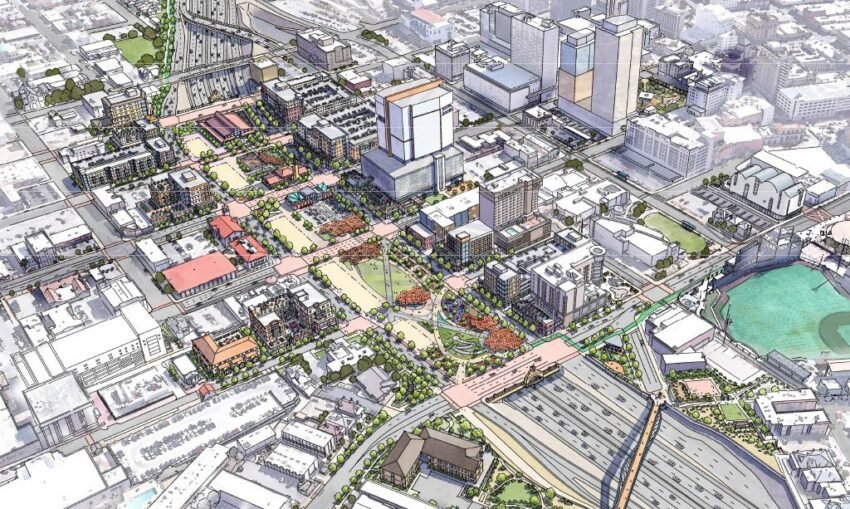
Depending on who you ask, both of those could fit as a description of the proposed deck plaza — a park that would span five blocks over I-10 in downtown El Paso and cost something like $207 million to build.
Over the last two decades, major cities in Texas and throughout the United States have built deck parks on top of freeways. The idea is to create new green space and prompt new development in areas of cities that decades ago were sliced up by the construction of big freeways.
In El Paso, we’ve seen the deck plaza idea gain some steam recently, but there’s still a lot of skepticism about the project and how much it will cost. Will building the deck park raise property taxes? Will this benefit all of El Paso or just wealthy urbanites? And is this the right time to take on this project?
I’m your host, Diego Mendoza-Moyers, and this is another episode of the El Paso Matters podcast.
Today, I’m joined by Pablo Villa, assistant editor of El Paso Matters, to talk through these questions and more about the deck plaza.
Pablo, thanks for joining me.
Pablo: Thank you, Diego. Hi, everyone, and welcome to this special edition of the El Paso Matters podcast. I’m Pablo, and I’m stepping into the host seat today with the very generous permission of our usual host, Diego Mendoza-Moyers. Thanks for letting me take the wheel, Diego.
As Diego alluded to, the reason we’re switching things up is because Diego has been working on a story that’s both complex and incredibly important to the future of Downtown El Paso. And that’s the proposed deck plaza over Interstate 10. It’s a project that’s been years in the making, but in recent weeks, things have really started to move. There’s momentum, there’s money on the table and there’s still a lot of questions to work through.
So, today, we’re turning the mic around and putting Diego in the proverbial hot seat. In the most collegial way, of course. To break down where things stand, what’s at stake and what El Pasoans should be paying attention to in the months ahead.
So, Diego, let’s start with the basics. What exactly is the deck plaza project and where in Downtown El Paso is it supposed to be located?
Diego: Yeah, so it’s this idea that we’ve — as you kind of said — it’s been in the works for almost a decade as a concept. And so it would span five blocks over Interstate 10 in Downtown. So the trenched portion of the freeway that cuts through kind of the northern edge of Downtown El Paso, it begins with Santa Fe Street and it would go east to Kansas Street, I believe.
And so, you know, the idea is we’ve sort of got this trench with these fast-moving vehicles that cut right through Downtown. It was built decades ago. And so the thinking is, hey, let’s go ahead and instead of just having this trench in Downtown, let’s put this park with a lot of amenities, right, and gardens and trails and, you know, other kind of conceptual ideas of amenities.
And let’s kind of create this new real estate. And the ultimate thinking is that this will make this area much more attractive. Instead of having a freeway, we’ve got a park. And, so, then that will bring in new housing and, you know, multi-floor apartments and retail and so forth.
So, I think the thinking is, really, this park would be the catalyst to prompt more development Downtown, ideally, right? And, you know, raise property values and property tax revenue for the city. That’s kind of the ideal thinking and reasoning for this project.
Pablo: Sounds immense, Diego. Now, supporters often point to Klyde Warren Park in Dallas as a model. Can you walk us through how the El Paso project compares and what’s unique about this proposal?
Diego: Yeah, so the Klyde Warren Park is kind of the — a lot of people point to it as kind of the ideal deck park project because it took this really wide Woodall Rodgers Freeway in downtown Dallas and it put a cap on it.
And all of a sudden, it prompted a lot of development of apartments. I think there were only a few hundred people living in downtown Dallas prior to Klyde Warren opening in 2012. And now I believe there are thousands of housing units. So, that’s kind of what the people in El Paso that want this deck park look to as the model.
One thing that’s interesting about it — obviously — Dallas has a lot of money, right? And a lot of people associated with the finance and energy industry. So there were some champions of the project there and wealthy individuals who put up a lot of money initially to really kind of turn it from this vague concept into a real thing.
Of course, it opened in 2012. The price was $112 million, I believe, to build the whole thing. Obviously, less than this would cost us just because of inflation.
A key fact about Klyde Warren is that 50% of it was paid for by private philanthropists. And so, we can get into the funding puzzle for El Paso’s deck plaza a little bit, but I think that’s a key thing to remember — that private dollars funded half of that project.
And I think that’s what city officials in El Paso would like the ratio to be for the deck park. You know, maybe 50% some form of public funds and 50% from the pockets of wealthy philanthropists.
So that’s … Klyde Warren’s a really successful example of a deck plaza, and I think something that we should strive for, but the funding piece is key — to remember that half of that came from private dollars.
Pablo: You mentioned in your response that vague ideas turned into actual big, big things for Dallas. That’s sort of the case here in El Paso, right?
We’ve seen a big shift from vague ideas to more concrete funding proposals in recent weeks. What are the key pieces of the financial puzzle and how solid are they at this point?
Diego: Yeah. So, I mean, obviously the big question that anybody will bring up when you talk about the deck park is, like, “So how much is it going to cost? And, you know, will it raise my taxes?”
So, the Downtown Deck Plaza Foundation, which is kind of a foundation the Paso del Norte Foundation spun off to sort of advocate for this project, they commissioned a cost study that they shared with the public last summer.
That’s where they came up with the $207 million cost estimate for the price of the deck itself, which is, I believe, six and a half acres, and the amenities on top.
So, they have that cost estimate. The following question is, OK, where do those funds come from?
We kind of saw the first real firm, you know, dollars put forward — I guess maybe I shouldn’t say firm dollars — but we saw in the Texas Senate budget that Senator César Blanco successfully included in there $10 million for the deck plaza to sort of pay for like construction blueprints and design documents. That’s not final. That would have to end up in the final state budget, which will probably be passed in June once the Texas Senate and Texas House reconcile their different budgets.
But that was significant, right? To see that our state senator had successfully gotten his colleagues to include a $10 million allocation for the deck park — to, like I said, pay for construction blueprints and design documents.
So that was pretty significant.
And then a couple of weeks later. We heard from the Deck Plaza Foundation folks that they plan to bring in $25 million from philanthropy. So that’s a pretty sizable chunk of the project cost paid for by private dollars. That was the first real commitment we’ve heard from philanthropy. I mean, we’ve kind of heard all along that philanthropy would play a role, but we hadn’t really seen any dollar figures associated with that.
So, $25 million would come from philanthropy on top of the $10 million from the Legislature. And then we know that the backers are applying for this transportation alternative set-aside grant. It’s a grant funded by the Bipartisan Infrastructure Law that Congress passed a few years ago. The idea is to fund non-vehicle-related transportation projects.
The deck plaza backers talk about this as if they’re fairly confident they’re going to get it, which would be another $25 million. So: $25 million from private donors, maybe $25 million from the state, a separate $10 million from the state.
Then, the city this week suggested it would be willing to contribute $35 million. Some people with the city’s economic development department said the city could contribute this $35 million, which would be a fair, proportionate contribution and also feasible — in the sense that the city could come up with the money without raising taxes or deteriorating its finances.
So far, we have about $85 million in funding commitments for the construction part, which is still almost $100 million short. The construction cost is estimated at around $188 million, and about $20 million for design. The design is mostly paid for. For construction, like I said, about $100 million short.
So, where does that money come from? That’s still the remaining question. There’s a possibility El Paso County contributes some funds. We don’t know how much. We know they’re open to it. County Judge Samaniego has been very vocally supportive of the deck park. So, we could see some money from El Paso County. There may also be opportunities for federal dollars.
We know the funding landscape at the federal level under the Trump administration is different from the Biden administration, which was awarding grants and giving out money a little more freely, I guess. Whether those federal dollars come in is a really big question. But, in a previous answer, I said the Klyde Warren Park was funded by 50% private donors. So, if you look at $25 million out of $207 million, that’s much less than 50%. Maybe you could say ‘Well, the private philanthropy amount has to increase to make this project feasible.’
City Manager Dionne Mack made it clear this week that if the funding isn’t there, the project’s not going to happen. The city isn’t going to overextend itself to make it happen. But if we can stitch these various funding sources together — whether the county chips in, maybe some dollars from the feds and from the state — maybe there’s a viable path ahead.
Pablo: Diego, you’ve got an excellent handle on the money picture for this project. It’s $207 million that’s potentially being funded through all these sources, and you have a really good handle on how that’s working so far, even though it’s a very muddled picture right now.
One thing that isn’t so murky is the date this is all supposed to happen. One of the big sticking points seems to be timing. Why is the 2027 construction date such a critical deadline, and how is the Texas Department of Transportation’s timeline shaping the urgency around this project?
Diego: A key part of this is that the whole thing that spurred the idea for the Deck Plaza was TxDOT, they’re widening the freeway. They’re widening I-10, they’re spending a billion dollars to do it in El Paso because they say if the highway doesn’t have an extra lane, decades from now, as El Paso grows, the traffic is going to get a lot worse.
You’ve seen the ongoing work in northwest El Paso, in the West Towne Marketplace, Cimarron area — really snarl traffic out there. It’s been a big multi-year project. The next step of that is going to be Downtown. Which, as you can imagine, will probably be a little bit of a disaster traffic-wise and create a challenge for traveling through there.
So, the thinking is: well, TxDOT is going to go ahead and do this widening project — which, by the way, a lot of locals don’t approve of, but TxDOT is moving forward with it — then why not take advantage of the fact that they’ll be doing this work on I-10 and build this deck on top? Supporters of the deck park view this as a once-in-a-generation window. In the sense that it probably wouldn’t be feasible to build this if TxDOT wasn’t doing its project on I-10.
That’s why the deck park supporters want this to match up with TxDOT’s timeline on expanding the freeway downtown. TxDOT’s project has gotten a little bit delayed. The anticipation is that they’ll begin soliciting bids next year and start awarding bids for construction in 2027.
If this project is going to happen, the city has to up those construction funds I mentioned — it’s $188 million, roughly, we’ll see that cost estimate crystallize a little bit more in the months and years ahead — but the city has to put up the funds for construction by 2027.
More urgently, the city has to fund that $20 million design — all the construction documents, blueprints and so forth — they have to fund that within a few months. TxDOT needs to know this because if they’re going to incorporate this deck into their design and construction work on I-10, they need to have the design documents ready.
So that funding for design has to come together in the months ahead — like, by the end of this year. The city and deck plaza supporters have a little more time until sometime in 2027 to put up construction funds. But it’s still a short timeline. It’s been in the works for several years, but this funding picture is coming together quickly, and it’s a short timeline for a project this big. So, that’s one of the big questions opponents have said: there’s a big funding gap, can we fill that in a relatively short time span?
But that’s why it’s really picking up steam and becoming more of an urgent issue.
Pablo: A tight window for sure, right, to make all this happen. You mentioned opponents there in your last thought. So, we do have a lot of enthusiasm for this project, but there’s also still a fair amount of skepticism about it, both from prominent community members and even some city council members as well. What are the main concerns being raised and how are supporters of the deck addressing them?
Diego: Yeah, I mean, and number one is the cost, right? And I think that there’s a perception that the cost estimate will prove to not be totally accurate, right? And, you know, which wouldn’t be the first time in El Paso that we’ve seen something go over budget and maybe take a little bit longer than expected. And that’s not to say that that’s the reality for this project, but I think that’s kind of the perception that we could see it advance and then all of a sudden that $207 million cost estimate balloons up and can we really afford that?
The other thing too is, I mean, just the… the property tax burden that people in El Paso, they’re really opposed to seeing those taxes increase, right? And so, the question of whether, like, can we fund this with outside dollars and without issuing a bond to pay for it with taxpayer dollars, you know, kind of… I think that that’s one of the big concerns from people who are skeptical about this project.
And then I think there’s also kind of this sense of like, you know, do we need it? Like, who is this for? You know, it’s great for people that live in Sunset Heights, right? But are people on the, you know, on the east side or in more outlying areas of the city going to use this and enjoy this? You know, which I think if you look at San Jacinto Plaza Downtown, I mean, you know, that’s usually pretty well populated, particularly on the weekends and around holidays and stuff. I think you could envision people from all over utilizing this deck park if it becomes a reality. But I still think it’s a fair question to say, do we need another downtown quality of life project over maybe redirecting these funds elsewhere?
One question or one point is that if the Legislature puts up tens of millions, the private donors put up tens of millions, that kind of raises the pressure on the city and county to maybe chip in too with some taxpayer dollars. So that’s kind of another thing that I think people who are skeptical of the deck park don’t want the county and city to sort of get roped into this project. Say the cost balloons, right? But still there’s this pressure to keep going. I think that’s one concern that the city kind of overextends itself to make this project a reality because it looks cool on paper, right, but maybe ultimately proves not to be sort of viable financially.
So those are the big concerns. I guess also like there’s a perception that the deck park will create a lot of traffic and challenges like that. But the reality is, I mean, TxDOT is going to move forward with this big reconstruction regardless of the deck park. And so I think we’re going to have traffic snarls, you know, no matter what happens with the deck park.
Pablo: Diego, you’ve got a handle on all of it up to now, right? I want to ask you a hypothetical, though. Let’s say everything works out. Let’s say this deck plaza does come together, right? Construction funding, TxDOT coordination, all of that. There’s still the question of what would come after. What do we know so far about who would operate and maintain the deck plaza park, and how would that be funded year to year?
Diego: Yeah, so this is obviously a key question, because you can put up all the money in the world to build it. But then, you know, there’s going to be ongoing costs, right? Whether it’s maintenance and security and paying to host events in the park, right? Programming and what have you and, you know, bringing in food trucks or whatever. There are many costs associated with a big, five-block long park. And so the thinking is that the maintenance and operations actually could cost as much as $7 million a year, which kind of surprised me. That was a pretty hefty sum.
The Deck Plaza Foundation has proposed that private donors could pay $5.5 million of that cost annually. So they could bear the majority of the maintenance and operations, the private donors. There’s kind of a proposal that the city and county would chip in $750,000 each annually to fund maintenance and operations or, you know, help pay for it. That money, the idea for now, and this is a little bit wonky, but the idea for now is to expand what’s called a tax increment reinvestment zone, which is basically, you know, it’s kind of a zone in Downtown where the property values are held flat for property tax purposes. And then as investors come in and improve, you know, buildings and infrastructure and everything, the property taxes increase.
But that increased property tax revenue is reinvested in the zone to improve infrastructure. So the thinking is that, you know, as the property tax revenue from that zone increases, you could redirect some of the funds to pay for some of that ongoing maintenance operations. And the thinking there is that, like, the people who are benefiting, the property owners in the area, are, you know, kind of reinvesting some of the money back into the area to pay for the, you know, expense associated with the park.
So that’s kind of the thinking on maintenance and operations, is that really private donors bear most of the costs and there’s a little bit of public dollars that are spent on it. But yeah, we can’t forget about the ongoing costs that would be really high for, you know, continuing to operate the park, you know, for years to come.
Pablo: All right, Diego, thank you. That’s all the questions I have for you. And that’s going to do it for this special edition of the El Paso Matters podcast. A big thank you to Diego Mendoza-Moyers, not just for letting me take over the host chair today, but for all his thorough and ongoing reporting on the deck plaza and everything surrounding it. This is a project that could reshape the heart of our city. And as we’ve heard, there’s still a lot to figure out.
So, thank you, Diego.
Diego: Thanks for switching seats with me, Pablo. And you can read all of our reporting on the deck plaza and downtown redevelopment at ElPasoMatters.org. And make sure to tune in to our next episode of the El Paso Matters podcast.
The post Listen: City officials begin to form plan to fund Downtown deck park appeared first on El Paso Matters.
Read: Read More