




By Andy Vargas-Hernandez
The American Southwest is approaching a rare inflection point — one rooted in demography, geography and culture. A recent Brookings report by Andre Perry and Manann Donoghoe reaffirms what many of us building in the region already know: Hispanic communities aren’t just growing — they’re shaping the future of the U.S. economy.

Let’s start with the fundamentals. The U.S. Hispanic population is projected to grow nearly 30% by 2060, reaching over 27% of the total population. But this isn’t just a numbers game. Hispanic entrepreneurs are 30.6% more likely to start businesses than the general U.S. population. In 2021 alone, Hispanic-owned businesses generated $572.9 billion in revenue. That’s not a niche. That’s a core engine of the American economy.
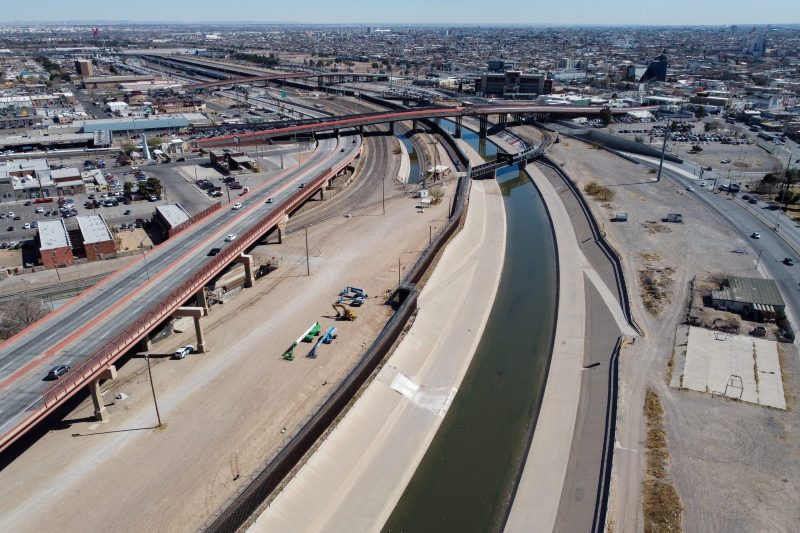
And nowhere is this more visible than in the Southwest. El Paso — my hometown — is a case study in what happens when bicultural identity meets border trade and community resilience. So are Laredo, San Antonio, McAllen and Austin. These cities show us how culture and commerce, heritage and hustle, can combine to drive regional — and national — prosperity.
The rise of Latino and Hispanic-owned businesses is one of the most underappreciated trends in modern American commerce. Between 2018 and 2021, these businesses grew by an average of 5.6% annually. Women-led Hispanic businesses grew even faster, at 7.4%. In Texas, they’re injecting tens of billions into the state economy.
Yet there’s still a gap between population and ownership. In places like El Paso and Laredo, where Hispanic populations exceed 80-90%, Hispanic business ownership still hasn’t reached proportional parity. That gap isn’t a failure. It’s latent upside.
What’s holding things back? Access to capital. Mentorship. Institutional support. These aren’t new problems, but they are solvable ones. The cities and states that solve them first will reap the benefits — jobs, growth, innovation — from the communities already primed to lead.
Culture as a competitive advantage
Economic growth is only half the story. The Southwest is experiencing a full-blown cultural renaissance — one fueled by music, food, art and heritage. From the global rise of Grupo Frontera to the hometown success of Khalid and Becky G, Hispanic artists are shaping the national narrative from border cities once dismissed as peripheral.
Festivals like El Paso’s Chalk the Block and the Sun Bowl, or San Antonio’s Fiesta, aren’t just cultural markers. They’re economic assets. They attract talent, tourism and investment. And increasingly, cities like Austin are folding Hispanic innovation into the mainstream — SXSW is next.
Then there are folks like Bianca Quesada (ARCUS Studios) and Tom Chavez (Murado Entertainment), building media platforms that elevate Latino voices and reshape the way our stories are told. Culture isn’t decoration — it’s differentiation. It’s how regions brand themselves in a global economy.
The Southwest’s position at the crossroads of the U.S. and Latin America gives it an unmatched advantage. El Paso and Laredo handle more than $80 billion in annual trade. The workforce is young. The median age of Hispanics in Texas is nearly a decade younger than the national average. That’s talent. That’s time. That’s long-term economic leverage.
Cities like Austin and San Antonio are already leaning in. Austin’s Economic Development Department supports minority-owned businesses with grants and tailored programming. San Antonio’s small business advocacy program prioritizes diverse founders in public contracts. At the state level, Texas just appointed new leadership to a Small Business Freedom Committee to identify and remove regulatory friction slowing down innovation.
But the biggest unlock isn’t policy. It’s belief. It’s moving beyond a scarcity mindset — “helping Hispanic businesses” — to an abundance mindset: unleashing them to lead.
The opportunity ahead
The upside here isn’t speculative — it’s structural. We know that investing in Hispanic entrepreneurs fuels job creation, builds wealth and strengthens communities. But it also makes America more competitive. These businesses are well-positioned in construction, logistics, energy — sectors prioritized by the Inflation Reduction Act and the reshoring wave.
The Southwest’s cities are living laboratories. El Paso’s logistics startups, Austin’s tech scene, San Antonio’s cultural economy — each is a node in a growing web of innovation that looks, sounds and feels like the future of America.
But none of this is automatic. It requires intentional effort. It requires capital flowing into overlooked ZIP codes. It requires mentorship that reflects lived experience. It requires policies that remove friction, not add complexity.
And above all, it requires us to see Hispanic communities not as future contributors, but as present-day builders.
The American experiment has always been about reinvention. And right now, the Southwest is offering the country its next big reinvention story. Not one built on extraction or speculation — but on inclusion, creativity, and connection. That’s the new growth playbook.
We have a chance to get it right – to invest in the builders already on the ground, already doing the work. That’s the promise of the Southwest. And that’s the opportunity in front of all of us.
Andy Vargas-Hernandez, an El Paso native and first-generation college graduate, is the co-founder and managing partner of No Border Ventures, a venture capital firm investing in early-stage tech startups across the Southwest and Latin America.
The post Opinion: Unleash Hispanic innovation to fuel American dynamism appeared first on El Paso Matters.
Read: Read More