



JUAREZ, Mexico (Border Report) – Fernando Rustrian Herrera had been a fixture at suburban Houston construction sites up until a few days ago.
He had an apartment that he shared with friends and often set aside part of his pay so he could wire money to his mom and grandmother in Guatemala City.
But on a recent morning, a team of U.S. Immigration and Customs Enforcement agents stopped the vehicle carrying Rustrian and coworkers as they approached a construction site.
“Immigration is coming to the worksites a lot. There are checkpoints in every city. They didn’t get me at work; they got me at one of those checkpoints. We were undocumented, so they sent us back,” he said.
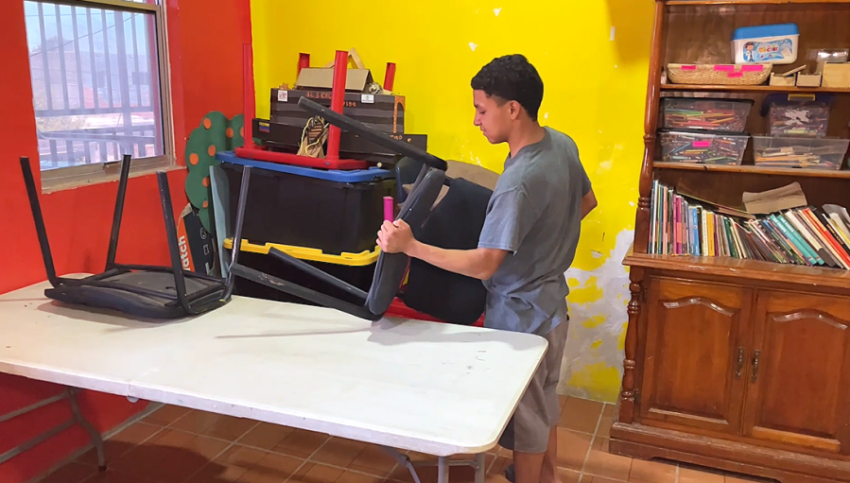
Sitting in the classroom of a migrant shelter in Juarez this week, the 18-year-old man described the environment of fear and uncertainty undocumented immigrants are living in U.S. cities these days.
“I had my apartment in Houston and saw raids. I saw people with residency and those who didn’t have residency deported,” he said. “Some with (court) papers were told to go to court and deported. They all wanted to be (in the U.S.); it’s hard to get there and they throw you out from one day to the next.”

Juarez officials say some 1,500 migrants remain in government and church-run shelters with possibly an equal amount renting rooms or apartments in this sprawling Mexican border city of 1.5 million people.
They say U.S. authorities have deported about 3,000 Mexican nationals through Juarez since President Donald Trump took office on Jan. 20. But they say few third-country migrants like Rustrian are being expelled through here. Most are being flown to southern Mexico or to their countries of origin.
“They generally come in very sad because they had been in the United States for a long time. They had jobs, they possibly had homes and properties. Some even started businesses in the U.S., and they were doing well,” said Enrique Serrano, head of the Chihuahua Population Council that runs Juarez’s Migrant Assistance Center.
Third-country migrants stuck in limbo
Serrano said the Mexican deportees know the land and the dynamics. They quickly find ways to settle here or go back to their families in the interior of Mexico. But third-country migrants face difficult choices.

“Those who remain here from other countries – and could not cross (before Trump) – are in a sort of limbo. They see no possibility to enter illegally like before, nor legally, either,” Serrano said.
That’s because the Trump administration has suspended asylum except in extreme hardship cases, and the U.S. military is now helping Border Patrol seal the border between ports of entry. Migrant apprehensions were down 93 percent year-over-year in April.
Serrano said deportees and stragglers are slowly melting into Mexican border society. It’s a hard life, but they refuse to give up on the American dream.
“Some have the desire to stay in our city indefinitely because they find better living conditions than in their own countries,” he said. “They hope immigration authorities give them permits to work in the formal economy. There is a will from some Juarez businesses to hire foreigners, but they require documents.”
A Mexican CURP, or work authorization, is needed to deduct payroll taxes, get tax credits, and a bank account is required for employees to receive electronic payments.
The migrants’ and deportees’ remaining option is the so-called informal economy.
“They are street vendors, they work in small shops in Downtown and other places where they are paid cash,” Serrano said.

Rebuilding life after deportation
Rustrian admits he’s sad and misses life in the United States. The work, the money and sharing stories of success and hope with his sister in Pennsylvania provided a stark contrast to the crime and bleak job opportunities from which they both fled in Guatemala.
Rustrian has no plans to return to that environment and encourages other recent deportees and asylum-seekers stuck on the Mexican border to not go back, either.
“If you already made the trip, why go back? Going back is a waste of time and money. My opinion is that they stay where they are. The dream is not over just because you couldn’t cross,” he said. “You must persist and work hard wherever you are. Here I am in Juarez, trying to get ahead – little by little but for sure.”

The Rev. Francisco Gonzalez, coordinator of Red de Albergues migrant shelters, said he tries to give support and encouragement to deportees, in addition to food and shelter.
“It makes a strong dent to be separated from your loved ones — whether it’s a young man, or a wife or a husband. They are affected emotionally. Our job is to assist them spiritually and emotionally and maintain hope someday they will be with their family again ,” Gonzalez said.
Unlike many migrants who abandoned their Mexican humanitarian documents when they crossed the border wall under the Biden administration, Rustrian opted to hang on to his Mexican privileges.
“My plan is to work. I have my (documents) ID from Mexico, so I can go anywhere here. I want to establish myself in Mexico while the waters (in the U.S.) get calm,” he said.

Rustrian, who entered the United States at 16, said he harbors no ill feelings toward the Trump administration for deporting him. He got to work and live in America for almost two years and traumatic events he witnessed on his long journey from Guatemala prepared him for the worst.
He said he saw migrants fall from atop trains and get maimed in southern Mexico, and watched two Venezuelan boys perish from exposure in a cold region in Mexico.
“As (Trump) harms us, he also harms himself because all of the things being built in the United States are being built not by Americans, but by migrants,” Rustrian said.
ProVideo contributed to this report.
 Read: Read More