



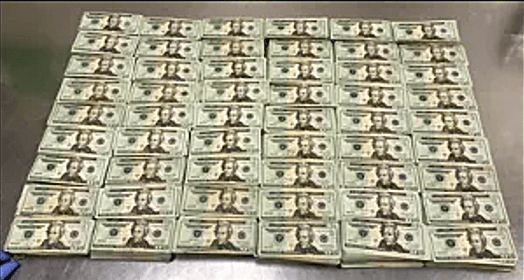
EL PASO, Texas (Border Report) – Border officers have intercepted yet another massive load of cash headed to Mexico.
U.S. Customs and Border Protection personnel inspecting cars leaving the United States over the Anzalduas International Bridge in Hidalgo County, Texas, report seizing $815,475 in bulk, unreported cash “hidden within the vehicle” earlier this week.
The vehicle was a 2025 Honda Odyssey SUV driven by a 44-year-old male U.S. citizen. Homeland Security Investigations agents are investigating the man, the source and the destination of the cash.
“Our CBP officers’ continued vigilance led to this major currency seizure. These outbound interceptions are key in disrupting criminal networks and limiting their access to illegal profits,” Hidalgo Port Director Carlos Rodriguez said following the June 16 seizure.
CBP has seized more than $7.3 million at Southwestern border crossings so far this fiscal year that started Oct. 1. In FY 2024, the agency seized $13.7 million and $14.7 million a year before that.
On May 2, border officers seized $184,000 in cash headed to Mexico over the Brownsville (Texas) and Matamoros International Bridge. On April 8, CBP reported finding $270,000 in undeclared cash inside a Toyota trying to exit the United States over the Hidalgo (Texas) International Bridge that leads to Reynosa, Mexico.

It is not a crime to carry more than $10,000 in cash, but it’s a federal offense not to declare such currency or monetary instruments, to hide them or evade filling out the paperwork for it, CBP said. Failure to declare may result in seizure of the currency and/or arrest.
While CBP questions every driver and pedestrian coming into the U.S. at ports of entry and often searches incoming vehicles, most Mexico-bound traffic is seldom interrupted at most border crossings. However, CBP said the Odyssey was selected by officers for “a routine southbound inspection.”
An individual may petition for the return of currency seized by CBP officers, but the petitioner must prove that the source and intended use of the currency was legitimate, the agency said.
 Read: Read More