



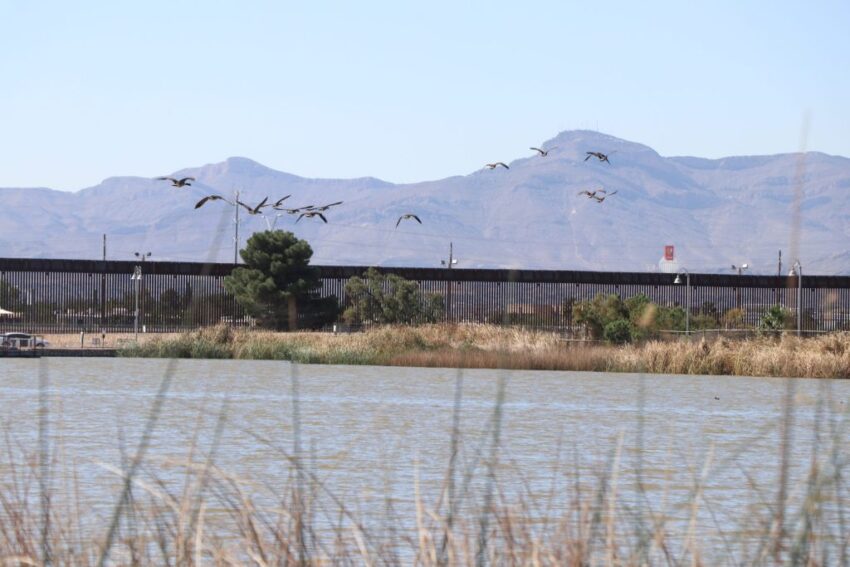

El Paso County officials are ditching a plan they unveiled last fall to drain and excavate sediment out of Ascarate Lake, and instead are proposing some smaller-scale improvements at the 85-year-old lake.
It was disappointing news to anglers who frequent the lake and say dredging and deepening the body of water would make for better fishing and a healthier aquatic ecosystem. Over the last decade, the lake has been the site of numerous fish kills – events in which hundreds of fish die and float to the surface largely as a result of golden algae blooms that choke the lake of oxygen.
County leaders now say the plan would be much more costly than anticipated and that smaller-scale projects will help improve the quality of the lake.
The El Paso County Commissioners Court last year set aside $6 million to drain the 48-acre Ascarate Lake and remove debris and sediment that has accumulated since it was built. The idea was to remove the source of nutrients that fuel the deadly algae blooms.
Events in which hundreds of fish die at Ascarate Lake have not been uncommon in recent years. Between 2018 and 2024, county officials have said there were at least a dozen fish kills at the lake.
However, studies conducted by consultants and researchers at the University of Texas at El Paso found that removing the sediment and deepening the lake would actually cost “upwards of $20 million,” Precinct 2 County Commissioner David Stout said at a community meeting on July 2 in the park’s pavilion.
If the county isn’t going to undertake a large project such as cleaning and deepening the lake to prevent fish die-offs, it should more intensely prioritize basic repairs at Ascarate Park off Delta Drive in Central El Paso, said Henry Aguilar, an angler who runs a fishing group called Make Ascarate Great Again.

He pointed to caved-in walls along the lake shore and poorly-maintained segments of the walking trail. He also said the county should improve signage to prevent drivers from frequently driving the wrong way on the one-way road around the lake.
“It won’t even take much,” Aguilar told El Paso Matters.

Stout and other county employees at the meeting said there’s no guarantee that removing sediment at the lake bottom would actually prevent future algae blooms. Plus, closing and draining the lake could damage the wildlife ecosystem at the park, such as the fish and flora but also the migratory birds that stop at the lake because it’s the only large body of water in the area.
“When we talked to the folks at UTEP, they brought up some major concerns with doing that, because it would change the ecosystem of the lake,” Stout said. “We don’t want to ruin the lake.”
Instead of a big improvement project, the county wants to do smaller-scale things such as plant cottonwood trees along the lakeshore to prevent erosion, install new aerators to improve water circulation and create new, deeper water wells to feed the lake.

Those potential improvements are separate from the park-related upgrades that El Paso voters approved in a bond election last November.
After voters approved Proposition A last fall, the county plans to issue $95.6 million of bonds and use the proceeds to fix up Ascarate and other county-owned parks. The proposition will increase county taxes on a home worth $200,000 by nearly $18 a year.
About $31 million from that bond proposition will fund improvements at Ascarate Park, including a new outdoor festival stage and covered pavilion, picnic shelters, a 3-mile walking trail and pedestrian bridge, and upgrades to the park’s electrical system.
County Commissioners in early 2023 approved issuing $59 million of debt that’s paid back with property tax revenue but that didn’t require voter approval. Those certificates of obligation, as they’re called, is where the money came from for the initial excavation and lake project because county commissioners decided it was essential maintenance.
A county spokesperson said the $6 million allocated last year will still “be used exclusively for the lake improvements and design cost.”
“Future funding is always a possibility, either through grants or County funds,” the county said in a statement. “Currently, there are no plans to issue additional bonds.”

County parks and public works staff said many of the initial assumptions the county laid out when it announced the plan to dredge the lake last fall proved incorrect. For one, the study of the lake showed there’s less sediment at the bottom than previously thought; only about six inches to 10 inches compared with initial expectations of 1 to 2 feet of sediment. And the clay liner at the lake bottom is largely intact, so the county doesn’t need to replace it after all – a change from earlier plans to replace it with a plastic liner.
They also found that the lake is between 4-6 feet deep, much shallower than the depth of 10-13 feet that the county’s technical consultants and Public Works Department assumed.
“That was a big surprise that the lake, it’s not as deep as we anticipated,” said Lidia G. Arias Banach, a civil engineer for the county.
The lake’s water quality was better-than-expected, including healthier than water stored at Elephant Butte, said Tim Fulton, the county’s director of parks and recreation. Unlike most of the other regional bodies of water that serve as reservoirs, Ascarate Lake is entirely fed by wells that draw water from around 160 feet underground, he said.
Still, the county wants to dig new, deeper wells because they detected some phosphates in the lake water that come from fertilizer used on the park’s nearby golf course, Fulton said. And the county wants to maintain a higher water level at the lake than it has in the past.
The phosphates, a likely source of nutrients that spur algae blooms, wouldn’t be able to leach into water drawn from further beneath the surface, Fulton said.
“Our concern is: Do we invest lots of money with uncertain results, or do we invest our money in things that we know will have certain results and improve the water?” Fulton said. “We think that some of these low-cost approaches, quite frankly, might be a better route.”
Aguilar said he liked the county’s plan to create new water wells and to install larger aerators to improve oxygen levels throughout the lake.
“The wells, I mean, they need to be deeper,” Aguilar said. “We’ve seen the kill-offs. It’s terrible.”
Other El Pasoans said the county should commit to a larger investment in the lake. Making the lake deeper – and free of nutrients for golden algae – could create conditions for fish to get larger and for better angling.
That way, El Pasoans don’t have to travel to New Mexico and spend money there to find good fishing opportunities, Aguilar said.
“We want some investment here,” said Fred Borrego, who owns a small business along Alameda Avenue just north of Ascarate Park. “This could be the jewel of El Paso right here. Plant many trees, clean up the lake, make it fishable. You have die-offs and die-offs.”
Borrego rejected the risk-averse approach by county officials who don’t want to tamper with the lake’s current ecosystem.
“We’ll end up with the same thing that we’ve always had,” he said. “We need an environment at the lake to where these fish reproduce.”
County officials such as Betsy Keller, the county’s chief administrator, and others have floated some longer-term ideas such as creating a bait-and-tackle shop at Ascarate Lake, or bringing in coffee or food offerings.
Any timeline on the lake improvements for now is unclear. The park projects funded by the bond voters approved in November will likely be completed by the end of 2029, Keller said during the public meeting.
“Cleaning up the lake and beautifying the lakeshore is part of a larger vision that the county has really put forward,” Stout said, “to improve the park through things like cleaner water, healthier fish populations and safer recreation opportunities for all of us that use the lake.”
The post Citing costs, El Paso County ditches plan to drain, excavate Ascarate Lake in favor of smaller fixes appeared first on El Paso Matters.
Read: Read More