



EL PASO, Texas (KTSM) — The Goose Fire did not grow overnight but still remains at 0 percent containment, fire officials said on Sunday, July 20.
The fire, burning 18 miles northwest of Silver City, has burned 1,845 acres and remained the same size for two straight days, after showing growth throughout the week.

Nearly 180 firefighters are on the scene of the fire, which is burning in the Gila National Forest.
The fire started on July 9 and was caused by lightning, fire officials said.
It is one of two large wildfires burning in the Gila; the other is the Turkeyfeather, south of Reserve, New Mexico.
Saturday, full suppression efforts continued with progress towards establishing of alternate and contingency lines in the southern part of the Goose Fire.
Crews worked hard in the Forest Service Road 4083V (Victor Road), Goose Lake Trail No. 238, Snow Creek Trail No. 233, and Forest Service Road 282 areas.
Strategic controlled burns were conducted in the Goose Lake Trail No. 238 vicinity to secure the southeastern corner of the fire, fire officials said. These operations were necessary to remove vegetation between the fire and containment lines.
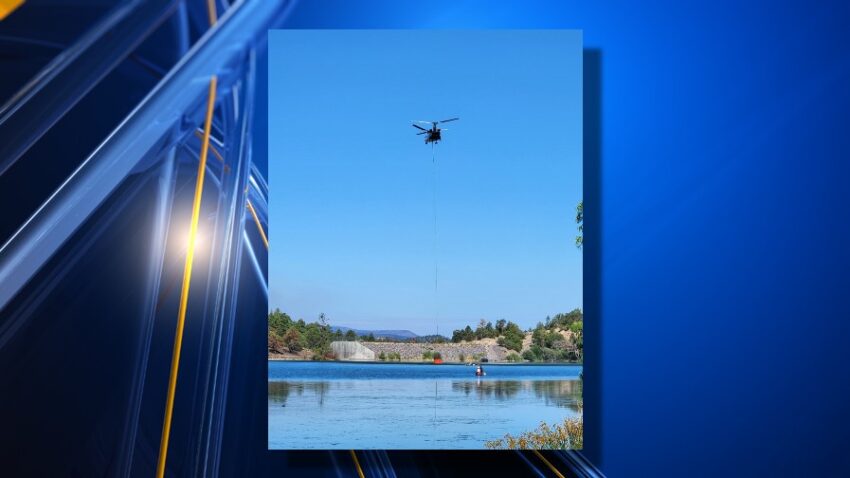
Two helicopters operated throughout the day doing bucket drops over active areas of the fire. Initial attack crews responded to a smoke report Saturday.
Sunday, crews will continue efforts to secure contingency lines in the southern portion of the fire. Fire crews are also working to improve roads in the fire area to increase “critical access,” fire officials said.
Incident Commander Lino Baca said: “Our firefighters have been working in extremely challenging conditions, and I remain committed to their health and safety as the top priority.”
Similar to Saturday’s weather, a chance of rain remains as storm systems move north. Relative humidity values will be around 30% with temperatures in the mid-80s.
Members of the public should avoid the Goose Fire. Members of the public are also urged to be careful when driving throughout the Mimbres Valley because of firefighting traffic and activity.
A new temporary flight restriction went into effect at 6 a.m. Sunday.
You can click here to learn more about the new flight restriction.
Unmanned aircraft, such as drones, pose a serious risk to firefighting and can cause air operations to cease, fire officials said.
Here is a link for closure information specific to the Goose Fire.
Visitors to the Gila Wilderness should be aware that the fire is burning near Goose Lake Trail No. 238, Monument Ridge Trail No. 254, and Packsaddle Trail No. 732.
Smoke may be more visible due to increased fire activity.
Turkeyfeather Fire
The Turkeyfeather Fire, located 22 miles south of Reserve, New Mexico, has burned 24,128 acres and remains at 23 percent containment, fire officials said.
This fire is in the northern part of the Gila National Forest. Reserve is about 250 miles northwest of El Paso. Reserve has a population of about 350 people and is the county seat of sparsely populated Catron County.

The fire started on June 30 and was determined to be caused by lightning.
About 140 firefighters are on the scene of the Turkeyfeather Fire, fire officials said.
Dry lightning Friday evening led to five new fire starts in the vicinity of the Turkeyfeather wildfire. Firefighters in the area quickly responded and all were suppressed, fire officials said.
Crews will continue to secure the new starts on Sunday.
Saturday afternoon, the Turkeyfeather wildfire received widespread, wetting rains, fire officials said.

The increased moisture and overcast skies helped minimize fire behavior, with the fire “primarily creeping and smoldering” in the area southeast of Willow Creek and around Moonshine Canyon, fire officials said.
There is a possibility of daily thunderstorms in the fire area throughout the week, with winds expected to remain light to breezy. There is a potential for heavy rainfall and erratic, gusty winds. Temperatures are expected to remain within the normal range for mid-July.
Here are some helpful links.
For real-time smoke conditions, click here.
For Gila National Forest closures and alerts, click here.
 Read: Read More