



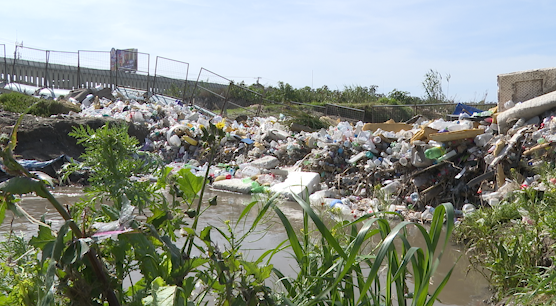
SAN DIEGO (Border Report) — This past rainy season, a trash boom in the Tijuana River kept 500 tons of plastics, trash and other debris away from the Tijuana River Valley and the Pacific Ocean, far exceeding expectations.
On Tuesday morning, Oscar Romo, director of Alter Terra, the non-profit in charge of the boom, gave a tour of the area to members of the Rural Community Assistance Partnership, one of the agencies that helped secure funding for the trash boom.
“It was decades in the making, something fantastic to celebrate for all the partners involved,” said Jennifer Hazard, director of Community Programs for RCAP, which has offices nationwide and is based in Washington, D.C.
Before working with the agency, Hazard was involved in doing research in the Tijuana River Valley and in the city of Tijuana, where many illegal dump sites exist.

When it rains, a lot of trash from these sites washes down canyons and into the river, eventually flowing across the border.
The boom was installed as a way to stop trash from flowing farther into the United States.
“A project like this doesn’t just happen overnight, this was two decades in the making.”
According to Hazard, others who participated in the tour, are considering similar projects in areas where they work.
“I hope they walked away with an important message that it’s all about establishing partnerships, with the city the county, relationships that we built on both sides of the border over more than two decades,” she said.
For the time being, the boom has been dismantled but will be reassembled and operational in a few months.
“RCAP was funded through the California State Water Board to have the booms, deploy them for two storm seasons,” Hazard said. “We were able to extend that to a third storm season.”
According to Hazard, projects like the trash boom are a great benefit to the environment, especially in rural and under-served communities.
“When we have thriving rural communities that have clean drinking water, access to sanitation and solid waste services, it benefits the urban core as well.”
 Read: Read More