




El Paso City Council votes on housing, urban devel | RSS.com
Today, we’re talking about housing, affordability, and our city leaders’ differing visions for how El Paso should grow and develop going forward.
El Paso City Council this week considered a couple of different policies that the city’s urban planning staff said could increase the number of housing units here and also, ultimately, help make the urban core more dense and walkable.
One of the policies would have gotten rid of parking minimums in the historic core of El Paso. Here’s an example of why that matters: the Nuestra Señora apartment complex that’s under construction at Montana Avenue and Kansas Street initially was slated to have 133 apartment units. But requirements to set aside a certain amount of land for parking spots forced the project developer – the Housing Authority of El Paso – to reduce the number of apartments to 80 to make space for more parking. So, that means 50 fewer units of housing available in the center of the city.
The other policy on the table would have made it easier for homeowners in El Paso to build “casitas,” or small housing units, in their backyards. The idea there is to allow homeowners to either rent out units on their property or build them for a parent or relative to live in. That way, that’s one less housing unit occupied somewhere else in the city. Even if only a small percentage of homeowners actually built casitas, the idea is to expand the number of housing units in the city however possible to increase the supply and help lower housing costs that have risen sharply over the last several years.
The big, overarching idea here is to find ways to increase housing within the core of El Paso, and either reduce, or prevent, urban sprawl, which takes a slow, creeping toll on El Paso.
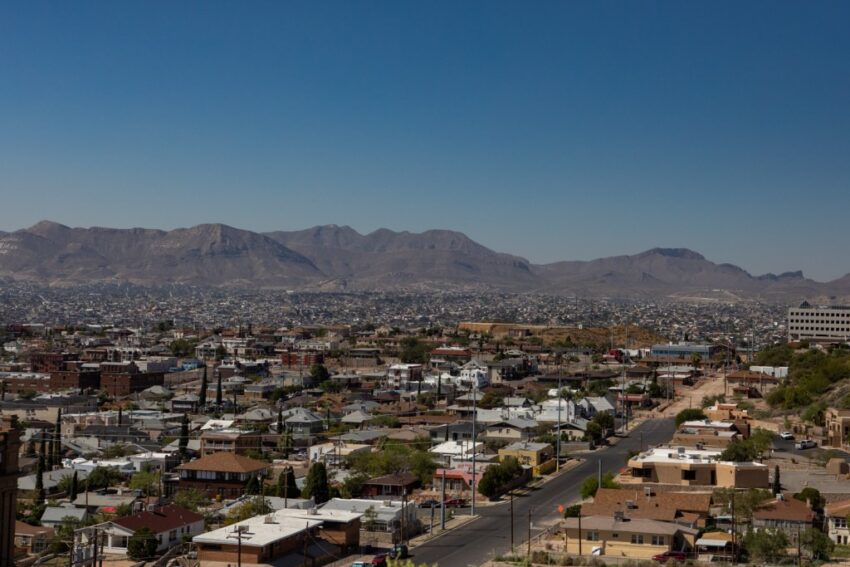
El Paso has sprawled out in the Northwest, Northeast and eastern parts of the city. As populations in outlying areas such as Socorro and Horizon increase, El Paso’s biggest school district is closing schools in the urban core as enrollment declines, leaving empty campuses in historic neighborhoods.
Meanwhile, grocery stores are sparse in lower-income segments of the city center, while big box stores pop up in fast-growing suburbs. Offices in Downtown remain empty, while new complexes sprout up in new-growth areas such as Eastlake or Cimarron.
And as new housing subdivisions pop up on open land at the edge of the city, El Paso Water customers – rather than homebuilders – subsidize that sprawl by shouldering most of the utility’s cost of building out water and sewer lines to new developments at the periphery of the city. That translates to higher water bills for everyone.
Most City Council representatives acknowledge the costs and negative effects of urban sprawl. But (City) Council declined to approve either policy during a meeting this week.
To talk through City Council’s decision and what to expect as far as urban development going forward, we welcome Elida Perez, a senior reporter with El Paso Matters, to the podcast for the first time.
But before we start, I want to mention that this El Paso Matters Podcast episode is sponsored by Tawney, Acosta and Chaparro, truck crash and injury attorneys. Their team of local, seasoned trial attorneys are ready to help if you’ve been injured in a crash.
Elida, thanks for joining me.
Elida Perez: Thanks for having me. It’s a pleasure to be here.
Diego: So, what did City Council decide (at) the meeting on Tuesday? Is this idea of allowing casitas and getting rid of parking minimums still on the table?
Elida: In a way, it is. It’s just indefinitely delayed. So, what the council did after listening to about two-and-a-half hours, at least, I feel – give or take – (of) public comment, the majority of which was people speaking against, they ultimately decided to delete these items.
And, so, what that means is that they’re not off the table completely. They will indefinitely – or, without a doubt, return. It’s just a matter of when. And, so, this way to approach it by deleting the item, there’s not, like, a set time frame. Had they postponed, they would have needed a specific amount of time. And the City Manager Dionne Mack had told them, at that point, it’d be better to just delete so that she can take time to develop an outreach plan – which was part of a big point of contention – so that she can bring that back and the discussion will begin again.
Diego: So, can you characterize some of the opposition that people had described (about) this policy of sort of, “Hey, let’s get rid of these parking requirements and allow people to build these housing units,” why did people dislike it? Or at least the ones who spoke at City Council. What was the opposition based on?
Elida: The biggest point of contention was a lot of concerns that allowing for these changes in the zoning would suddenly disrupt the entire integrity of the neighborhood, create congestion as far as parking goes in some of these areas like Kern, where neighbors have for a long time now had issues with what they believe is too much parking in the neighborhood from either UTEP or concerts or people wanting to go to the Cincinnati district.
The issue with casitas and what they wanted to change – the fear from what I was hearing with the public comment – was that these are suddenly going to start popping up everywhere, that people are going to be building – because part of the zoning change would have allowed more than one bedroom, there’s still size restrictions, but I guess people thought, “OK, if they can do more than one bedroom, then these casitas are going to be popping up with six or seven renters and eight or ten vehicles suddenly taking up space in the neighborhood.”

And also, part of what was originally introduced would not have required the owner to live on the property. And, so, a lot of people were concerned that investors would then come in and buy up these properties, either raze them or turn them into fourplexes, which would then add a casita, which would then bring more and more parking, further exacerbating the situation. So, those are the main points that I noticed people were repeatedly – well, not that people were repeatedly saying it, but that more than one person brought up the same concern.
Diego: Yeah. And I think there was also a perception that the city staff did outreach in maybe more the Downtown neighborhoods, right, but didn’t reach out to people in Northeast or on the Westside or Far Eastside or wherever else to say, “Hey, what do you guys think of this policy?” I think that was something people felt like maybe the city could have been better in the outreach. You think that’s fair to say?
Elida: Yes, that is fair to say. And I think the reason behind that is because this idea of the zoning change was to address the Uptown-Downtown master planning area that they developed and adopted in 2020. So, my guess is that they wanted to focus on outreach within that area since that was kind of the main point. But, in the process, the casitas change would be citywide, the parking minimum changes would have only applied to certain areas within that Downtown master planning area. But, because anybody anywhere in the city limits could then build a casita in their backyard, I think that’s where the misstep was in not reaching out further.
And, so, people in the Upper Valley or in the Northeast or Central or anywhere outside of that downtown core area did not have community meetings. They didn’t have outreach or anything like that as closely as it was with that urban core.
Diego: So, if this policy comes back to council, it would have to be after probably a series of meetings throughout the city?
Elida: Yeah. And I think that’s what the city manager is trying to go back to the drawing board with, is another outreach campaign, if you will. So, they’ll have to decide where, how often, what times and places for these meetings. And they’ll probably have to bring that back to the council before they even start that outreach. Because the council also raised concerns that nobody else had heard about this, and also the approach in which they talked about the ADU changes. A lot of people in El Paso, you say ADU, that’s just an acronym that is meaningless to me.
Diego: Which refers to casitas, right?
Elida: Yes, ADUs: accessory dwelling unit. So, that’s the official term for them. But, here, they’re known as casitas, mother-in-law’s quarters, guest house, that kind of thing. And, so, I know, city Representative Lily Limón brought up that point that, if you were to say in your outreach “Hey, these are about casitas,” more people in El Paso would be more familiar with what that means than just saying “Hey, come to a community meeting about ADUs.” and nobody’s really going to know what that means. So, they need to think about how they’re going to approach that.
Diego: Yeah. One thing I thought was interesting at council was we did hear that concern over and over again about, “Hey, if you guys approve this, there will be these outside investors from Wall Street or wherever that will buy up properties. And, so, then, it’ll be this outside entity that is just going to cram as many people into these properties as possible.
And, so, Representative Chris Canales – who’s really kind of backed these ideas of urban development and so forth – he had this idea that, “Well, we’ll include this amendment to make it so that if you want to build a casita and rent it out, you have to live on the property as well.” And, so, I’m just curious what you thought of that and how that played out?

Elida: Well, I think that would have addressed a lot of the concerns about investors coming in and destroying the neighborhoods and cramming renters into these properties because of this rule change. So, Representative Canales made the amendment to the motions to add that stipulation, because as it was initially introduced, owners wouldn’t have had to live on those properties either in the accessory dwelling unit or the casita or the main house, if you will.
So, he heard those concerns and made that recommendation and made a motion to have that be part of the requirement, that the owner has to live either in the accessory dwelling unit or in the main house. Either way, owner has to live on the property, which would have eliminated that concern about people just buying up properties and renting them out and nobody (lives there) that has an invested stake in the property, aside from the person getting money from rentals, right? Having the owner there would mean that that kind of situation would likely not unfold.
But, I am not sure why that did not pass. I don’t know if there was maybe confusion, maybe there was just an overall, “We’re not going to adopt this anyways.” Maybe the majority of council had already made up their minds, and, so, maybe that’s why it didn’t pass. But, it would have addressed some of the major concerns, so it’s a bit of a mystery.
Diego: Yeah, I was surprised at that, because that was probably the number one concern that a lot of the public commenters raised was about the investors or or whatever. But, it was interesting that Canales tried to address that and it failed.
So, as you were reporting on this leading up to it, you interviewed a researcher with the Urban Institute – kind of a nationwide think tank, I guess – because we’ve seen many cities adopt similar policies to allow for the construction of these casitas and to get rid of parking minimums and things like that. So, this is a movement around the country outside of El Paso. But, I’m curious what the researcher at the Urban Institute told you when you interviewed them, and how that compared to what you heard at City Council?
Elida: It actually was right in line with what he has seen from other communities that go through the process of easing these restrictions. I think that, across the board, what he was saying – and this is Yonah Freemark from the Urban Institute, who specializes in this type of housing research – most people, when these changes are going to occur, that that immediate fear comes out that the neighborhoods will be drastically changed, that a bunch of strangers or outsiders are going to come in and start crowding the neighborhoods, the excess parking, basically everything that the people that spoke during the council meeting brought up.
And, so, it’s not uncommon at all for those concerns to happen within the communities. What he has found throughout his research is that there’s really no evidence to show that those things have occurred. So, even though there’s fears that neighborhoods will become overcrowded and too dense, I guess, I suppose, these types of changes and these casitas are actually not very intrusive at all, because you can only build so large of a casita in your backyard.
Diego: Based on the lot size, right?
Elida: Yeah. And, so, it’s done in a way where it’s not going to change the appearance of the neighborhood. Because, from street view, you will literally, likely, not see any difference at all, because these little casitas are built behind the house in the backyard, right? So, it just…
Diego: It ran counter to what you heard at City Council about the big concerns?
Elida: Yeah. Well, basically, it confirmed what he had said about how these concerns pop up everywhere. But, ultimately, these drastic things don’t end up happening. They actually end up being pretty manageable.
Diego: Yeah. And I think you mentioned you had a personal story about casitas that you wanted to share?
Elida: Oh, yes. So, in my home, the house directly behind me is a duplex that’s been for sale for a really long time, and has a little casita on the property. So, it’s a very small space, and the casita fits just fine. What happened was that this duplex had been on the market for quite some time. I know nobody bought it because it’s literally right behind my wall. And, one time, I noticed that the light was coming on in the little casita and then I saw, like, a mattress covering the window. But, the ceiling fan was on, and the dogs were going crazy because there’s somebody in there. And I kind of peeked a little over and saw somebody. And I was like, this house hasn’t sold, so what is going on here? And I actually did call the police to do a welfare check because I wasn’t sure if maybe this was a squatter situation.
I think that the homeowner rented out the casita just to maybe make some ends meet here and there while this house has been on the market for so long. But it ended up being, yeah, this person was just renting. There wasn’t some strange situation unfolding. It was a very quiet person. I mean, there really was no issue. I think more than anything, my dogs annoyed this poor renter. But otherwise, it really was a non-problem. So, I just thought it was funny that those concerns come up. And even myself, I was like, “Uh oh, what’s going on here?” But it really wasn’t an issue.
Diego: Yeah. And, so, on the next thing I wanted to just touch on here before we wrap up: I mentioned this in the intro, but there was this policy that City Council, about a year ago, considered. And it was, really, a pretty different council. Several new members were elected earlier this year. So, different composition.
But it was this policy to, basically, charge homebuilders who build at the edge of the city in the Northwest and Northeast and Far Eastside, charge them quite a bit more for the fees associated with providing water service to their new developments that this study suggested should be several thousand percent higher – several thousands of dollars more per home in these fees these home builders pay. And the idea being there that, basically, at the moment, El Paso Water customers generally – anybody who pays an El Paso Water bill – it’s a little bit higher because they subsidize the cost of providing water service to these new homes.

And, so, City Council considered this idea, “Hey, let’s raise these fees,” and the home builders showed up and basically said, “Hey, we need more housing, if you implement higher fees, it’ll make housing more expensive and we can’t do this and, so, we need more housing” and effectively they convinced city council (to say) “We’re not going to do this.” And it was a very, very minute increase compared to what the study suggested should be much higher based on what El Paso Water was actually spending to build out these water lines.
And, so, I just bring that up because that was a way of maybe curbing sprawl or maybe making urban sprawl a little bit more – less cheap, basically, for homebuilders and maybe incentivize building in the core more. So, they shot that down. And then we have this other policy presented this week to, rather than counter sprawl, it’s like, “Hey, let’s create more policies to incentivize growth in the core of the city and mitigate the impacts of sprawl.”
And then, again, we see City Council shoot that down. And we hear – Representative Canales, I think, is a big proponent for revitalizing the urban core. And, of course, this is his district here in Downtown, and Representative Josh Acevedo as well. But even Representative Alejandra Chávez on the Westside acknowledges some of the tolls of sprawl. But we still see them not really offering ideas or embracing new policies that would maybe prevent or, at least, ease urban sprawl.

And, so, I just found that interesting that we have the acknowledgement, but not really the actions or policy proposals, I guess, to try to revitalize the urban core. So, anyways, that’s just something that I’ve noticed now in kind of a pattern. And, again, that was a past council. But I just found it interesting that nobody’s really – it’s, like, we acknowledge a problem, but not really offer any ideas. So, that’s just an observation on my part.
But I’m just curious if you have any thoughts on how city council, as it’s composed today, thinks about urban development and how to direct growth in the city?
Elida: I think it might be a little too early to say at this juncture. This was this new council’s first opportunity to actually make a decision that would have an impact on addressing, even in a small way, urban sprawl. Or, at least, trying to encourage a little more in-fill development, which is, as you say, is something that the city’s been trying to work on in different ways, right, with that one that occurred last year.
So, it’s not 100% clear where they’re going to stand at the end of the day, because the public came during the first reading of the ordinance, so a couple of weeks ago was probably the first time that this new council heard the outcry from the public. And even like Representative Limón had said, at that time two weeks ago, “We’re not making the decision right now. We’re going to come back in two weeks and then decide then.”
So, they had the opportunity to review what these changes were going to be. They should have known what was coming and how this would have impacted citywide. Now, whether they got the opportunity to talk about it with their constituents thoroughly is unknown, certainly not with extensive community meetings. But they should have known what the issue was at this juncture.
So, they are asking for a little more time for more outreach. They’ll have another opportunity to revisit this. There’s no doubt in my mind this is going to come back. Like, it didn’t just die on the vine completely. So, they are going to have another chance and we’ll see when they come back with that, what they ultimately decide to do. Because, even though this initial plan was to address the urban core, giving people with existing homes the opportunity to build these little casitas in their backyards would still address – still help to address urban sprawl, if you will.
Like, if people in the Upper Valley, for example – if I were to build a casita in my backyard, then I could use that for either myself if I get tired of the main house, or I can have my dad, if he needs, to come and and live with us and have his privacy. And that’s kind of the idea, right?
So, we’ll see how they decide moving forward. This is probably their first real opportunity to make a decision that will have a greater impact, and, so, we’ll definitely be keeping an eye on ultimately how they decide. Like, whether, put your money where your mouth is and we’re going to make this decision that can make a slight change. It’s not going to end urban sprawl, right? But it’s a step in that direction from what even Representative Canales and the planners and the folks that presented the plan. So yeah, I mean, we’ll see how they do.
Diego: Yeah. And I think we heard one of the city’s main city planners, Alex Hoffman, suggest that this proposal is the first of a set of policies that they’re going to unveil. And I’m not sure if the City Council shooting down this initial idea is going to change how the city staffers proceed.
But, I do think we’ll see more policies, and I’ll be curious to see if maybe we see some of these density policies align with, like, the Brio line so that, alright, if you get rid of parking minimums, it’s aligned with public transit, or something like that. So, we’ll see how that proceeds. But, either way, we’ll be looking to you to be there at City Council and asking the questions.
Elida: You can count on it.
Diego: Yeah. So, anyways, we’ll wrap up there, but appreciate you joining me. Elida: Sure. Thank you for having me.
The post Podcast: What fueled public backlash on city of El Paso’s proposed ‘casita’ housing, parking changes? appeared first on El Paso Matters.
Read: Read More