



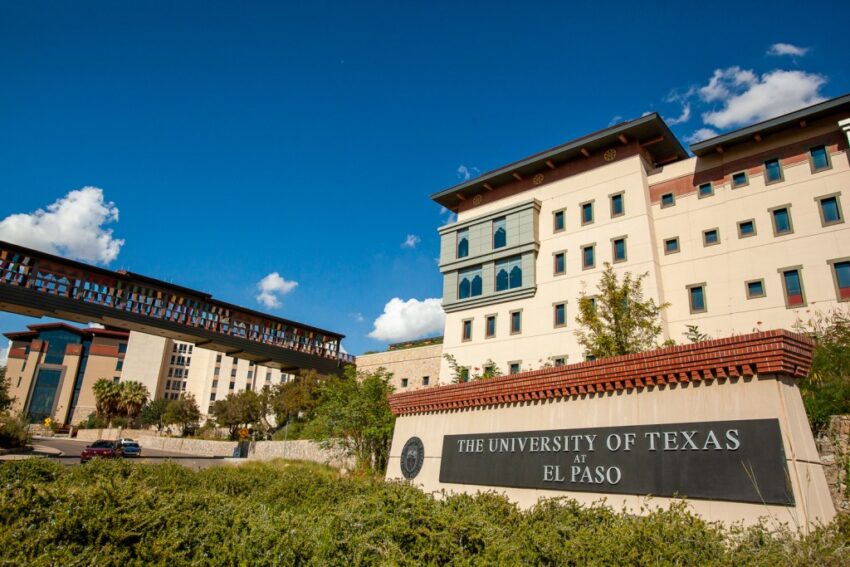

As Texas colleges and universities prepare for changes to their faculty senates on Sept. 1, campus leaders must weigh how such entities will function — and whether they can preserve the independent role instructors have usually played in shaping academic life.
In the case of the University of Texas System, its Board of Regents decided last Thursday to allow its campus presidents to establish “faculty advisory groups” to replace existing faculty senates as part of Senate Bill 37, which became law earlier this year.
These advisory groups would perform similar functions as a faculty senate or council to maintain an institution’s operations. In the past, such duties have included the creation of curriculum, the development of majors, minor and certificates, and to be an independent voice for campus instructors.
The biggest change to new senates would be that they would serve purely in advisory roles when it comes to an institution’s curriculum and policy. The final authority for decisions will go to governing bodies such as a board of trustees or regents.
In recent weeks, the governing boards of El Paso Community College and Texas Tech Health El Paso have agreed to allow their faculty senates to continue as long as they comply with SB 37.
The law’s supporters have said that the bill will improve governance at public colleges and universities, and will support a curriculum that better prepares graduates for the workforce. Opponents are concerned that the law replaces academic expertise with political control when it comes to curriculum, faculty hires and academic policy because institutional presidents would appoint up to half the body’s members, to include the group’s presiding officer, associate presiding officer and the secretary. Other decisions would be made by regents and trustees, who often are political appointees.
The scope of administration oversight in SB 37 was the reason that University of Texas at El Paso Faculty Senate President Bruce Cushing resigned in July before his term was up at the end of this month.
Cushing has been a vocal opponent of the bill’s plan to curtail the role of higher education faculty since its introduction last spring. He said that elected faculty senate officers cannot serve at the pleasure of the president or provost if there is to be shared governance.
“As a former (UTEP) Faculty Senate president, the current policy does not indicate, suggest or provide support for the concept of share governance,” Cushing said in an emailed statement.
LEARN MORE: Texas Senate bill seeks to limit faculty senate influence at colleges, universities
Acting UTEP Faculty Senate President Paul Carrola said that the information from the Board of Regents has just begun to filter down so he had no immediate comment.
Efforts to reach UTEP President Heather Wilson, Provost John Wiebe, or Craig Field, who was to be the incoming Faculty Senate president as of Sept. 1, were unsuccessful.
The UT System Board of Regents in a statement said it will consider policy recommendations that enable faculty senates to be reconstituted in accordance with SB 37. Meanwhile, institutional leaders may form temporary faculty advisory groups that do not have to include past faculty senate members who were in place prior to Sept. 1.
“The advisory groups will enable UT faculty to continue to provide counsel and perform important and valued functions delegated to them by regents’ rules and regulations and institutional policies,” according to the statement.
SEE ALSO: After more than a year, NSF eliminates ‘suspended’ UTEP-led grant
The regents also stressed that their institutions must report the creation of any faculty advisory groups to the appropriate executive vice chancellor.
The EPCC Board of Trustees approved a resolution at its Aug. 6 meeting to continue the college’s Faculty Senate under a new organizational structure, and with an interim policy that goes into effect Sept. 1.
Prior to the vote, EPCC President William Serrata said the administration had worked closely with legal counsel and members of the Faculty Senate to comply with the new law that states that he must appoint the Faculty Senate’s officers and half its members.
Serrata said that EPCC believes in shared governance, but must follow the legislature’s dictates to be in compliance.
“It’s not something that I was eager to do, but it’s what the law is, and so I will comply with the law,” Serrata said. “We will ensure that we’re in full compliance.”
Through a spokeswoman after the meeting, Serrata said that he probably would not announce any faculty member appointments until the start of the new academic year, which begins Monday, Aug. 25.
Albert Burnham, the EPCC president of the Faculty Senate, like Cushing, has been a loud critic of several components of SB 37, an all-encompassing piece of legislation that will bring major reforms to higher education in Texas. He was elected to start his third term this fall.
During the trustees June meeting, Burnham made a five-minute presentation titled “ ‘EPCC and the Terrible, Horrible, No Good Very Bad’ Bill Known as SB 37.”
He called the bill an abomination to democracy and that the rule that only a governing body could establish a faculty senate was excessively harsh. He also did not agree with the new rules of term limits for elected senators, and that senate officers were not entitled to compensation or reimbursement of expenses unless approved by the institution’s governing body.
“I think this is the first step toward tyranny, and when you look at the political climate nationwide, we’re drifting that way,” he said during a July interview in his Valle Verde campus office.
The Texas Tech University System Board of Regents adopted its own rules earlier this month to allow its campuses to have a faculty senate. Among the rules are that the senates must be made up of current faculty. Dr. Abhizith Deoker, president of the TTHEP Faculty Senate, did not respond to a request for comment.
Higher education instructors across the state must deal with SB 37 with diligence and collaboration, said Joseph Velasco, immediate past president of the Texas Council of Faculty Senates. He stressed that he was speaking for himself and no other group or institution.
He advised faculty to learn as much as they can about SB 37 in terms of shared governance so there is no over compliance, and to work with their administrators to ensure that the faculty voice remains valued.
Velasco encouraged instructors to join peer advocacy groups and to participate in events such as the fall meeting of the Texas Council of Faculty Senates Sept. 19-20 in Austin for support and suggestions on how to deal with recent challenges.
“This is a moment for faculty to be informed, engaged and proactive, both in safeguarding compliance and in sustaining the values of shared governance that strengthen higher education in Texas,” Velasco said during a telephone interview.
The Southern Association of Colleges and Schools Commission on Colleges requires institutions’ faculty to oversee the content, quality and effectiveness of campus curriculum. The lack of a faculty senate could affect an institution’s accreditation. Students who attend unaccredited institutions are ineligible for federal financial aid.
The association did not respond to a request for comment.
“We have a lot of question marks hanging over what SACSCOC’s interpretation might be with the reconstituted senates,” Velasco said.
The post UT regents OK faculty advisory groups as SB 37 abolishes senates at UTEP, system universities appeared first on El Paso Matters.
Read: Read More