



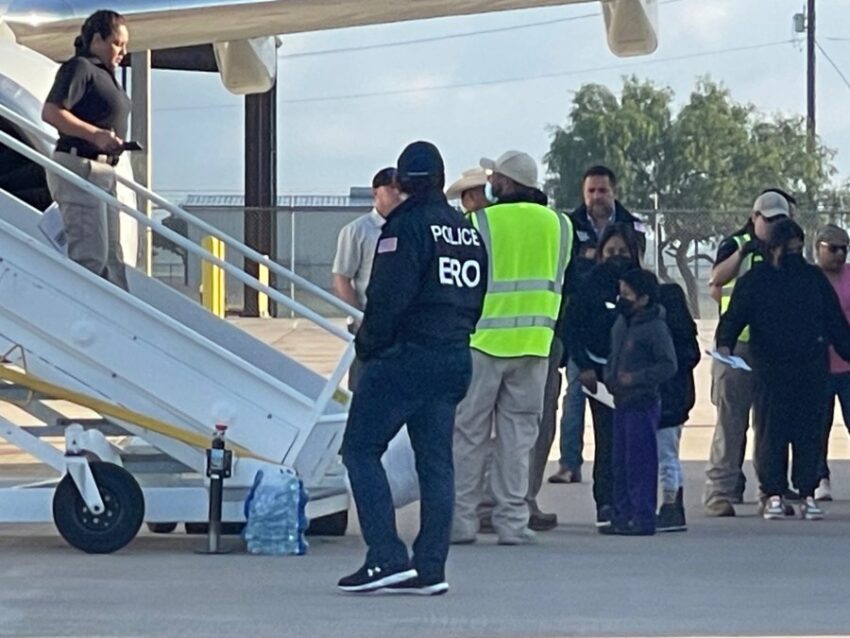
HARLINGEN, Texas (Border Report) — Representatives from an American nonprofit who recently visited Honduras said on Tuesday that the country is not ready to receive hundreds of migrant children that the Trump administration wants to send back.
Workers with the nonprofit Kids in Need of Defense (KIND) who last week visited the Central American country, said Honduras does not have the support system necessary to accommodate hundreds of children who crossed the border into the United States without parents if they are returned.
There are around 400 Honduran children currently under the care of the Office of Refugee Resettlement (ORR), said Jennifer Podkul, chief global policy and advocacy at KIND.
However, there is only one migrant shelter for unaccompanied youth in Honduras able to receive back migrant youth. And the facility only has 15 to 20 beds, she said.
It’s located near San Pedro Sula, a city in the northwest corner of the country, which Podkul says is far from the towns these children are from.
She said there is fear that they will be sent back to countries without families or unsafe environments.
After visiting Honduras last week and speaking with leaders and families, Podkul says there has not been outreach done in Honduras to find where these children might have families, and whether their relatives are still in country or if they are in the United States.
“Nobody has bothered to find out where these children’s’ families are. Are they in the U.S.? Where are they? They don’t know,” Podkul said.
Some sleuthing has been done to find more information on children from Guatemala, which includes speaking with the children and consulates also speaking with the children. This makes for more secure conditions for the children from Guatemala should hundreds of them also be sent back as the Trump administration wants.
“For the Guatemalan children, there had been some legwork done,” Podkul said.
Several lawsuits have been filed by nonprofits trying to stop the children from being sent back, and the cases are pending in court.
Podkul says given the lack of information on these children, she does not believe the Trump administration can call these reunification efforts.
“There is no way the government can justify this is a family reunification effort,” she said.
She and others who toured Honduras said what is happening is reminiscent of family separation from the first Trump administration but with different twists.
More migrant children currently are being separated from their families and coming under the control of ORR because of mass deportation efforts by the Trump administration that have essentially left them alone in this country, said Laura Just, KIND’s senior director for legal protection and international programs.
She says it is leading to a new era of family separation not seen since the first Trump administration.
“What we are seeing now is family separation that is happening in a new way,” Just said. “Their children may have spent most or all of their lives here. There are also U.S. citizen children who are impacted by the deportation of a Honduran and a parent of another nationality. … And these complicate the cases and affect reunification.”
KIND representatives say they and other nonprofits are working to advise all of their children clients of their rights and keeping them abreast of the removal orders.
“Our colleagues have been working day and night, literally working to make sure that the children understand what may be happening, what their rights are, what processes there are, what procedures there are to make sure that these kids have the ability to contest anything that they don’t agree with or that they’re worried about,” Podkul said.
On Wednesday, U.S. Sen. John Cornyn, R-Texas, will chair a Senate Judiciary Subcommittee hearing starting at 2 p.m. EDT on the current unaccompanied migrant children program and whether these children are being placed in properly vetted facilities or with potentially criminal sponsors. The hearing will be livestreamed here.
Sandra Sanchez can be reached at SSanchez@BorderReport.com.
 Read: Read More