



EL PASO, Texas (Border Report) – Most places in Latin America remain relatively safe for Americans to visit. But travelers should exercise caution in three hot spots where gangs control the streets or drug cartels are at war with each other.
That’s the gist of the annual international risk assessment published this week by Virginia-based Global Guardian security firm.
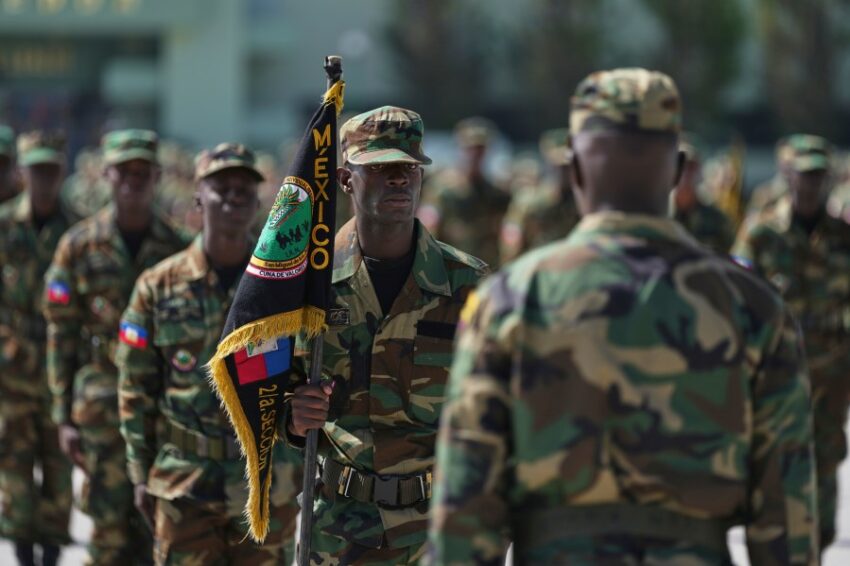
Setting foot in Haiti poses the greatest risk for foreigners or even Haitians returning home to see their families. Gangs control large swaths of land, including cities where they extort or victimize the population.
“Haiti is a failed state in many regards,” Michael Ballard, director of intelligence for Global Guardian, said on Wednesday’s Border Report Live. “You need a significant deployment of personnel to make a difference and to allow the government to function properly there.”

The president of the Haitian Transitional Presidential Council said the violence has displaced more than one million people, is snuffing out innocent lives every day and has become a contemporary “Guernica.”
Just this week, the United Nations Security Council adopted a resolution for a new 5,500-member security force of soldiers and police officers whose mission is to suppress gang activity.
Venezuela is next on Global Guardian’s list with a government allegedly bent on repressing dissent and unable to rein in corruption or stabilize its economy.
On top of that, the Maduro regime is on the Trump administration’s sights following the designation of the gang Tren de Aragua as a Foreign Terrorist Organization. The U.S. military has blown up three Venezuelan boats allegedly heading to America with drugs and may be poised to do more.
In response, Maduro loyalists are holding rallies on the streets and training to “resist” a perceived U.S. invasion – and there are reports their government is getting ready to arm them.
“These three airstrikes on boats with alleged members of Tren de Aragua coincides with a relatively large deployment of some 6,500 troops into the Caribbean region,” Ballard said. “You have U.S. Navy warships there now, part of it is counter-narcotics operations, part of it is sending a message to President Maduro, whom the U.S. government largely sees as illegitimate.”
Ballard said the Maduro regime could be preparing a decree to mobilize the population should the U.S. carry out covert of open military operations targeting Venezuela.

The only exception to nationalistic hostility could be foreign businesspeople coming to invest, contribute or run strategic Venezuelan interests such as its oil industry. These VIPs likely will get a much different treatment than other foreigners or returning ex pats.
Mexico is the third country on the list and the one that poses the most nuance.
President Claudia Sheinbaum insists her country is safe and that the government, not the drug cartels, is in control. As if to prove the point, Sheinbaum on Saturday visited the resort city of Mazatlan in a state where the Sinaloa cartel fractured and its factions are engaged in a war that has left 2,000 dead and 800 missing in just over a year.
“Mexico has a very interesting security dynamic. You could be going to Mexico City, Monterrey – relatively safe cities with issues with petty theft and some violent crime like any large city in the world,” Ballard said.
Cartel strongholds in some cities and rural areas of Sinaloa, Michoacan, Guanajuato and other states should be avoided due to cartel violence and the risk of abduction or extortion. And there’s no guarantee in places in Mexico traditionally considered safe that cartels won’t protest the arrest of a leader by hijacking and setting fire to cars or public transportation vehicles.

“The risks to travelers in other places like the border, Sinaloa, Jalisco, Michoacan the risk is pretty severe in many cases. Think kidnapping for ransom or just collateral damage from some of these large-scale shootings that occur between rival cartels, within cartels or if you have law enforcement trying to carry out an operation,” Ballard said.
The U.S. State Department maintains a “Do not travel” advisory in Sinaloa, Tamaulipas, Zacatecas, Michoacan, Guerrero and Colima. It also urges Americans to reconsider travel to Baja California, Chihuahua, Sonora, Guanajuato, Durango, Jalisco and Morelia.
In Tamaulipas, just across the border from many South Texas cities, “organized criminal activity is common […] includes gun battles, murder, armed robbery, carjacking, kidnapping, forced disappearances, extortion and sexual assault,” the State Department warning states.
Ballard said the violence in Tamaulipas – which includes the border cities of Reynosa, Nuevo Laredo and Matamoros – has waned in recent months as the Gulf cartel has broken up into groups that keep to certain territories or “plazas.” Those groups include the Metros, Cyclones and Scorpions.
The old Zetas are no more but the Northeast cartel (CDN) and the Zetas Old School still maintain a presence to the west of the Gulf gangs.
“By no means are those border cities safe, but certainly there’s been improvement from past years,” he said. “But we have seen what’s happened with the Sinaloa cartel and how quickly it can quickly devolve into violence if there is a power vacuum if someone gets arrested and extradited, that tends to lead to more violence until things settle themselves out.”
 Read: Read More