




A conversation on data center subsidies and economic development in El Paso
Diego Mendoza-Moyers: Today, a conversation on data centers, public subsidies and the future of economic development in El Paso.
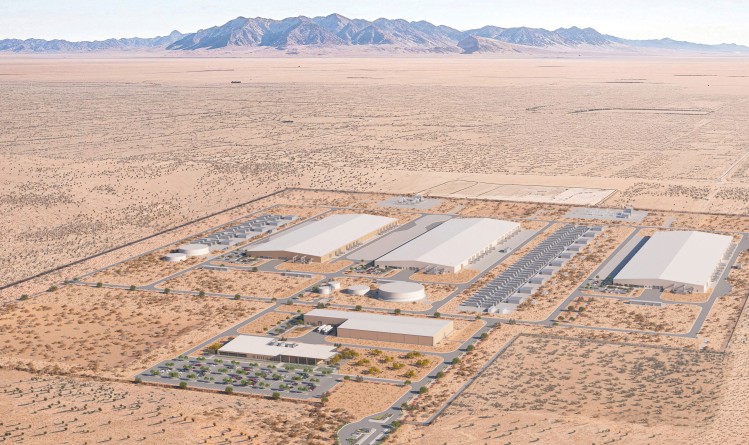
In late 2023, with little fanfare, the city and county governments in El Paso gave generous subsidies to Meta Platforms, the parent company of Instagram, Facebook and WhatsApp, in exchange for the tech giant spending a lot of money to build a data center in Northeast El Paso.
The incentives the city and county gave to Meta mostly include an 80% break on property taxes for decades and $12.5 million to repair the road infrastructure immediately around the data center.
As I look back, the data center deal escaped major scrutiny. Maybe the artificial intelligence boom and related data center build-out weren’t as frenzied and as much of a topic at this time two years ago. In truth, it’s something I look back on as a miss on my part as a reporter. And local organizers and even people working in our local governments have also told me the deal with Meta flew under their radars as well.
Now, in late 2025, the topic of data centers in the borderland is among the major issues facing our region – maybe the biggest one.
To supporters of Meta’s data center deal, the company’s $1.5 billion investment here is a huge victory, something that will boost the tax base in El Paso and have one of the world’s biggest companies establish a footprint in our city. Even with the tax breaks in place, the city’s economic development department has said Meta will still be paying millions of dollars in local taxes annually over the life of the deal. And the data center is expected to employ 100 workers.
But to critics, the subsidies are a handout from a low-income city to a mega corporation that doesn’t need to be subsidized and that will come here and consume, on average, hundreds of thousands of gallons of water per day. For perspective, Meta generated a profit of $2.7 billion in the three months spanning from July through September, and the company is sitting on a $44 billion cash pile.
I’m Diego Mendoza Moyers, a reporter with El Paso Matters. And for this episode of the El Paso Matters Podcast, I’ll be talking with Andy Vargas, a veteran of the technology and finance industries and a managing partner of the venture capital firm No Border Ventures.
Data centers appear to be an increasingly integral part of our local governments’ plan to improve El Paso’s economy and job market. But Andy has been critical of the subsidies that local governments awarded Meta, and he shares his thoughts on what the future of economic development in El Paso should look like.
I do want to note that the topic of data centers’ water and electricity consumption is important, and we didn’t touch on that in detail in this podcast. But check out elpasomatters.org to read a story we’re publishing about Meta’s water usage, which El Paso Water estimates could average 400,000 gallons of water per day.
And before I bring Andy on, I want to mention that this El Paso Matters Podcast episode is brought to you by our podcast title sponsor, Tawney, Acosta and Chaparro, truck crash and injury attorneys. Their team of local, seasoned trial attorneys are ready to help if you’ve been injured in a crash.
We’re also sponsored by the Greater El Paso Association of Realtors. If you’re looking for a realtor or for a property to buy or rent, visit ElPasoTX.com.
And you can sign up for El Paso Matters’ free newsletter and read our reporting on data centers and many other topics at our website, elpasomatters.org. While you’re there, you can also sign up for the inaugural El Paso Matters 9.15K run on December 7th. Registration for the run is open through December 6th.
Now, on to our conversation.
Andy, thanks for joining me.
Andy Vargas Hernandez: Thank you for having me.

Diego: So, before we start, can you just share a little bit about your background and who you are and what you do?
Andy: Yeah, absolutely. So, I’m a 17th-generation Tejano. I’m also a first-generation college graduate who grew up on the Eastside and who was raised by a hard-working family. My mother worked for one of the most iconic manufacturing companies in the ’70s, ’80s, for El Paso, back when manufacturing existed and when fabricas existed on this side of town, of the country, of the line. She worked for Farah. She worked for Farah for 25 years.
And I attribute a lot of her work with, basically her entire life, career, to Farah because it shaped how I thought about economic development and how I thought about the impact that a big company can do for the community. It also helped me understand more about workers’ rights and much of what a binational company is all about, and much of what manufacturing once was to the United States. I am noticing a renaissance of manufacturing, of American dynamism. I wrote a piece for El Paso Matters, which talks more about that.
And as I’ve moved back, right, after 15 years of being away from El Paso, this has very much influenced how I’ve gotten involved with the community and how I think and my perspective. I graduated with a master’s last year, and I returned to El Paso, my hometown, and I co-founded No Border Ventures, which focuses on investing in the Southwest and also in creating regional competitiveness. And my background in those 15 years has been a combination of energy trading, investment banking, capital markets, cloud infrastructure at AWS, and now venture plus civic involvement in the Borderplex.
And I also have served, and I’ve had the privilege of serving on the Regional Renewable Energy Council. I’ve worked with data center-adjacent companies, and I’ve mentored tech founders all over the country and in Latin America. And, today, I helped train some of the top AI labs in the world as a finance expert.
So, all that to say, Diego, I’m very much interested in how do we make sure that the Southwest, right, isn’t just a place where AI gets built, but a place where our people share in the upside?
Diego: Yeah. And I appreciate you going through that. You have kind of an interesting background, which is why I wanted to talk to you about this data center issue and this development of AI and so forth that we’re seeing here.
I guess just to get into it, I mean, can you share your general perspective on particularly the Meta data center that’s coming here to Northeast El Paso and what you make of it, both as a project and also the deal – the incentive deal that the city and county agreed to with Meta. Curious for your thoughts on that.
And I’ll just add, I think it’s an interesting project because I think that there’s a really massive gap between the perception of our elected officials and sort of developers and so forth versus just the public that I think has a fairly negative view of it. And, so, it’s been interesting to see that gap. So, I’m curious your thoughts on the project generally?
Andy: Yeah, absolutely. And before I jump into answering your question, I will say that these opinions are my own and they in no way are representative of any organizations or companies that I am affiliated with.
But, with that said, I think it’s very important to keep context of how this deal originated before we jump into more of the details. But this deal was in large part made by a previous city manager, and a previous mayor and city council, Dee Margo, at the time. And also in large (part) by Governor Abbott, who at the time, we can think of where, as tech companies approached the state of Texas, where did they want a place? And he had a big – he had a big effort to move these data centers (to) West Texas. And, so, we found, as we found data centers in Abilene and Midland in that region, we found one in El Paso.
But the truth is that city officials love these deals, right? But the public doesn’t. And both sides aren’t necessarily wrong. I do think that they’re just talking about different outcomes. And the question doesn’t necessarily become whether or not data centers will be built. The question is how they will be built and where. And those answers can be driven largely by utility commissioners, and we can delve into that. I think we have an outdated policy that could, if updated, could largely benefit the tax rate, the taxpayer at large. We can delve into that later.
LEARN MORE: Meta to build $1.5 billion data center in Northeast El Paso
But I do believe that cities grow through diversified industries. And as we talk about the Meta data center, El Paso shouldn’t chase the deal, right? I think that the deal should meet El Paso’s standards and every city’s standards. And, so, the city is seeing the promise, clearly, the promise of investment. But the public is feeling the pressure on resources, right? And understandably so. And, so, how do you reconcile the two, right? How do you prepare what I think is the next phase? The data center is coming, right? But how do we prepare the community for what’s to come? I think that becomes the bigger question.
And data centers can absolutely help a region, right? They can expand the tax base, they can modernize the grid, they can signal that a community is ready to compete in AI, in the AI economy. But they also come with real costs. They strain power, they require water, and the benefits only materialize if they are structured well and if these deals are negotiated well.
So, I think the key is not to be for or against them. I think that the question here is to be more thoughtful, right, and tie the incentives to actual performance, require companies to fund their infrastructure, prioritize efficiencies throughout the data centers, and make sure that the community sees the real value. Not just the headlines and not just some of the leaders praising a data center and a big name company coming to town. There’s more things that should be touched upon.
But to, I think, first to understand – like, it’s important to understand what are they? And I think a lot of the public may have different versions of what they believe. But for the El Paso people, data centers, as someone who has worked, at one of the last roles that I held, the responsibilities at Amazon and at AWS was the location, the co-location, the design, and the valuation of data centers.
What are data centers? Well, they’re warehouse-like facilities, right, that house computing, and they house networking equipment. Probably every website that you, Diego, and every other El Pasoan uses, anywhere from social media to Netflix to ordering groceries if you do, to using a website, any website, that all is hosted through data centers, right? And they generally have very special infrastructure for cooling, for high throughput networking, for fire suppression and reliable power delivery. And some data centers are the size of large warehouses. And some are as small as just a floor in an office building.
And then there’s some much bigger ones, hyperscalers, some that we will be seeing around the state line of New Mexico and Texas rather soonish, and others built around the country. I mean, you look at Midland and the West Texas region and what Stargate is doing.
But I will touch on these two points, on these two sides, why the praise exists. And, well, it’s because Meta brings large capital expenditures, right? In this case, $1.5 billion. Typically, they do an average of about $2 to $5 billion, and data centers pay for what? Construction wages. The cities rely heavily on the headlines to show momentum. And El Paso has one of the cheapest grid lines, electric grids in the country. And certainly in Texas. We benefit from the fact that we don’t share our grid with the rest of Texas, with ERCOT, that is.
Diego: Sure.
Andy: We have our own independent grid, and, well, that’s an upside to infrastructure development. Jobs, especially – not necessarily software jobs, but the full-time jobs that they bring to data centers are mostly in IT. And they’re mostly in energy management, right? And, to some degree, tax base – to some degree. And I say that because there’s a place in Virginia called Loudoun County where they’re the prime example of how data centers now generate 50% of the county’s property tax revenue. And they’re allowing, basically, large municipal benefits like those to effectively lower the tax rate. However, as we all know, that only benefits homeowners. It doesn’t benefit the lower class and the lower-class renters who are still on the hook for a living situation. But that’s a different story. And there’s a reason why it’s called Data Center Alley, right? It’s a cluster of data centers. That’s not El Paso’s story.
And, so, now what I want to touch upon is the public frustration, right? Residents feel like they’re giving up tax breaks to companies that don’t hire locals and drive electricity prices up. Certainly so.
Diego: Or need tax breaks, right? These high-value companies generating a lot of profit and so forth.
Andy: Absolutely. Right. And there’s also a point of taxpayer exposure from incentive management, right? That’s important. And there’s a misalignment there. Whereas Virginia, the example I just brought in earlier, is now proposing a 14-year customer contract to prevent exactly the type of public risk, signaling that earlier deals may have been overly-generous. And new state revenue for every dollar spent on the exemption, well, it turns out that you lose more than you gain. And that’s true.
There have been numerous studies that show that providing large-sized tax abatements, or, synonymously, tax exemptions, result in a loss for communities. Water and power stress in hot, arid regions like El Paso is very real.
In this case, I know – and I don’t know very much of the details, I wasn’t part of the negotiations or have read any of the documents – but I do understand that it’s running on a closed-loop system. A closed-loop system, you typically just fill up once, right? And the data center is able to treat the water, recycle the water, and use it once again. Yes, and I’d say, there’s definitely pros and cons, a little bit more pros that you’re only able to fill it up once, but people should be wary. I think the most important part is the makeup rate, the rate at which, essentially with the hot summer days, some of that evaporation that happens inside these buildings, any building, the makeup water that is being used, right?
PODCAST: Meta’s El Paso AI data center: Our journalists talk tax break deal, water, energy usage
And, as we know, these data centers use millions of water usage. And El Paso, I mean, as you know, El Paso receives 50% of their water through their annual allocation, through the (Rio Grande) through Colorado and through northern New Mexico. And it flows into our city, into our infrastructure here. And the rest is done through basins like the Hueco and the Mesilla aquifers, right?
We also benefit from the fact that we have a state-of-the-art (desalination) treatment facility, right? I’ve had the opportunity to visit the treatment center and it’s quite impressive. But there’s still more work to do. There’s still more infrastructure updating that needs to be done here. Even if we have some of the cheapest electricity prices per kilowatt in the country, there are still many other projects. Meta, Alphabet, Microsoft, ByteDance, X, and Snap, they spent, just on data centers alone, $61.5 million on lobbying in 2024.
Diego: Wow.
Andy: Yeah. That’s up to a 13% increase from the year prior.
Diego: To overcome public backlash?
Andy: Exactly. Yeah. And data centers aren’t necessarily job-creators in abundance, right? Like, the data center itself. It’s the tertiary and the adjacent industries that are, right? In Meta’s facility, this data center maybe is going to have 15 to 20 full-time jobs expected here in El Paso. But, every tech company, unless it’s strictly carved out, a lot of those jobs become remote. And a lot of those jobs are filled by out-of-towners. That’s the reality. They won’t necessarily be filled by local El Pasoans. That’s a big frustration, of course, for the El Paso people and the people who reside in the Northeast.
I think that there should also be a policy reform by commissioners, utility commissioners, where that regulatory mindset needs to evolve where they allow utilities not to just be cost centers, but to be strategic partners, right, in enabling the digital economy infrastructure. And I think El Paso Electric has done a good job. There’s a fund that’s able to fund and provide capital to many of the city’s needs. But we need more of that, right?
And that is another topic, which I’m happy to cover another time. But, another example, one quick, one more example is like Nebraska. Nebraska is learning from Virginia’s examples. A lot of data centers are going into Nebraska. Now, the state of Nebraska is requiring large industrial customers to pay for their own substations and other infrastructure, as Google did with the Lincoln Data Center.
So, these data centers, there’s a reason why the public is very frustrated. I mean, they require massive amounts of electricity. I mean, data centers are expected to triple their energy usage in a few years by 2028. And ERCOT’s 2031 forecast has jumped to 218 gigawatts, right? That’s half of the U.S. daily demand. Let’s think about it for a second. That’s, you know – it’s the enormity of the situation. And 1 gigawatt, for perspective, 1 gigawatt is enough to power 250,000 Texas homes on a hot summer day.
My last point here, just on the public’s frustration, and as I weigh in on this deal, there’s a problem between capacity keeping up, demand keeping up with capacity, right? And there’s, with data centers being built across the United States, we are entering a very outdated electricity grid. There’s going to be a lot of updates and, of course, restorations and repairs. But we’ve been seeing power outages, right? And perhaps it’s not anything new, but the more we operate as consumers on the cloud and through computing, the more it interrupts services. Power outages have interrupted the services of many companies, Fortune 100 companies, right? Because we rely on supercomputing and because we rely on this type of technology.
SIGN UP: Our free weekly newsletters deliver news like this straight to your inbox
And lastly, inflation, prices, right? Inflation, the inflation engine of the 20th century, of the 21st century wasn’t oil, it’s compute. So even if AI firms pay for connection feeds, the ripple effects inflate steel, they inflate transformer (prices) and capital across the system. And some say that data centers might even lower electricity by spreading fixed costs. But that logic belonged to the 2010s, a decade, two decades ago, when the grid had more capacity. It simply doesn’t anymore.
Diego: Yeah, that’s a comprehensive answer. And I’ll just – on the electricity point, I thought it was really interesting (that) El Paso Electric kind of set up this special rate for Meta’s data center. And, of course, El Paso Electric has said consistently that all of the costs that are created by Meta showing up here, that they’re covering them and they’re paying El Paso Electric for every bit of infrastructure.
And the PUC or, one of the public utility commissioners made this point that, like, that there’s a concern that, potentially, El Paso Electric builds all this stuff to serve Meta and the substations and poles and wires and so forth. And then, El Paso Electric charges the rest of us for it, right? And, so, the PUC flagged that and said, “Hey, you have to provide evidence in some form that ratepayers aren’t subsidizing Meta.”
So, it’s interesting that that’s a real key concern about, “Hey, we want to welcome data centers, but do it in a way where you’re ensuring that the costs are borne by the company that’s building it.”
I guess I’m just curious your thoughts generally on the kind of the AI development race we’re seeing. And it’s interesting how we’ve – El Paso, this isolated city, has sort of landed within this frenzy, right, of AI with Meta, but also this Project Jupiter that’s part of the Stargate initiative, right, that’s Open AI and Oracle just across the state line here. But just curious with your experience and just kind of your thoughts on the really big race that we’re seeing with the AI development?
Andy: Yes, I mean, I think on the macro side, we are in the beginning innings of a running race against two major superpowers, the United States and China. And I think it’s important to keep that into context. Because the first power to find the breakthrough into supercomputing will hold a lot of power over the world. And the threat alone of supercomputing is very real. I mean, it threatens our banking system. It threatens our government. It threatens everyday consumer life, right?
And it’s to no surprise that data centers are being built across the country, right? It’s a necessity to be able to break through that chasm of this AI frontier. And, AI isn’t necessarily software, per se. It’s infrastructure, it’s energy and it’s compute. And, so, there’s a reason why these hyperscalers are racing for GPU capacity, right? You see Microsoft’s big $120 billion spend. Project Jupiter is another great example, Meta’s $72 billion project, and Google’s $25 billion project in the PJM market down on the East Coast of the United States.
These data centers are requiring more power and more cooling than traditional cloud. When we think of the early innings of cloud when Rackspace was among the pioneers of cloud infrastructure, an amazing job. And how much, since Rackspace and then the adoption of AWS moving into cloud and then Microsoft and, the other big tech companies, how much they pushed, right, the frontier of cloud infrastructure. Today, you know, we’re in the world of AI and compute.
And, so, AI is causing a redesign everywhere, right? Operators are ripping up all their old plans, because new GPUs, right, have three to five times the density, a higher density. And so, yeah, I do think at the macro level, we are in a race between us and China. And AI has started to break the grid, not metaphorically, but literally.
The demand is growing faster than our ability to generate power. I think it’s probably an opportune time to, when we think about how you power data centers, we reintroduce the world of nuclear energy. It’s not necessarily too far-fetched now, given our necessities and given how much more safe nuclear energy and how much more development has poured not only through capital, but through technological development for nuclear energy, that could potentially be a source outside of renewable energy for these massively massive consumers of energy.
And at the end of the day, there’s a bottleneck, right? There’s a bottleneck that exists with power, people and with policy. There’s not enough capacity. There’s not enough talent to build, to commission and operate because the people carrying the subject matter experts, they’re in one place. They can’t necessarily be in all places at once. And to train people, to train a workforce, to be able to basically pass down all that knowledge and to train someone very well to run a data center takes time, right? And how many of these are being – they’re popping up every month?
Diego: A new headline almost every day of a $50 billion investment in data centers here and there. Yeah.
Andy: Exactly. Yes. And, there’s a negotiation piece. There’s a lot – many site rejections are happening, because AI workloads have changed design requirements midstream. Do you know what these companies do? I mean, these tech companies, they reach out to municipalities, right? Less so metropolitan cities, but more suburban.
Diego: Kind of like with Doña Ana County over here.
Andy: They call them and they try to negotiate. And simply, if their needs are not met, they simply hang up the phone and move on to the next municipality until they reach a municipality that is willing to work with them. That’s the fact of the matter.
Diego: OK, so I appreciate that. And I know you mentioned earlier that El Paso shouldn’t go chasing deals, right? And that we sort of should ensure that any deal has certain benefits for the city and is well-negotiated and so forth.
I just wonder, what do you think a good deal looks like for El Paso when it comes to a data center coming here? And I mean, I think the reality is we’re probably going to see more data centers in our region, right? Maybe not right in El Paso, but in our region, we’re going to see more of these. And I guess I just wonder, what does a good deal look like for our region for a data center? Is it caps on resource usage? Is it less-generous tax benefits? I just wonder generally, kind of from a high level, what you think a good deal looks like for a data center?
Andy: Yeah, absolutely. I think, I mean, here are my thoughts. If a data center wants our power, our land, our water, they should also invest in our people.
So, it’s important for us to look at whether the deal created real, long-term value, public value, that is. We all recognize the value of infrastructure in the U.S. We see it, we live it. We drive by it every day. But data centers aren’t inherently good or bad. They’re infrastructure. The question is, does a community get a fair return for what we’re giving up? And as it relates to El Paso, I think we must diversify the economy, right? We must strengthen our neighborhoods and invest in our infrastructure and help build and retain local talent.
Through that lens, data centers can play a role. But they shouldn’t define the economic strategy of a border city like ours. And, so, we need to negotiate from a position of clarity. We need smaller and shorter incentives. We need real accountability. We need local hiring, water and energy safeguards, and meaningful participation from local firms in construction, in operations.
And if we’re really, truly talking about what moves the needle for a region like the Borderplex, it’s not the single mega-projects. It’s ecosystems. It’s the integration and the participation of all the community to be incentivized and to participate and build an ecosystem where everyone participates. We can think of advanced manufacturing tied to nearshoring, logistics, binational supply chain, AI-enabled industries, and most importantly, innovation and entrepreneurship.
And I say this because local entrepreneurship can generate the strongest long-term economic returns because the jobs, the wealth, and the innovation stays here. So, a better deal has four pillars. A better deal has four pillars.
Less – from the get-go, less tax abatements. We need to reduce the amount, the years of abatements, in other words, tax exemptions. We need to increase clawbacks. We need to tie incentives to energy efficiency and water recycling and local workforce.
Research shows that tax abatements, as I alluded to earlier, do not work to recruit businesses and employers. They are a net-loss for communities. One study from North Carolina State University found that almost all corporate tax incentives programs left states financially worse off. Economists and public policy experts advocate for a re-evaluation of community reliance on abatements.
This is something that I touched a lot upon in Wharton, where our classes on urban development and policy were touched upon. Tax abatements were a huge no-go. NYC, for example, then experienced large losses due to tax abatement strategies. Then the next one was places like Houston, which lost over $2 billion in the same six-year period. And then you had other places like Chicago, other cities within the state of Ohio, and other places in the U.S. that left them with high losses every year.
And, so, I think we need to – we need just a better approach to redirect these funds.
Secondly, we need to require a “bring your own power” (policy). And as energy economists like (Abraham) Silverman noted, long-term PPAs with utilities, on-site clean power, financial collateral, and demand-response participation. Why does this matter? It matters because it protects the ratepayer, it protects the grid, and it gives us predictability.
And third, there is, we need to require water reclamation. There needs to be mandated closed-loop systems. The one that we’re specifically talking about for the purpose of this podcast has one as far as I know. But we also need to require investment in regional water infrastructure, the desalination, the reuse, brackish water, right, treatment, all those things. And as part of its companywide goal, I saw this excerpt on Meta’s website to be water-positive by 2030, Meta will restore 200% of the water used by data centers to local watersheds. Diego, I don’t know where they get that number from. I would love to see the explanation, the breakdown of how do we get to 200%.
Diego: I have a lack of clarity on that as well.
Andy: You and I (both). Yeah. And I mean, another thing is we know that they have an excellent PR team, right? Tech companies do. But aside from that, what I’m more focused on is the local benefits, right? A data center workforce academy with EPCC, with UTEP, would be amazing. I mean, annual community investments for fund allocations, local procurement commitments, for companies like Ferveret, which are happening. And it’s a good thing, right? We’re incentivizing a company that’s making data centers more efficient.
Diego: Yeah, which is a San Jose-based company. The city got some incentive or offered some incentives to come kind of set up shop here.
Andy: Absolutely. And further education to the public about data centers is critical. I think in any major city, when a major bill or a major plan or project is about to happen, they always start three to four months early in educating its constituents about the project. We need more of that, and we needed more of that because I felt like once we heard about the Meta (data center), it kind of went rogue. We didn’t really hear about it until now.
And of course, there’s going to be public frustration, right? We need to start early and we need to be able to educate and hear our constituents, right? And lastly, for those that are seeking to learn more about data centers, there’s a fantastic podcast called the Hawk Podcast. I don’t want to butcher that. It’s called the Hawk Podcast. And that is an excellent source for data centers to better understand the changing conditions within data centers happening not only at the state or national level, but the global level.
Diego: Yeah. And I think, there’s been a change in sort of the water efficiency of some of the data centers and kind of changing dynamics within them. So, I know what you mean.
And you kind of alluded to Ferveret, right? And this company that makes data center cooling solutions that the city’s trying to bring here. And I think the city is, to some extent, trying to create an ecosystem around data centers where not just the facility itself, but companies that come here and service it or work with the data center company or whatever. So, I think that’s an interesting strategy.
You made the point that can’t be sort of the sole strategy for a city on the border to just rely on data centers for economic development. And, so, I wonder, what you think is sort of the – could be a driver of economic growth and the tax revenue and the better job opportunities that we all want, right, higher wages? And I guess kind of more broadly, like, do you think that economic improvement in El Paso is going to rely on bringing in outside companies. Do you think it’s more trying to foster innovation and entrepreneurship?
Which is much easier for me – it’s easy for me to say that, right, but to actually make that a reality – I don’t know, do we just try to cultivate like, quant traders or something? Like, I don’t know, right?
But I wonder your thoughts on sort of, as we all look and talk about trying to improve El Paso’s economic situation, is it more, “Yeah, let’s bring in these big corporations,” or is it “Let’s try to do this from within and improve educational outcomes and entrepreneurship and so forth?” Or is it a combination of both? I just kind of wonder, again, and like I said before, it’s a kind of a lofty question, right? But I wonder what you think about the ideal economic driver for El Paso going forward?
Andy: Wow, I mean, I do think that is the $1 million question. And I mean, it’s a great question.
Look, I will start off by saying this. I think that I do want to make a point that in the short run, El Pasoans are getting squeezed, OK? And they’re getting squeezed economically, and that’s much of the frustration by the people. Higher property taxes, higher prices, regardless of the advent of tariffs, we were already on the rise for higher prices. higher utilities, inflationary periods. And yet, you know what hasn’t changed? Our wages.
People are working to go to school and they’re going to school to work, to find a job. It seems like to me the totem pole has moved further up because you have – it’s a problem, not just in El Paso, but across the country, where people are receiving an education, but they’re struggling to find a job. They may be moving back to their hometown to be able to live with their parents because, one, they’re not finding a job, and they don’t necessarily have the means to make it on their own, right?
I read an article in The Economist, or I think it was the New York Times, that spoke about the average age for first-time household buyers has been increasing steadily over the years. We’re now at 40 years old. That is, 40 years old is the average age for first-time households in the United States.
Diego: Compared with maybe early 30s or late 20s, a couple of decades ago, probably, right?
Andy: Absolutely. And there’s a big – I mean, you have your tio, tias, your grandma, your grandparents, who were able to afford houses for a fraction of the price that today we’ll be paying for, right?
So, minimum wage hasn’t been able to keep up with inflation, that’s true, there’s a big disproportion. And it’s barely made even a dent, right? Some people are working multiple jobs, right? Some people are choosing whether to work just to make a living to pay the bills versus investing in themselves, right? That’s huge.
What I think about the approach of what a good economic development plan looks like, it’s advanced manufacturing. It’s in cross-border supply chains. When you touch nearshoring, when you touch military and the aerospace industry that’s been highly talked (about), right? It’s been circulating a lot. I like that. It’s growth and it’s tailored to students at UTEP who can be our next pipeline for those jobs.
Diego: Relatively high value jobs, right?
Andy: Relatively high value jobs. Mobility for manufacturing, semiconductor-adjacent logistics, AI integrated industrial capacity. I like that industry, or those industries that is.
The second one is raising the bar on our quality of life, right? Our quality of life infrastructure. So, for El Paso, that means smart water policy. That means mobility and connectivity. That means a neighborhood revitalization. We need that in El Paso. You know, I love the – I’m a big Eastside person. I grew up on the Eastside. The Eastside has been one of the fastest growing neighborhoods in the city. Can we provide more interconnectivity and more hubs within the city and revitalize our neighborhoods, right? That’s important, you know? As many people start to commute, and where you start to see the Amazon warehouse brought in a form of digital infrastructure, but you know what it also created? It created a workforce housing that was near the job. The world of Eastlake, the world that expanded that’s outside of El Paso’s true parameters, but it brought look at the growth and development. It looks like a totally different city.
Diego: Sure. A lot of really nice homes and successful businesses. I mean, I think we saw Elemi, the kind of fancy restaurant from Downtown move out there.
Andy: Move out there, right. And we need more of that. You know, we need to reinvest in our neighborhoods, right? We need to reinvest in our experiences. Look at what San Antonio did. I mean, right now, with the latest mayor, newest-elected mayor, Gina (Ortiz Jones) a little bit of a riffraff between her and city council members about the Spurs Arena. This plan of taking, approving the San Antonio Spurs arena into downtown, I think it’s a good idea. Why? Because it creates the experiences that will incentivize the consumer to spend more time in downtown, to spend more money in downtown, and to have an experience where after work you can go grab some appetizers, a happy hour, you can go to the game. When you leave the game, you can have dinner and drinks with your friends and family. That’s a full experience for the afternoon, for the evening. Right?
So, quality of life is huge. And San Antonio was very smart about that. San Antonio in the ’80s and the ’70s was a town that was mostly led by the military and tourism. And they were very smart in developing and bringing Toyota.
Diego: And all of the suppliers for Toyota as well.
Andy: Look at the effects that it had. Today there are 20 Japanese companies in the San Antonio and the surrounding San Antonio area that employ 9,000 people. Huge, huge. So, that’s why, I said that you can win, you can do good and you can do well.
And my last point is about talent retention. If we can keep – I, unfortunately, or fortunately, I’m a product of El Paso who boomeranged, who is from El Paso, left, and is returning. And I have much of a different perspective. I’m very fortunate from having lived in places like New York and Philly, places like Seattle and San Francisco, and everywhere in between and abroad, where I did grad school, where I did my undergrad, away from El Paso.
But there is an opportunity for the students that come to El Paso, right, from the border to graduate – talented students, driven students, right, to come get educated at a great institution like UTEP is. For EPCC graduates to also participate in the economy, and for NMSU, even our local allies, right, our local friends, regional friends, to also do well and to fill in roles here within the region.
I had the opportunity to judge multiple competitions for NMSU, and I always walk away impressed by the caliber of the engineers, of the students, and how driven they were. And I think we can attract better investment experiences, opportunity, better experience, experiences like the one discussed with San Antonio in that model for the people of El Paso. If our population grows and people stay here, right? And there’s several people working to tackle that same problem.
And lastly, I think there’s a great opportunity that exists for EPCC. A lot of people focus on reinforcing UTEP, on reinforcing the medical school, which is an absolute smart idea, and potentially bringing in a law school, right? But I would love to see a world where EPCC is targeted and revitalized because Austin did a phenomenal job reinforcing their community college and creating a pathway for advanced manufacturing graduates. So they train Austin Community College students on the next frontier of what advanced manufacturing is and what this higher level technology is all about. You look at places like San Antonio, who has arguably the best community college in the country.
Diego: And a whole network with the Alamo Colleges.
Andy: Exactly. These institutions are critical. Why do I say this? They provide the opportunities for those with lower income. And they can provide a pathway for, if AI is coming into town, right, and there will be more data centers built, which is the truth, right? Can those students that go through the pipeline, the EPCC pipeline, rise with the tide that AI will bring? A redesigning of an advanced manufacturing (program) or an AI component for that community, I think would make a big change.
Diego: Yeah, I appreciate you laying that all out. And I have one more question for you, Andy. I appreciate this time.
Before I ask it, though, just give me 30 seconds. Do you think that the deck park idea could be El Paso’s San Antonio downtown arena?
Andy: Wow, great question. I haven’t done much of my homework, about the deck plaza to give you, like, a confident answer. But I will say this. Cities, Tier 4, Tier 5 cities, just like El Paso, in order for them to graduate and become your Tier 2, and eventually it would be amazing, right, to become something much larger, need convening spaces. But again, I would probably apply the same, the same model to the sky deck. The negotiation to a sky deck has to be one with discipline and it has to be one that doesn’t squeeze the El Pasoan.
I like the idea when you have friends visit El Paso, to have gathering places, right? Could the sky deck be that, the deck plaza? I don’t know. Maybe. Possibly. And I see, of course, there would be some great minds working on it where you could have all the amenities and it could be a really very entertaining place to bring people, especially after a ball game, to attract more people into El Paso –
Diego: Spur some housing demand?
Andy: Yeah. I think, and especially when in this Borderplex, we’re talking about 2.6 million people, right? Roughly. It might be chopping the population, but between Juárez, between Las Cruces and El Paso, that’s sizable, right? And you know what I would love? I would love a professional sports team. But to get to that point, you know, that’s an experience. That’s an arena. We would need an arena, right? An arena can be converted into massive, state-of-the-art, concert venues, right? And we could do many more things. But we need our population to grow. We need our baseline average household income to grow. We need to fix housing. We need several things. And we need a talented workforce that can then, in turn, help the economy.
Diego: A lot of things.
Andy: A lot of things. But we’ll get there. We’ll get there, right? I mean, there’s a reason why the city has these 5-, 10-, 15-, 20-plus year plans. But I am optimistic that we get to have much of the luxuries and much of the entertainment that we see in other parts of the country.
Diego: Yeah. And just last thing here, Andy, I’ve taken up more time of yours than I wanted to, but I appreciate this.
So, you wrote an opinion piece that we published on El Paso Matters that you mentioned, too, that you said that to fuel American dynamism, Hispanic communities, especially in the Southwest, need to shift from a scarcity mindset to an abundance mindset. And that stood out to me.
We’ve heard of the abundance movement, right? And just one anecdote: With the Project Jupiter project up in Doña Ana County, I went to a vote on that in Las Cruces, and the executive who was kind of this front company, I guess, BorderPlex Digital Assets, kind of the guy that has to answer the questions and stuff. This guy, Lanham Napier, used to be an executive of Rackspace. So, he’s there, and he’s taking a lot of questions and criticism, right? And, so, afterward, I went up and talked to him.
And in just a moment, we had a short conversation, but he pulled out of his bag the book “Abundance” by these writers, Ezra Klein and Derek Thompson, that’s kind of advocating for building more things and more housing and energy infrastructure and all these different things and cutting red tape and all this stuff. And, so, to me, it was just a little bit of insight into the mind of this guy involved with bringing this huge data center here that’s obviously very controversial. And, so, it just got me thinking about this concept of abundance. And I think the tech companies think of like, “Hey, let’s build things and artificial intelligence will bring a world of abundance” and all these things.
And, so, I thought it was interesting that you were kind of talking about trying to shift the mindset similarly, I guess. So, I just wonder if you could kind of just opine on that and should we embrace this idea of abundance? Should we sort of welcome these data centers with the, as you’re saying, kind of some of the strong negotiating and strong terms and all that? And yeah, I just wonder, is that the path to a better life in El Paso, do you think, is kind of embracing this abundance mindset?
Andy: Yeah, no, hey, first of all, well, thank you. Thank you for allowing me to create an op-ed. I think it’s a very important topic. And secondly, there’s more to come. I think it’s important for El Pasoans to be more educated. And as someone who’s lived in these different parts of the world and parts of the country, we have a really good thing here going and I think we can continue to build from it.
I think where there is a middle path, I think that this is just a start. And I know that many El Pasoans feel like they’ve lost a battle with this data center, but this new age has just begun and we should welcome the future, but shape it responsibly. And I remain optimistic about the new possibilities.
I mean, I’m an optimist, I’ve always been an optimistic person, and I don’t think that that’ll ever – I won’t ever be any different. But I remain optimistic about the possibilities of helping take shape. I think El Paso and this region is at an inflection point as we think about a renaissance of manufacturing, as we think about a renaissance of industrialism and American dynamism for the city. And I think that together we can build faster and stronger communities. And, so, my sincere hope is to see more of our generation and newer generations be involved and do good for El Paso.
In terms of abundance, abundance doesn’t necessarily mean saying yes quickly. What I meant with abundance, it meant belonging at the table with the leverage to shape the deal. An abundance mindset is agency. It’s investing in productivity. It’s building things that last. It’s negotiating from a point of strength and believing that the region has leverage and not desperation.
And how would I apply abundance to data centers? I would say that we don’t necessarily reject them outright. We need the compute to fuel AI, to fuel this race, the defense modernization, the biotech, the manufacturing automation. We need those things. But don’t give away the store. Negotiate like a region that knows its value. Land, talent, proximity to Mexico, renewable potential, cross-border supply chains, those things.
And should communities reject these deals? I don’t think so, but they should absolutely insist on renegotiating terms that currently favor the company far more than the public. They should insist, as we spoke about, the local workforce investment, the grid protection, the water protection, smaller abatements, more transparency, which I would love to see on these deals, more workforce upscaling.
There’s a great organization here in town called Tech Frontier that is building on this very same mission to upscale and rescale our workforce. There’s a company, Ferveret, like you mentioned, who was recruited to come to El Paso, built by former NVIDIA engineers and MIT Ph.D.s who operate out of the Bay Area. And today they split their time between San Jose and El Paso, down at the Innovation Factory adjacent to the airport. What they’re tackling, to cool systems that directly inject liquid cooling technology into the racks to minimize the increase of entropy at these racks, is super important because that optimizes what? It optimizes our electricity and it optimizes their performance. It’s companies like those. They have hired, I think, about 10 El Pasoans. Their head of operations is a Ph.D. from UTEP. The plan is to hire 10 and 20 more El Pasoans.
That’s job growth. And that’s job growth directly for the people of Juárez, the people of El Paso, the people of Las Cruces. So, at the end of the day I think what matters is the discipline of the deal, the fairness of the incentives, and the ecosystems that you build around them. That’s the right approach, a measured approach, a disciplined negotiation, and a broader vision. Use data centers as a foundation, OK? And build the companies around them, the workforce that feeds them, and the infrastructure that supports them. If we do that, I do think that El Paso will be among the cities that shape the next frontier of AI-driven growth in the Southwest.
And for the Southwest to rise, we need to build things, data centers included. But we must build them on our terms, with our people in mind, and in ways that expand the economic capacity instead of straining it for the average El Pasoan. The question really isn’t whether or not data centers are good or bad. The question is whether we’re negotiating from scarcity or abundance.
Diego: Well, we’ll leave it there, Andy. I don’t want to trap you here in our office any longer, but I appreciate that answer and just the really thoughtful commentary and discussion on this issue that I think has become quickly one of the most important issues facing our community, right? Whether we should welcome these data centers. Do they pose a threat to our resources? Are they good for the economy?
All these questions I think are in the minds of a lot of people. And, so, I just appreciate you coming on and talking with me, even if I kept you here longer than I wanted to, to kind of talk through all this.
Andy: My pleasure.
Diego: Cool. We’ll leave it there.
The post Podcast: We discuss Northeast El Paso data center, tax breaks for Meta, city’s economic future appeared first on El Paso Matters.
Read: Read More