




By Angelina Olivera
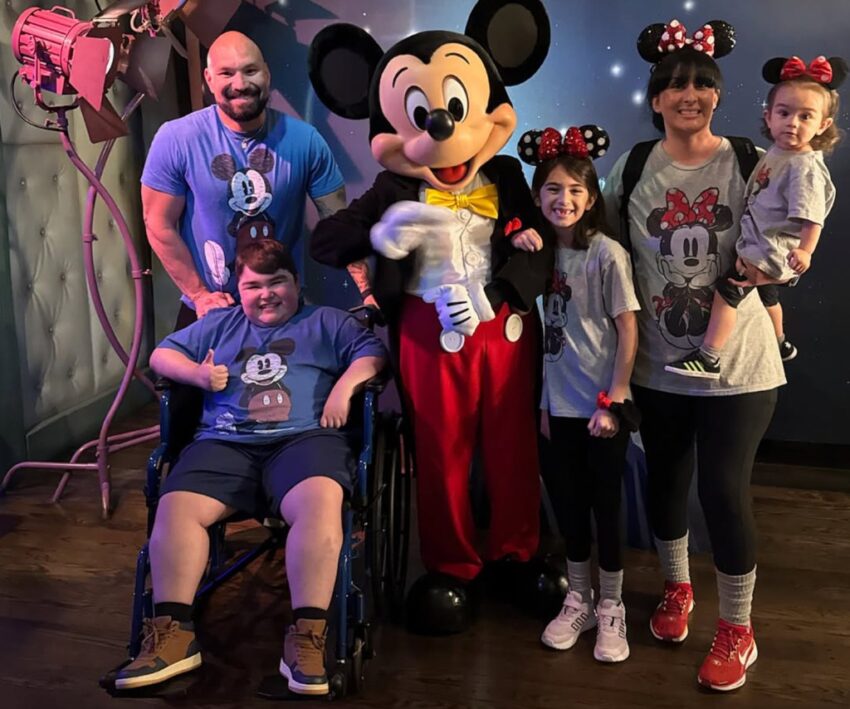
When Dr. Vinay Prasad leaves the Food and Drug Administration this month, my husband and I will raise a toast to his departure. And then we’ll get right back to taking care of our son Ryu — turning on the BIPAB machine that keeps him breathing through the night, giving him the steroids that keep some of his pain at bay, and putting on the braces that keep his joints in place because he’s confined to a wheelchair.

Ryu is 14. Like thousands of other kids, thanks to people like Prasad, he may not live long enough to vote for president, because he suffers from Duchenne muscular dystrophy, a disease that took my brothers, Angelo and Antonio, at 20 and 22 years old.
And unless Prasad’s culture leaves with him, Ryu will continue to rapidly decline with very little hope to slow or reverse his disease progression.
In his role as head of FDA’s Center for Biologics Evaluation and Research, Prasad decided which drugs moved with the accelerated approval necessary for rare disease treatment — and which were blocked. Last summer, Prasad halted Elevidys — the only approved gene therapy for Duchenne on the market — following the tragic deaths of two individuals with Duchenne who had additional underlying health issues.
It was a devastating blow to Duchenne patients. Some shipments later resumed, but patients who have deteriorated to the point of not walking are still denied access. These are the patients who are closest to death and who need urgent treatments the most.
DMD patients aren’t alone. Those struggling with Sanfilippo syndrome, Hunter syndrome, spinal muscular atrophy, and other devastating rare diseases are also watching their loved ones decline while the FDA fiddles. Just a few weeks ago, the FDA blocked a promising treatment for Hunter syndrome because it didn’t match the normal standards the FDA applies to drug approvals.
But those “traditional” standards are inappropriate for rare diseases affecting children with drastically shortened life spans. Accelerated approval protocols and flexible trial designs exist to save kids like Ryu, whose body may not make it the five to 10 years traditional approvals require. For rare disease families and patients, higher-than-average risks are the only way to beat our children’s death sentence.
Since Prasad assumed his role in May 2025, the number of FDA application rejections and delays increased, including when his choices contradicted his own scientists and blocked promising new cell therapies.
People like Prasad are why Ryu urged me to attend February’s rare disease Senate hearing and share his story. It was my first time in an Uber, and the first time in 43 years of fighting Duchenne that I had hope. Everyone I saw and spoke with talked openly about how delays at the FDA are slowing access to therapies for children without time to wait.
The issue had no partisanship when I visited Democratic and Republican offices and was warmly welcomed by staffers. I shared our personal story with Sens. Rick Scott (R-Florida) and Ron Johnson (R-Wisconsin) directly. Everyone made it clear that helping children with terminal illnesses is a priority. A few days later, Senator Johnson followed up by launching an investigation into the FDA’s treatment of children with rare diseases.
For the rare disease community, hope will matter only if HHS Secretary Robert F. Kennedy Jr and FDA Commissioner Dr. Marty Makary change course post-Prasad. Makary recently promised to accelerate treatments for patients who “have waited far too long.”
For families watching children lose a little more life every month, we eagerly await the fulfillment of that promise. I know all too well that with DMD, obstruction has consequences. Days without treatment guarantee decline. One lost month cannot be recovered.
Prasad will soon be gone from the FDA. Children like my son, on the other hand, will be gone from this Earth, unless Commissioner Makary listens to families and their advocates to make sure the FDA stands with us.
Our children can’t wait.
Angelina Olivera is an El Paso resident and is currently the full-time caretaker for her teenage son, Ryu.
The post Opinion: FDA delays on rare disease drugs put my son and other children with rare diseases at risk appeared first on El Paso Matters.
Read: Read More