



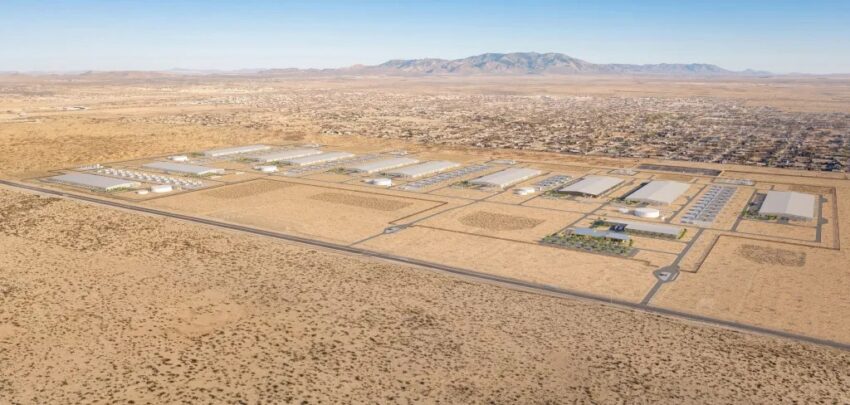

The artificial intelligence data center that Meta Platforms Inc. is spending $10 billion to develop in Northeast El Paso will be the city’s biggest property taxpayer when the campus is fully built.
The city of El Paso estimates Meta’s data center will pay around $15 million a year in city property taxes alone – not including what it may pay to other taxing entities. El Paso Electric is currently the city government’s biggest taxpayer, paying about $4 million last year, according to Robert Cortinas, the city’s chief financial officer and deputy city manager.
“We’re talking about a large influx of property tax dollars in the very near future,” Cortinas told El Paso Matters.
The city and county governments in late 2023 awarded economic development incentives to Meta. Those consisted mainly of an 80% break on property taxes for 35 years. The city also committed $12.5 million to repair the road infrastructure immediately around the data center.
That $12.5 million is the biggest outlay so far of an $80 million fund El Paso Electric committed to the city in exchange for City Council’s support of the utility’s 2020 sale to a J.P. Morgan-owned investment fund.
The main reason the city courted Meta to establish a data center here, Cortinas said, was to increase local tax revenue from a multi-billion-dollar private investment that would lower the tax burden on existing El Paso property owners. The city recognized the project wasn’t a massive job creator, Cortinas added.

Meta has said it will hire 300 permanent workers for the data center, and 4,000 temporary workers to construct the facility.
Commercial properties account for about 23% of the city’s property tax base, while residential makes up about 68%, according to the city’s 2025 comprehensive financial report. El Paso local governments rely on homeowners for a higher share of property tax than most other urban areas in Texas.
“We understand and we know the burden on homeowners,” Cortinas said.
“This makes a huge impact on improving and increasing that commercial tax base overnight,” he added.
Meta’s data center facility is expected to start operating in July, but won’t be fully built out until 2028, according to filings El Paso Electric submitted to the Public Utility Commission of Texas.
The city said it expects Meta will pay $400 million in property taxes to the city over the next 25 years, and about $1 billion to the other taxing entities over the same time, including the county, University Medical Center of El Paso, El Paso Community College and the Ysleta Independent School District, whose boundaries include the data center site.
That tax revenue sum is an uncertain estimate. The true property tax bill Meta will pay will depend on how the Central Appraisal District values the property. But Cortinas estimated the CAD will value the site between $4 billion and $6 billion.
RELATED: Average El Paso homeowner could pay about $105 more in city taxes next year
Cortinas said the city’s top 10 taxpayers currently contribute about 5% of the roughly $400 million that the city collects in property tax revenue annually.
The average El Paso homeowner could see property tax bills increase by $105 next year, according to preliminary budget information Cortinas presented to City Council this week. That would mean the city portion of a tax bill on an average-value home would be $1,785 next year.
New data center policies
The El Paso City Council this week unanimously agreed not to offer incentives, including tax abatements, to data centers going forward after facing uproar from the community over environmental concerns.
City representatives voted in favor of a general policy direction that “future development of hyperscale data centers should not be actively recruited, pursued, or incentivized due to their misalignment with the City’s long-term sustainability and infrastructure resilience goals.”

“We know now a lot more than we did about their impact,” said District 8 city Rep. Chris Canales, who in late 2023 voted in favor of the city’s incentive agreement with Meta and this week brought the new policy up for a vote. “Not every project that generates revenue is automatically the best fit for a city.”
READ MORE: Proposal: No tax breaks, incentives for future data centers within city
Mayor Renard Johnson also supported the new direction. Last October, however, when Meta said it was increasing its investment in the El Paso data center, Johnson expressed his support of the project.
Since entering office in early 2025, Johnson’s stated strategy to lower residential property tax bills in El Paso has centered around attracting commercial projects that pay property taxes and, in turn, lower the amount of taxes residential property owners have to pay every year.
“El Paso is proud to be the home for Meta’s new data center — a project that represents innovation, investment, and opportunity for our community, ” Johnson said in a statement issued last October. “This project will create high-quality jobs and generate lasting economic benefits for our region. Attracting major employers like Meta is a key priority of my administration, and we’re grateful to all our partners who have worked to make this investment a reality.”
Who else will get Meta taxes?
The $15 million that Meta will pay in city taxes annually is only a part of the data center’s future tax bill; the facility will also pay taxes to UMC, EPCC, YISD and El Paso County.
While the city developed an estimate for future tax revenue from the Meta project, none of the other taxing entities could say how much additional tax revenue Meta’s data center would generate for each entity.
Ysleta ISD, meanwhile, is unlikely to see a big increase in tax revenue as a result of Meta’s investment, according to Texas public school finance experts. If a school district experiences a large increase in locally -generated tax revenue, that would likely result in a lost off only replace state funding under complex school funding formulas that the district receives and produce, essentially, a net-zero impact to the district’s finances.
UMC did not comment. EPCC said it has no estimate for the additional revenue it would collect as a result of Meta’s investment. YISD did not respond to a request for comment.
Despite awarding a tax break deal to Meta, El Paso County also doesn’t have a firm, updated estimate for additional tax revenue it would collect from the data center.
That’s because the county’s deal with Meta depends on how much of Meta’s investment is classified as “real” property – such as land and buildings – versus “personal” property such as computer servers, equipment and other movable items housed within the buildings.

In Doña Ana County, the $165 billion Project Jupiter data center campus backed by Oracle and OpenAI will pay a flat $12 million annually over 30 years to the county in lieu of paying standard property taxes.
Whether an even bigger data center proposed to start operating next year on Fort Bliss property pays local or state taxes is an open question.
That could depend on negotiations between the data center’s developer – private equity firm Carlyle Group – and local taxing entities including the city. The statute that enables private companies to lease land on military installations says private firms can be subject to local taxation on the value of any privately owned buildings they construct on federal property.
RELATED: Proposed Fort Bliss data center could use more power than all of El Paso
Beyond tax revenue to local governments, Ransom of El Paso County said Meta’s data center project will have a “ripple effect” in the local economy. He said Meta’s project is the reason the company Faith Technologies is investing $81 million to build a manufacturing facility in El Paso to produce electrical components.
After El Paso Electric, the other biggest taxpayers in El Paso are the Marathon-owned oil refinery, Walmart Inc. and Texas Gas Service.
City officials said it’s up to elected council representatives to decide how to allocate the additional tax revenue Meta will generate for the city. But the revenue could reduce pressure to increase property taxes, said Ian Voglewede, the city’s director of legislative and strategic affairs.
“Recruiting big companies like this, the goal … is to reduce the impact on the residential (tax) base,” Voglewede said. “Fifteen million dollars – it changes the calculus in terms of what we’re looking at for any kind of potential property tax increases.”
The post Meta data center expected to become city of El Paso’s largest property taxpayer appeared first on El Paso Matters.
Read: Read More