




Federal immigration officials are jeopardizing public health by slow communication about infectious illnesses at its El Paso detention facility, the county’s top public health official said Friday.
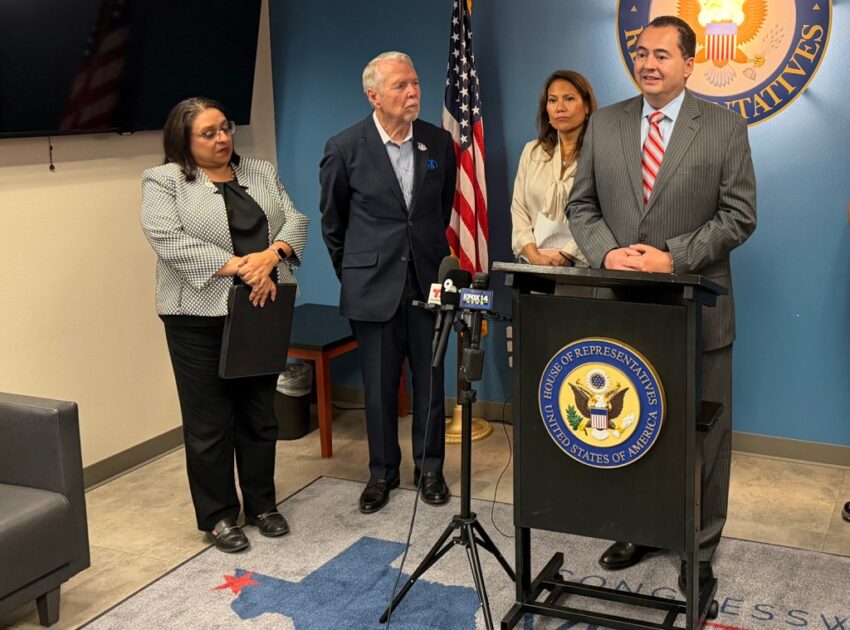
Dr. Hector Ocaranza, the city-county health authority, was among a group of El Paso leaders who met Friday with David Venturella, the acting director of U.S. Immigration and Customs Enforcement.
“What I expressed was that we need to have that close communication, because the regular channels of reporting are taking days, and to respond to an outbreak, you need to act now,” Ocaranza said in an interview with El Paso Matters.
In February, a measles outbreak spread from a private ICE detention facility in Sierra Blanca to the Camp East Montana facility and into the El Paso community via people working with the detainees. Poor communication by ICE and an El Paso hospital slowed local public health efforts to respond to the outbreak, an El Paso Matters investigation found.
In late May and early June, days elapsed before El Paso public health officials were notified that nearly 180 detainees at Camp East Montana were quarantined after possible measles exposure. None of those detainees had tested positive for measles that he was aware of, Ocarnza said Friday.
READ MORE: Nearly 180 ICE detainees quarantined at Camp East Montana for possible measles exposure
With hundreds of El Pasoans working in ICE detention facilities, the slow communications expose the community to heightened risks from a communicable disease outbreak, he said.
“As I told them, infectious and communicable diseases do not know jurisdictions, and it is sad that we have to go through normal jurisdictional channels instead of just having the phone or having a more direct process where we can have local communication. The response is local,” Ocaranza said.

Ocaranza said Venturella seemed receptive to his suggestions to build more direct communication between ICE detention facilities and local public health officials.
Department of Homeland Security officials didn’t immediately respond to a request for comment from El Paso Matters about the public health issues raised by Ocaranza.
Under current reporting structures, ICE reports information about infectious diseases in detention facilities to the U.S. Centers for Disease Control and Prevention, which then notifies state health officials, who then notify local health officials.
“Waiting for the federal government to go through the CDC to the state to the local partners is going to take many days, and by that time an outbreak can be poorly controlled,” Ocaranza said.
Escobar, who organized Friday’s meeting between Venturella and local government, health and public safety officials, said she has raised repeated concerns about health practices at Camp East Montana, which has been plagued by problems since opening last year.
LEARN MORE: ‘Millions of dollars in waste’: Federal report shows failures at ICE Camp East Montana
She said that during a visit to Camp East Montana, ICE staff advised her not to go into a pod because the detainees hadn’t yet been tested for communicable illnesses.
“While we were standing there talking, I saw facility staff – these are El Pasoans – walking in and out of that same pod with no mask, no PPE, putting our citizens, our residents, my constituents, at risk,” Escobar said.
She asked officials why the workers weren’t using protective gear commonly used by medical professionals to prevent the spread of disease. She was told it was the option of the workers.
“That’s not how public health should work,” Escobar said.
The post Slow ICE reporting on infectious illnesses threatens El Paso outbreak response, health authority says appeared first on El Paso Matters.
Read: Read More