




El Paso seeks unpaid animal services bills from ne | RSS.com
Diego Mendoza-Moyers: Today: Who pays to round up and shelter stray animals throughout El Paso County?
The city of El Paso provides animal services throughout the county and for smaller municipalities like San Elizario and Anthony. But, lately, the city has increased what it charges to provide animal services to other communities, who say they can’t afford to pay the drastically higher bills.
This isn’t a small problem. El Paso County owed the city well over $1 million for animal services before paying up a portion of the bill recently.
So, how do we fix this problem, and ensure every community around El Paso has someone providing animal services, and that they can afford that? El Paso Matters senior reporter Elida Perez will join me in a moment to talk about her recent story exploring this issue and how outlying communities feel after seeing their bills to the city triple.
And just a quick personal note: Last summer, I adopted an alley cat out of my backyard with a very messed up eye and a playful spirit. And the folks at Animal Services on Fred Wilson surgically removed her eye, gave her meds and made sure that she was in good shape for me to adopt her. Without that, I don’t think that our kitty, my best friend Nina, would have made it. So, I know how important it is to have animal services in all of our Borderland communities, not just within the city.
Before I talk with Elida: this El Paso Matters podcast episode is brought to you by our podcast title sponsor Tawney, Acosta and Chaparro, truck crash and injury attorneys. Their team of local, seasoned trial attorneys are ready to help if you’ve been injured in a crash.
And you can read our free reporting or sign up for our free newsletter at elpasomatters.org.
Now, on to the show.
Elida, thanks for joining me.
Elida Perez: Thanks for having me.
Diego: So, can you just give us an overview of the situation with the Animal Services Department, this apparent disagreement over cost for service between the city and municipalities and what’s going on? What’s owed to the city? Just give us a breakdown here.
Elida: Yes, so, a couple of weeks ago when the city started to have its budget discussions and budget sessions, it was brought up when Animal Services was talking about what they do that their was some outstanding payments from a couple of municipalities, including the county, totaling about – well, for the county specifically, about $1.5 million.
So, obviously, that raised a few questions. And looking into it further, we come to find that the city has multiple interlocal agreements with other small municipalities around the city that don’t have their own animal services shelter, don’t have the capacity to be able to address some of those issues. So, they partner with the city.
Animals will be taken to the city shelter, wherein the city will then charge, through invoices, those municipalities for each animal that they take in and a daily fee, for example.
What started to happen was, for the agreement that kicked in 2024, those prices went up. And, so, some of these smaller municipalities got their – for lack of a better word, kind of a sticker shock, and started to really take a closer look at what they were being charged for, what animals they were being charged for.
Diego: What kind of bills were the towns facing?
Elida: Well, the county, turns out, hadn’t paid the city in a little more than a year, a little over a year, as well as Horizon also stopped paying for a little more than a year. Basically, when they started to get those much higher invoice costs.
So, we’re talking about $22,000, $27,000 a month, up from around $8,000 or so. From what I understand, when they saw those higher costs, they were taking a closer look, kind of going through things with a finer-tooth comb, if you will, to make sure that the animal that is being charged to the county actually is from the county, not maybe from San Elizario, but being logged as a county animal and being charged in that way. Does that make sense?
Diego: Yeah. So, it’s all about the origin of the animal and that’s who pays the cost to have them rounded up and put in the shelter?
Elida: Yes. So, that’s what also was happening with Horizon. Based on the ZIP code or where the address is, it may on paper look like it’s Horizon City, but they’re not within the city limits. But some of those animals were being charged to the city of Horizon, not those that were in the county unincorporated area, but it’s also called Horizon. So, it’s kind of a tricky little detail there.
But that’s kind of where everybody started to kind of take a look at it like, “Wait a minute, this is a very high increase in our monthly costs and impact to our budget. So, we’re going to have to take a closer look before we pay” is what a couple of the municipalities did.
Diego: Yeah. Which seems like a difficult problem because you’ve just got sort of animals roaming around and how do you know where they’re from or sort of assign a place of origin for them? It seems kind of a thorny issue.
Elida: Indeed. Yes. Particularly the San Elizario mayor mentioned that a dog doesn’t know what – they don’t know boundaries. If they’re walking up the street or down the street and get picked up along a street that is adjacent to their city limits, then should they be charged for that animal?
Diego: Yeah, sure.
Elida: So, it is, it’s very tricky.
Diego: So, we’ll come back to this.
But one question I had that stood out to me from your story was that the shelter in El Paso for animals has seen a really big increase in the number of animals there that they take in. And, so – and in a short period of time, too, in the last three or four years.
I just wonder if you could speak to the magnitude of that increase? And maybe the “why” behind that is hard to know, but how much of an increase are we talking in the number of animals staying at the shelter?

Elida: So, the number of animals, at least from outside of the city limits – so, these animals coming in from the outside municipalities, which is kind of the issue here, has increased about 37% over the last three years and is pretty much on pace to increase another 16% this year.
The specific reason I think is an issue for everybody in the city, whether it’s people not spay and neutering animals, whether it’s strays out there that were never spayed or neutered that are out there reproducing, and the problem just gets exacerbated when they’re out there, left to their own devices, if you will.
I think it’s an ongoing issue that it’s really hard to pinpoint the exact “why.”
DIego: Yeah. And you would think that, like, the population hasn’t increased so much that would drive that much of an increase in strays. So, obviously there’s some other factor. But, anyways, it was just an interesting, interesting trend, I guess, of a pretty large increase, right, of over a third.
One thing, too, Elida that I wanted to talk about is like the shelter isn’t the sole provider of animal services, right? It’s the city’s relying on fosters as well to provide that service, which just strikes me as a little bit of a kind of odd dynamic kind of relying on people in the community to take people in or take animals in.
I just wonder if you could speak to that and just sort of the dynamic at play here where the shelter is not the only provider of these animal services and the city is really telling people like, “Hey, if you find an animal, go ahead and foster it.” Is that fair to say?
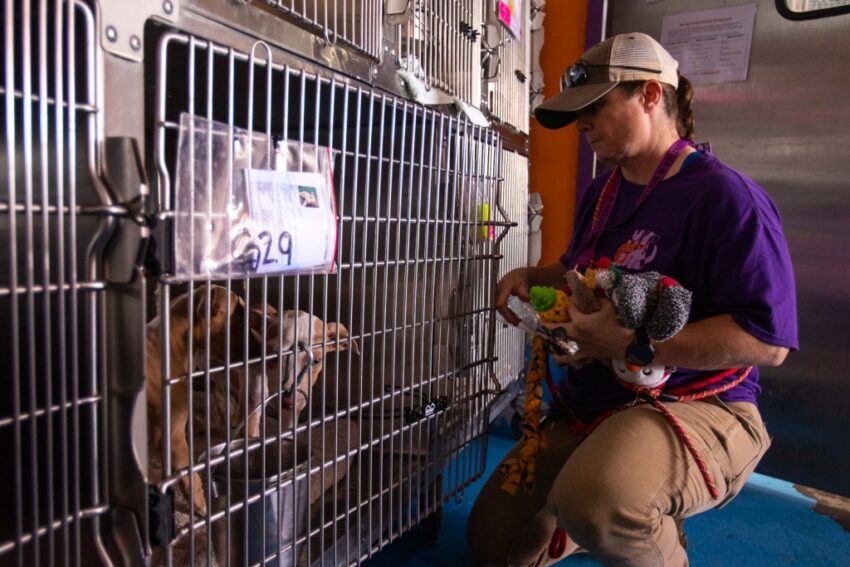
Elida: So, they have the fostering program. And if you think about it, it’s a great idea to help get animals acclimated to being in a home environment. They’ll probably be extremely less stressed than in a shelter environment, like being in those kennels and, sometimes packed in with other animals.
The socialization declines for a lot of animals that are kept in those conditions.
So, the foster program allows animals that would otherwise have been in the shelter for unknown periods of time to acclimate to a home environment or back to a home environment if they had been in the shelter for however long.
I think the strange thing about that or where there could be problems is making sure that they keep track of all those animals. And is the foster going to then adopt the animal? Is it a fostering situation where they’re just keeping the animal until somebody sees the picture on the animal website and decides, “Hey, I want to foster that particular dog.”
Because I think that some, I think they periodically lose contact with some of the people that have these animals. And, so, there’s kind of an unknown outcome of those dogs. So, they’ve talked about that a couple of times at the Animal Service Advisory Committee meetings. That question comes up quite a bit, actually.
But, overall, you can see where it would be beneficial to the animals that would otherwise be stuck in the shelter. Whether it’s a flawless system is a good question that I don’t think has been answered.
Diego: Yeah. And it reminds me of my own experience where my wife showed up with a cat a couple of years ago that was from the shelter, Nova, we love her.
I wasn’t given a forewarning about that one, but my wife scooped her up from the shelter. I think she’d been there for quite some time. But, to your point about the socialization and maybe some better outcomes from fostering, (one of) our cats has kind of got some health issues that we think arose from a pretty lengthy stay in the shelter. So, anyways, I could see how that, there’d be a benefit there, the fostering system. It just seems like it’s, it puts a lot in the community, right? But, there’s only so much the city can do, I suppose.
Elida: Well, and the thing – I guess the other thing about that is that, I mean, the fosters are volunteers. It’s not like the city came and dropped a cat off with your house. Sure. So, you can see also where that did work in this little kitten’s outcome, Aubrey, she saw the kitten, she was like, “Let’s do the right thing, let’s give this little guy a chance.” and now happy home, I would think.
Diego: For the most part, yeah.
So, moving on, though, Elida, just to speak of the shelter capacity. So, the county is building its own shelter, right, which I’d almost forgotten about. And, so, I wonder, can you just talk about that? Where’s the money going to come from? How much is that going to cost? And I’ve got a follow-up, but just tell us some details about this county shelter and how that’s coming together?
Elida: So, voters in November 2024 approved, through a bond proposal, the animal shelter for the county.
That shelter is going to have room for, let’s see, about 290 dogs and 100 cats once it’s operational. Thing is, it’s barely in the design phase. And, so, it will be a few more years before it’s up and running and ready to take in those animals. It will prioritize the county and unincorporated areas of the county.
So, while it will make a significant difference for those areas, there’s still going to be a problem of strays out in the streets and overpopulation.
Diego: What’s the cost of the facility?
Elida: It’s going to be about $33 million.
Diego: OK, so pretty big investment. But that was my sort of follow-up question. You kind of answered it, but it seems like that’s the perfect sort of thing that would solve this problem, right, of these stray animals out in the unincorporated parts of the county. And “Hey, we’ve got this new shelter. Can it absorb all of these strays that we’re talking about that these municipalities are being charged care for?”
But it sounds like you’re not optimistic that this is just going to be the silver bullet to solve the issue of strays in El Paso County.
Elida: I’m always optimistic when it comes to those little animals. Will it completely solve the problem? I don’t think so. I think that so much needs to change with the way the community as a whole, not only the city, but the county and the unincorporated areas, deal with animals and pets that should be treated as pets, not just, something outside in the backyard.
Animals escape. They get abandoned in the desert. Those animals are generally not fixed, so they reproduce and just exacerbate the problem. So, until there’s a larger effort by everybody involved to stop those behaviors, then you’ll be able to see some better outcomes.
But this, what the county is doing, it’s going to make a significant difference, particularly for that area. It would be great if all the other little municipalities and stuff had the finances and the capacity to be able to do the same, then you might see then you might see some better outcomes. But for now, it’s still going to be an ongoing work in progress.
Diego: It sounds like what you’re saying is greater personal responsibility among El Pasoans as it relates to their pets is part of the solution, at least in the city’s eyes?
Elida: I would say yes. I’m not ashamed to say there definitely has to be some better personal responsibility from people that are pet owners.
Diego: Yeah. To your point about the municipalities not always having the funds to put together their own shelter or whatever to address the problem of stray animals, you identified two municipalities that are in pretty good shape with this issue, and they’re not facing these really massive bills like other communities like San Elizario are for animal services that could maybe bankrupt them, right, if they were to pay it.
But the ones that seem to be doing well are Anthony and Socorro. And, so, I just wonder, can you talk about how are they avoiding this issue of facing tripled bills for animal services from the city of El Paso?

Elida: Yeah. So, Anthony, Texas, a couple of years ago, when the increase in costs for services through the agreement with the city kicked in, about that same time, they were able to hire an animal control officer. So, what that did was it put a specific person, a law enforcement officer, to be able to handle calls for service in that community. They also help Vinton out a bit.
So, if there’s a stray dog or if they have to investigate something, that animal control officer is responsible for keeping track of everything. And, so, that individual also is the one that, if necessary, will take an animal to the city shelter. Because, while they were able to get an animal control officer, they still don’t have the capacity of building and managing their own animal shelter. So, they do still work with the city.
The difference with them is that because they have that one individual and the area isn’t as large as, say, El Paso County, where one person can actually manage it and has been managing it, they take a close look at the invoices. Like, “Yes, these are all our animals.” If there’s a discrepancy, like, “No, this animal didn’t come from our territory.”
Then they’re able to quickly resolve it with the city and the city works with them. The city works with – tries to work with everybody to, if there’s a discrepancy or something, they’ve said that they work with everybody to come to a resolution and make adjustments as necessary. But, so, that’s what they started to do.
And the city of Socorro also does something similar where they have an animal control division, if you will, that does very similar (tasks). So, they’re responding to those calls for services, investigating animal cruelty cases, things like that. If an animal in the city of Socorro also needs to go to the city shelter, then they’re the point of contact. So, they also are keeping close track in that sense.
So, that particular law enforcement officer or the Police Department animal control folks are the ones that are really monitoring that to make sure that what they are being charged is accurate.
Diego: Do you think that’s the solution for other municipalities? Like, you identified San Elizario in particular in your story. I mean, is that instructive for, “Hey, maybe you other guys should also hire your own animal services person.”
Elida: I don’t think it would hurt. But the question is, do they have the funding? From what the mayor of San Elizario said, is they have a very small budget compared to some of the other smaller municipalities. So, I think they’re looking at about a two million annual budget.
Diego: Facing about $20,000 a month, is that right, in animal services bills?
Elida: Yeah, it’s starting to get up there. So, I think he said that, over the last two years, about 10% of that budget has gone to that particular service. So, in a place, in a town so small or an area so small like that, that’s a big chunk of their budget. So, do they have the financial means to hire a specific animal control officer?
The county has agreements with some of those other smaller municipalities for animal control services. So, it’s kind of one of those things where if there were more animal control officers that could serve these smaller areas, then that could probably also help as well. But I think the challenge is becoming more financial in nature. And everybody knows the cost of everything is going up. And I think everybody’s in kind of that situation where it’s like, “What can we afford to do here?”
Diego: And that’s really – I should have asked this earlier, but the reason that the costs or what the city is charging these municipalities for animal services, the reason that’s going up is because the city is saying, “Look, it’s more expensive for our veterinary care or things like that,” right? That’s what the city’s saying, that, “Hey, we’re charging you guys more because our cost of service is more.” Is that fair?
Elida: Yes, I mean, that’s exactly what they said was the reason to have to restructure the cost in the agreements. Because veterinary care, sheltering, medicine, everything has gone up.
And in the prior – the way it was structured before, there was a fee for the impound. So, each animal taken in, you get charged. And then there was a daily fee, but it wouldn’t go past six days.
This updated cost structure has an increased cost to the impound, to the intake fee. And then there’s a daily fee that also went up a little bit, but it’s per day that they are held. So, they don’t cap it at six days anymore. If the animal is there for three months, then you’re getting that daily charge for that full time. So, that’s where a lot of the cost increase went up as well, as far as what they’re looking at on their bills.
Diego: And, so, if a community says, for example, San Elizario or any other municipality, right, that’s part of these inter-local agreements, if they say, “Hey, our budget simply does not give us the flexibility to afford these bills, City of El Paso, we’re not going to pay you.” I don’t know – I suppose they could cancel the inter-local agreement, whatever. The point being they can’t afford the services. So, then what happens?
Elida: Unfortunately, what would happen is that the city would – so they would care for the animals that were already there throughout the end of the agreement, right? So, let’s say my agreement is set to end in September, September 1, I think.
So, a municipality says, “I want out, we’re not going to renew, we’re going to cancel this agreement.” So, whichever animals they had taken in up to that date, they continue to care for those animals and make sure that they get adopted out or transferred to another rescue or all those general things that they do to try to find homes for animals and things of that nature, like fostering perhaps or whatever is necessary.
But, come the end of that agreement date, then the city would no longer accept animals from that municipality, which if the municipality doesn’t have an animal shelter or any other means to care for those animals, I mean, you might see a situation where there’s an increase in strays in the streets or other area rescues might get overwhelmed with people that, say, “I can’t take this animal to the shelter. Can I bring it here?”
So, there could really be a potential increase in stray animals in those areas.
Diego: So, it’s fairly high stakes, right?

Elida: It could exacerbate the issue that is already existent. We talk about this already big increase in animals going in. Part of that is because there’s so many animals out there that are already just dropped off that are not spayed or neutered and they’re just reproducing.
So, it’s already challenging to handle that. So you imagine just putting another crack in the wall to let the water go through and it’s just going to create more of the same problems.
Diego: Based on your reporting throughout this story, I wonder, do you think that this issue exposes a rift between any local governments, right? Whether it’s the county and the city or any of the little municipalities and the city?
And I ask that because I think Betsy Keller, who’s a county administrator, she had a pretty interesting quote in your story saying, like, “We want to figure this out because it doesn’t really do anybody any good to have that scenario you’re laying out where there’s no provision of animal services in an area.”
But I feel like at the same time, the City Council Representative Chris Canales, was kind of like, “Look, we’re owed this money for providing the service.” And, so, I just wonder does this expose maybe a little bit of discord between our local governments?
Elida: I wouldn’t completely rule that out, but I also – it’s kind of like, you can see both sides of it, right?
If you’re in the position of the city, you’re like, “Well, this is how much it’s costing us, and we’re not even recovering the full cost of taking care of these animals.” And in talking to them, you can see that they’re like, “Well, we’re not going to not provide the services.”
So, it’s like, it’s in everybody’s best interest to work together. What makes 100% sense for everybody might look a little different. Where one municipality is under stress because “I don’t think we can afford this anymore. What do we do? We need help.” But, so, it’s kind of like they’re in between a rock and a hard place. I would say more than like a rift. I would say it’s more like how do we deal with this? Because you have to do A, B and C, and we have to do A, B and C, but the numbers aren’t jiving,
Diego: It kind of strikes me as a somewhat odd problem because like these animals all exist in the same area that is El Paso, right? But it’s, like, we’re trying to figure out what is the exact place that this animal is coming from and how do you assign the cost?
As opposed to – it feels like this issue we could solve collectively, but there’s this kind of challenge of these jurisdictions and figuring that out. Which, I wonder, I mean, I don’t know if there’s any clarity on this, do you know how they even can tell where a stray animal comes from? Is it just if it’s microchipped or something like that?
Elida: Well, so if it’s an animal control officer picking up a dog, then I think it would depend on where the officer logs where the animal came from, which could potentially create the, well, that dog doesn’t belong in my jurisdiction.
But Horizon’s got an interesting situation because of the way the ZIP codes are. If a person has Horizon City, Texas on their driver’s license address and takes and drops a dog off, but they’re not within the city limits, that dog might accidentally be invoiced to the city of Horizon, even though that individual doesn’t live in the city limits.
So, that’s what they were kind of saying. So, it’s a matter of like, where are you from, little dog? Like the little dog doesn’t know where they’re from. And I think sometimes there’s these blurred lines of the boundaries of the – and I can’t speak to how closely animal services staff, for example, I’m sure that they see the address, they log the address, and, I don’t think there’s anything nefarious there. So, it’s tricky.
Diego: Sure. And just last question here, Elida. I appreciate your time.
So, I just wonder if you can speak to what’s next in this situation? And one thing we should have mentioned, like the county has paid up some of that $1.5 million you identified, right? Which is a really, really big bill, right?
But they have paid up some of it after auditing this and saying, “Ok, yes, this animal is from unincorporated area of the county. That is our responsibility.”
So, it seems like these audits will continue and maybe these municipalities will pay some amount to the city in the near future. Maybe I’m wrong on that. I just wonder what you see as the next steps as it relates to this kind of impasse of like who pays for these services and how much and so forth.
Elida: Yeah, excuse me. So, the county is, I would say, paid a large portion of it, definitely more than half, $900-something thousand while they take a look at the remaining details. And I think from there, they’ll work with the city or they’ll go back and forth with the city on like, “OK, this is what we saw, can we work out how the rest or remainder gets paid or?”
But they are definitely making those moves to address that, address those services that were provided that they were able to confirm, right? Horizon has also said they’re getting close to wrapping up. They said they have the money to pay, but they just wanted to make sure that they’re paying for what they need to be paying for and no more because they also, I mean, they don’t have city budget dollars or the county also has a larger budget.
I think those smaller municipalities have to be a little or are being a little more cautious just to make sure – I’ve been using this example of it’s like when you have a monthly bill for a service and it’s like $70 a month and then out of nowhere it’s like $150 and maybe you don’t think too much about it the first time but then it is $150 consistently and starts to climb up, then suddenly you’re like taking a closer look at that bill and those line items. Like, wait a minute, what am I paying for exactly? So, it’s kind of like, that’s the example I think is more relatable to everybody.
Diego: It’s kind of like my water bill rising drastically and tripling and I’m going, “Man, what’s behind this?” And then, “Oh, I spot a leak in my front yard.” So, I know what you mean. You have to sort of comb through the line items to see what is this big bill?

Elida: So, I think that’s what’s happening. I don’t think that these partners aren’t trying to not pay ever again. Although San Elizario is kind of in a position where they, a couple of months ago, paused on paying so they can figure out how to look through that because they don’t have an auditor. They don’t have, the funds to hire an auditor to audit those things. So I think they’re in more of a position where they’re trying to figure out what comes next.
Because if they end up ending their agreement, then they’re going to be in that tough spot of like, “OK, well, what are you going to be seeing in the streets of San Elizario as far as animals go?” Or people that can’t take care of their pets or any number of those issues that come up.
So, I think it has to be an ongoing conversation, which seems like people are willing to come to the table to have. Unfortunately, it is also one of those situations where the costs are what the costs are. So, if the city, for example, lowers the cost of what these agreements are, then El Paso taxpayers are still on the hook for making up for that.
So, what comes next is I think there’s still a bit of a question mark. But, as far as the county goes, they are working to build a new shelter to serve that area. So, that will certainly help, but it’s going to be a few years down the line.
If other municipalities start to have these conversations and say, “Well, what are the solutions that we can do within our own communities, like maybe hiring animal services officers.” I think those conversations are going to start taking place more seriously as a result of this. So, I wish I could reach into my bag and …
Diego: Pull out a crystal ball?
Elida: Yeah, and give you like, “Nobody will drop dogs off in the desert. Everybody will spay and neuter their pets. Everybody will be responsible pet owners.” That’s the answer I wish I could give you. But I think it’s still a little uncertain.
Diego: Sure. We’ll be curious to see how this impasse plays out, right? And sort of how the city and these municipalities come to terms and kind of settle up these bills. So, it’ll be something interesting to see. So, we’ll leave that there.
But before I let you go, Elida, what’s next? Is it city budget season coming up? What do you got coming up next?
Elida: City budget season and county budget season are fixing to get into fuller gear, if you will. We’re getting closer to adopting budgets, hearing what the actual tax rates are going to be based on certified values, which should be out at the end of this month. So, we’ll be taking a close look at that and all sorts of other interesting topics that unfold with county and city government.
Diego: Yep, you’re always there and keeping us informed on all the city and county goings on. So, we appreciate it, Elida, and hope to have you on the podcast soon. Maybe we’ll talk budget stuff if there’s anything interesting and fun.
Elida: There’s a lot of interesting things going on with the budgets this year.
Diego: Cool. All right, thanks for your time, Elida. We’ll leave it there.
Elida: Thank you for having me.
The post Podcast: Animal services costs rising across El Paso County as animal shelter populations grow appeared first on El Paso Matters.
Read: Read More