



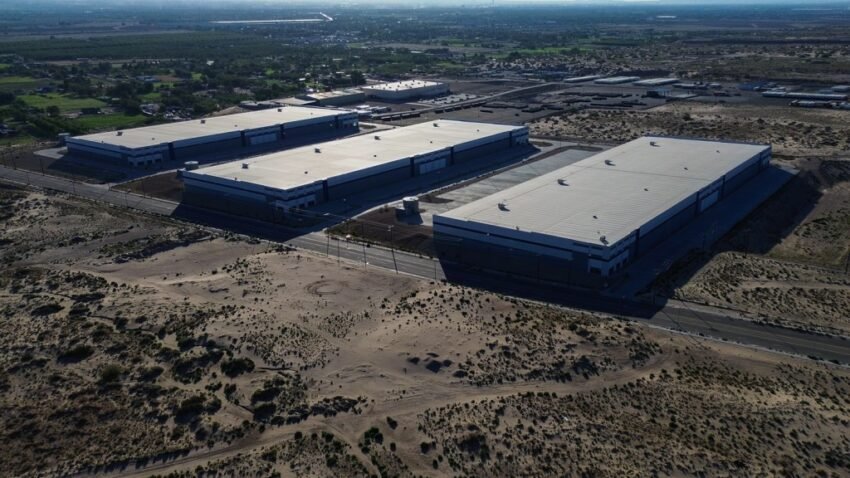

The Trump administration is scrapping plans to convert a nearly 1 million square-foot Socorro warehouse complex into an immigration detention center and training center for Immigration and Customs Enforcement, U.S. Rep. Veronica Escobar, D-El Paso, said Tuesday. The complex originally was envisioned as the largest immigration detention facility in the country.
Escobar said in a statement that the Department of Homeland Security has transferred the Socorro warehouses to the General Services Administration, the agency in charge of federal properties.
“This means the warehouses will be put up for sale and they will no longer be used by the federal government for detention purposes,” Escobar said.
The DHS has indicated in recent weeks that it was moving away from a plan begun earlier this year by then-DHS Secretary Kristi Noem to buy and convert 11 warehouse complexes across the country for use as detention facilities in support of the Trump administration’s mass deportation policies.
“DHS is moving swiftly to utilize EXISTING detention space with our state and county partners,” a Department of Homeland Security spokesperson said in a written response to El Paso Matters on July 28. The agency’s statement is identical to what it has given other news outlets when asked about the status of its plans, announced early this year,
The reversal on the planned Socorro detention facility came after months of scrutiny over costs and intense local opposition impact on local water supply and first responders. Of the 11 warehouse complexes – purchased by the federal government for $1 billion – this marks at least the ninth to have now been scrapped.
Numerous political and advocacy groups in El Paso opposed the Socorro detention center plan. In Socorro, a community of about 30,000 people southeast of El Paso, much of the opposition came from parishioners in the community’s three Catholic parishes, who had moral objections to mass detention as well as practical concerns about the impact to their relatively small water system.
“Personas humanas no deben ser tratados como sardinas. No somos,” – “Human beings should not be treated like sardines. We are not sardines,” El Paso Bishop Mark Seitz said July 29 to 50 people gathered at San Felipe de Jesus parish in Socorro to hear a presentation on the proposed ICE detention center and other issues by the Lower Valley Water District.
Escobar said the ICE warehouse plan would have created numerous problems in Socorro.
“The community of Socorro has been working on an economic development vision and plan to grow their economy while embracing their rich history,” she said in her statement Tuesday. “The community has also faced challenges with water, wastewater, and general infrastructure, making the purchase of these facilities for detention a terrible idea to begin with, threatening their ability to execute on their future plans and growth.”
The Department of Homeland Security in February purchased a three-warehouse industrial park and some adjoining land in the city of Socorro near Clint for $123 million. The planned Socorro facility, sold to DHS by a Kansas City-area developer, was to house up to 8,500 people and would have been the largest Immigration and Customs Enforcement detention center in the nation.
In June, however, the administration scaled back the project to be a smaller detention center alongside a training facility and ICE offices and conference rooms, Escobar said after a meeting with Acting ICE Director David Venturella in El Paso at that time.
At the July 30 meeting at San Felipe de Jesus, water district officials said they had received no information from the federal government about water needs for the facility, and told the gathering that it would take years to provide the water infrastructure needed to convert buildings designed to store pecans into ones that would house large numbers of people.
After the church meeting, Lower Valley Water District officials told El Paso Matters that they had informed DHS that it would take a year to develop models to assess water and wastewater needs, then several years to plan and build, all at federal expense.
“It would take three to five years,” district General Manager Gerald Grijalva said.
Under that scenario, DHS would not be able to occupy the facility until mid-2029 at the earliest, months after President Donald Trump would have left the White House.

News outlets in June began reporting that the administration planned to sell or transfer seven of the warehouse facilities it had purchased for a combined $1 billion. In July, Pennsylvania officials said ICE abandoned two other warehouse projects in the state. DHS hasn’t confirmed the reports, but told several news outlets that it was moving to use existing detention space.
The planned Socorro facility had raised serious concerns among community leaders and residents over the area’s limited water and wastewater infrastructure – including whether the facility would strain water resources, impact water pressure or raise water bills in the community.
Officials at El Paso County Emergency Services District 2, which would respond to emergencies at the warehouse facility, said the warehouse facilities were approved to hold pistachios, not humans. Putting large numbers of people there – whether in detention centers or offices – would require the district to buy a new pumper truck that costs millions of dollars and currently has a three-year wait for delivery, the officials said.
READ MORE: ICE mega detention center in far East El Paso County faces water infrastructure limits
The plans also raised concerns about whether the facility would have enough drinking water for the detainees, if the sewerage infrastructure could support the additional tens of thousands of people, and whether first responders could absorb the influx of calls anticipated from such a facility.
A group of Catholic churches in Socorro began organizing in opposition to the detention center in April with the help of the El Paso Interreligious Sponsoring Organization, with about 40 people addressing their concerns before the Lower Valley Water District board in May.
Beyond the infrastructure questions, the proposal brought forth concerns about the mass detention of immigrants, with human rights advocacy groups citing the questionable conditions at other ICE detention facilities across the country – especially at Camp East Montana.

ICE plans to keep the controversial detention facility on Fort Bliss land open for at least another year, rejecting calls that it close over reported human rights abuses.
Now the largest ICE detention facility in the country with a capacity of up to 5,000 detainees, Camp East Montana opened on Fort Bliss land in East El Paso in August 2025. Since then, the $1.2 billion facility has been plagued with accusations of inhumane conditions ranging from sexual abuse and beatings to inadequate food and medical care and unsanitary quarters. Three detainees have died at Camp East Montana.
Despite calls to close the facility, ICE plans to extend its contract with Amentum Services Inc. to continue operating Camp East Montana through September 2027 at a cost of up to $776 million from the “Big Beautiful Bill,” according to records on the federal government’s award management website.
SEE ALSO: ICE extends no-bid contract for Camp East Montana in El Paso, rejecting calls for closure
The current agreement with Amentum, which took over the previous controversial operator in March, was awarded as an emergency sole-source contract and was to expire Aug. 21.
The original operator, Acquisition Logistics, was replaced following internal reviews by the ICE Office of Detention Oversight that showed nearly 50 deficiencies involving use of force, inadequate medical care and security gaps. Loyal Source Government Services, the troubled medical subcontractor, remains at the facility.
An average 2,026 people are detained at Camp East Montana daily, according to July 9 data from the Transactional Records Access Clearinghouse, or TRAC, a nonpartisan organization that tracks immigration detention trends.
The El Paso Service Processing Center off Montana Avenue near the airport has faced similar civil rights abuse allegations. That facility held an average 750 detainees daily, TRAC figures for July 9 show.
In a July 30 interview with El Paso Matters, before DHS announced its plans to abandon the warehouse plan, Seitz, the El Paso bishop, spoke about the power of local activism.
“It would be encouraging, if this program doesn’t go forward here in Socorro to think that when a community comes together and speaks up, they can be part of what encourages rethinking of the plans that are being laid out to turn a warehouse into a place that stores people,” he said.
The post DHS scraps plans for mega ICE detention center in Socorro, to sell warehouse properties appeared first on El Paso Matters.
Read: Read More