



EL PASO, Texas (Border Report) – One of the first things John Beckham did when he joined the North American Development Bank was to travel the border and ask community leaders what their biggest challenge was.
“I was thinking it would be water availability, and it was. But the challenge today is to train certified operators, make sure the infrastructure works and we’re delivering the water quality we need to deliver,” said Beckham, the managing director for NADBank. “It became clear we need human capital as well as physical capital and infrastructure.”

That led to the development of Skills for Sustainability, a partnership with the Organization of American States’ The Trust for the Americas and local sponsors. In the past year and a half, the program has trained and channeled some 200 at-risk youths to jobs in air and water quality and sanitation in the El Paso, Texas-Juarez, Mexico, region.
That same drive to keep critical water and wastewater infrastructure running brought Beckham to El Paso this week.
On Tuesday, he met in Juarez with the head of CILA, the Mexican section of the International Boundary and Water Commission, to talk about the sewage crisis in the Tijuana River. On Wednesday, he was headed to Sunland Park to learn of efforts to address water quality issues in that New Mexico community across the state line from El Paso.

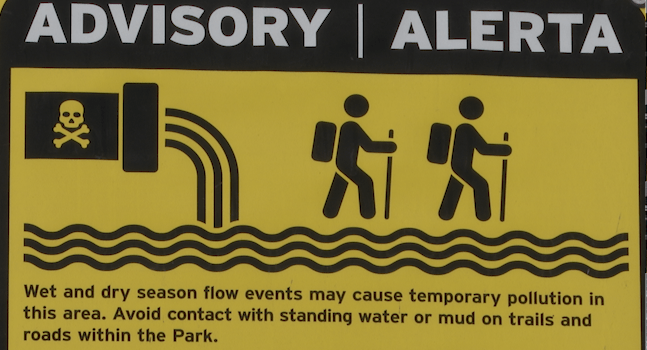
Mexico in April released millions of gallons of wastewater into the Tijuana River while it repaired a large pipeline routing sewage to treatment plants. It’s not the first time this has happened.
“In Tijuana, the conversations are more direct now. There is a lot more interest in holding Mexico accountable,” Beckham told Border Report. “The memorandum of understanding signed in July lays out a calendar of investments that need to be made to address water sanitation.”
The United States will spend $600 million to improve wastewater treatment in the San Diego-Tijuana area, while Mexico is expected to commit at least $94 million. NADBank will commit funds, and it previously issued a $150 “green” loan to the state of Baja California for water sanitation.

“There is a written understanding, now the proof is in the pudding. The memo lays out the concept of operation maintenance with a committee to make sure the infrastructure is being maintained as it should be,” Beckham said. “There’s a need to replace infrastructure and have a mechanism to ensure proper maintenance, so we don’t repeat an environmental disaster” in the Tijuana-San Diego region.
Juarez wastewater system gets upgrades, Presidio finds ‘missing’ water
Juarez, several years ago, built a wastewater collection system to keep sewage in neighborhoods near the U.S. border from seeping into the Rio Grande. But population growth, aging pipes, sediment and trash overwhelmed it.
NADBank stepped in with $11.5 million to help the local utility replace nearly 60,000 feet of 8-inch to 48-inch pipe in Anapra and other neighborhoods with a combined population of 240,000. Repairs were completed last June.
“The Norzagaray collector project in Anapra achieves common benefits. The residents of that neighborhood will no longer have sewage seepage on their streets and sidewalks. For the broader region, that seepage eventually makes its way to the Rio Grande,” Beckham said. “So, communities here as well as further downstream in Coahuila and Tamaulipas will have cleaner water.”
In March, New Mexico officials celebrated the completion of a wastewater collection system and the replacement of 23,000 feet of aging waterlines in Anthony. The money came from the Border Environmental Infrastructure Fund that NADBank administers.
In Presidio, Texas, NADBank contributed to the replacement of water lines that halted the loss of up to 80,000 gallons a day.
“They knew they had a problem: Not enough water available for their community. They thought what they needed was a water storage facility. Their system was antiquated and had a lot of leakage. So, really, we helped them find missing water,” Beckham said.
 Read: Read More