



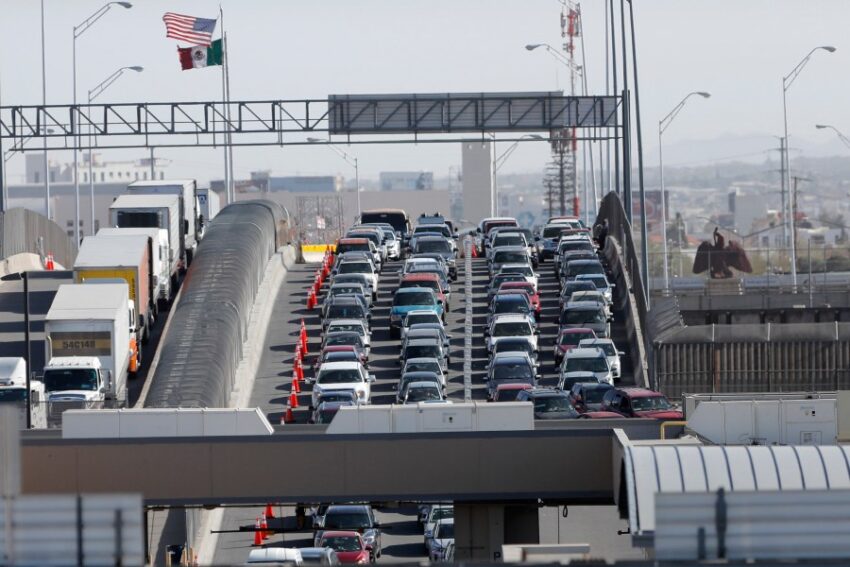
EL PASO, Texas (KTSM) — University of Texas at El Paso (UTEP) economics professor, Tom Fullerton, says holiday retail shopping in the Borderplex has been sluggish as we approach the meat of the holiday season, having increased by 2%, which does not even match the current inflation rate.
“This year is turning out to be, at least in the initial phases of the holiday season, as being one characterized by much more muted growth than was the case last year. There’s a lot of uncertainty over economic policies out of both Washington, D.C. and Mexico City. The peso is weaker. Those things, in combination, with just general uncertainty regarding what’s happening at the world at large, is causing consumers to be a little more cautious than they were last year,” Fullerton said.
Fullerton said the value of the Mexican peso declined when Claudia Sheinbaum was elected as the new president of Mexico over the summer, due to concerns over what economic policies she might implement with a lack of checks and balances in the Mexican congress that is now made up of a majority of her political party — Morena.
To add to that unease, the United States will also be changing leadership beginning in January when President-elect Donald Trump takes office. Trump has threatened to impose tariffs on Mexican imports.
However, Fullerton said shifting consumer behavior and several factors locally are also contributing to the slower retail shopping this year.
“Once we got past the pandemic and the economy started recovering, and the unemployment rate was very low, and wages started going up, a lot of households went a little bit crazy and they drove up those credit card balances before the holiday season. A lot of years, credit card balances go up during the holiday season,” Fullerton said.
Fullerton said that many El Paso households shifted their consumption from physical items to services, such as home renovations, that they had been holding off on due to the pandemic and they ratcheted up their credit card debt.
This, in turn, decreased demand for items produced at factories in Ciudad Juarez and other areas of northern Mexico, which Fullerton said forced factories to shrink the amount of workers on their payroll.
Fullerton said that 8 to 14% of El Paso’s holiday shopping sales depend on consumers from northern Mexico, and that this year it is trending more to that lower 8% mark.
Fullerton also said there are five less shopping days between Thanksgiving and Christmas in 2024, which is likely forcing many to shop online rather than in brick-and-mortar stores.
Jonathan Bahena, the manager of a family-owned business in Downtown El Paso — the Happy Store — said their sales have been approximately 80% down from last year during the holiday season, despite trying to push strong sales and discounts.
“Usually, we have lines forming all the way outside. Today and most days now, if we were lucky to get 20 or 30 customers or transactions, to be exact, to have a good day,” Bahena said.
Bahena said their sales have not even been enough to help cover the bills for their electricity and rent. He said they are hoping they can recover some revenue in the coming days as Mexican residents tend to receive bonus pay from Dec. 7-9.
Fullerton said that as demand and traffic decrease in stores, retailers will work harder to push sales and discounts that will be reflected more come January.
Read: Read More