



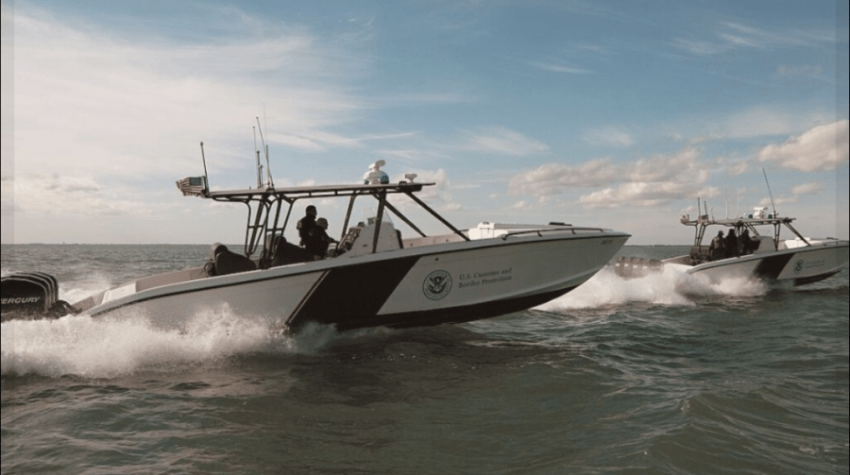
EL PASO, Texas (Border Report) – Mexican transnational criminal organizations for decades have exploited the Southwestern U.S. border for drug and migrant smuggling.
But with additional law enforcement resources pouring in to the region, federal officials say cartels are shifting at least some of that activity to the high seas.
The U.S. Coast Guard has seized 101,000 pounds of drugs since Jan. 20, including 19,000 pounds off the coasts of Mexico, Central and South America in April alone.
Other federal agencies are vouching for the increase, particularly in the Caribbean and off the coast of California. The Air and Marine Operations branch of U.S. Customs and Border Protection in Jacksonville, Florida, last April contributed to the seizure of 6,600 pounds and 8,600 pounds of cocaine in separate events.
“In addition to high maritime drug interdiction rates, smuggler aggression and violence also has been on the rise,” said CBP Executive Assistant Commissioner for Air and Marine Operations Jonathan P. Miller. “Non-compliant boardings and instances where we physically disable the engines of smuggling vessels to get them to stop has exponentially risen in the past few years.”
Speaking at a Tuesday subcommittee hearing of the House Homeland Security Committee, he said seizures of maritime vessels involved in drug or migrant smuggling are up 30 percent and migrant apprehensions have doubled off the coast of Southern California since January, compared to the same four-month period last year.
“Criminal networks are increasingly taking to the sea, where vast distances, patchwork jurisdictions and limited visibility offer TCOs a lower risk of detection and a high reward for moving contraband,” said Committee Chairman U.S. Rep. Carlos Gimenez, R-Florida.
The smugglers are employing increasingly faster motorboats, paying cargo ship and fishing vessel owners to stash their illicit loads, and even building and deploying to sea small submarines packed with drugs or carrying migrants, federal officials said at the hearing.
“They use everything from hand-made wooden boats to sail freighters to speed boats to jet skis,” said Rear Adm. Adam A. Chamie, the Coast Guard’s assistant commandant, adding these ventures are typically organized by the transnational criminal organizations.
Chamie said the Coast Guard stands to benefit from $21 billion for vessel acquisition, port infrastructure and new aircraft included in the budget reconciliation bill recently approved in the House of Representatives.
The money would help the agency deal with the growing cartel threat and also allow federal agencies to intercept drugs farther from U.S. shores.
“We try to interdict as far away from the U.S. because the closer they get, the more (illicit drug loads) get broken into (smaller shipments) to get into the United States,” Chamie said.
Committee members quizzed law enforcement members on the merits of a pending bill to expand American territorial waters from 12 nautical miles to 20.
“This increases the areas we can patrol […] increases our interdiction,” Miller said.
Witnessed did not name the specific cartels involved but said they are some of those sending drugs like fentanyl across the Mexican border. That would include the Sinaloa cartel and the Jalisco New Generation Cartel.
The hearing on how to deal with illicit maritime activities off U.S. coasts was at times sidetracked by strong questioning of witnesses by Democratic members of the committee regarding their agencies’ involvement in stateside immigration enforcement.
The Democrats quizzed law enforcement officials on their views regarding diversity within their ranks and whether having a tattoo allows them to suspect an individual is a gang member. They also expressed dismay at the Trump administration sending National Guard members and Marines to face off with U.S. citizens in Los Angeles.
A GOP committee member briefly joined the fray to characterize his Democratic colleagues as siding with “rioters and illegal aliens” instead of law enforcement.
 Read: Read More