



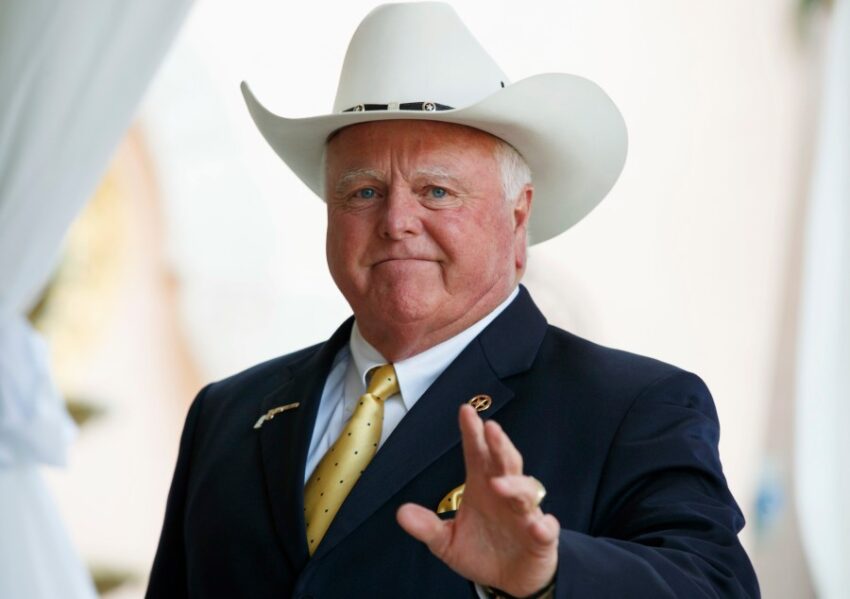
McALLEN, Texas (Border Report) — Texas Agriculture Commissioner Sid Miller on Tuesday warned of Mexican cartel violence that he says threatens ranchers and farmers along the South Texas border.
“I urge all Texas farmers, ranchers, and agricultural workers who travel to Mexico or operate near the border to exercise extreme caution. The Lower Rio Grande Valley (LRGV) is a crucial part of Texas agriculture, and the safety of our agricultural community is of utmost importance. We cannot overlook the rising violence that threatens not only lives but also the security of our farms, ranches, and rural communities,” Miller said in a statement.
Miller referenced the death of an elderly rancher that he said “occurred near Brownsville, Texas,” when the “rancher was killed by an improvised explosive device (IED.)”
However, Miller did not specify that 74-year-old Antonio Céspedes Saldierna was actually killed earlier this month in San Fernando, Mexico, which is located miles south of the border in the Mexican state of Tamaulipas.
San Fernando is about 90 miles south of the Mexican border town of Matamoros and Brownsville, Texas.
Killed with Céspedes was another man, Horacio Lopez Peña. And Céspedes’ wife, Ninfa Griselda Ortega, was hospitalized for injuries, according to Ag Daily
In response to questions from Border Report, Maddison Jaureguito, director of communications for the Texas Department of Agriculture, on Tuesday confirmed Céspedes was the rancher Miller was referring to.
“The incident occurred on the Mexican side of the border,” Jaureguito said. “The rancher ranched on both sides of the border.”
In a statement to KXAN, Jaureguito said “A 74-year-old rancher ran over an improvised explosive device — which authorities suspect was planted by a drug cartel — in the Mexican state of Tamaulipas, killing him and a passenger and wounding another.”
NewsNation earlier this month reported that cartels have begun weaponizing drones to drop explosives on rival groups. This is spurred by frustration by the cartels that are unable to get people illegally across the border due to asylum and immigration policies put in place by President Donald Trump’s administration.
An IED explosion also was reported last month in the northern Mexican border town of Rio Bravo, about 80 miles north of San Fernando and just south of Alamo, Texas. The blast destroyed a pickup belonging to federal water officials from Mexico’s National Water Commission, or CONAGUA, and has been connected to cartel violence.
Miller says increasing Mexican cartel fighting threatens South Texas farmers, ranchers and communities.
“This shocking act of violence highlights the growing threat posed by cartel activity along our southern border,” he said. “I encourage everyone in the agricultural industry to stay vigilant, remain aware of their surroundings, and report any suspicious activity to law enforcement. Additionally, you can avoid dirt roads and remote areas, refrain from touching unfamiliar objects that could be explosive devices, limit travel to daylight hours, stay on main roads, and avoid cartel-controlled regions. Our agriculture family is the backbone of Texas, and we must do everything we can to protect it.”
The Tamaulipas government on its Facebook page last month urged residents not to touch devices they find on the ground with which they are unfamiliar.

“Armed confrontations between organized crime groups have left explosive materials and substances on roads, ditches and agricultural fields that represent a risk to citizens,” the government warned. “Get away from it immediately and call 911… Do not move it or touch it.”
The U.S. Embassy and Consulates in Mexico are warning against traveling to several areas of Tamaulipas, including Reynosa, Rio Bravo, Valle Hermoso and San Fernando.
The U.S. warning was issued Jan. 27, days after and in response to the Tamaulipas government warning.
“The State of Tamaulipas has issued a warning to avoid moving or touching improvised explosive devices (IEDs), which have been found in and around the area of Reynosa, Rio Bravo, Valle Hermoso, and San Fernando along dirt and secondary roads. IEDs are being increasingly manufactured and used by criminal organizations in this region,” the U.S. Embassy said.
“An IED destroyed a Government of Mexico (CONAGUA) official vehicle in Rio Bravo and injured its occupant on January 23. As a precaution, U.S. government employees have been ordered to avoid all travel in and around Reynosa and Rio Bravo outside of daylight hours and to avoid dirt roads throughout Tamaulipas,” it reads.
Sandra Sanchez can be reached at SSanchez@BorderReport.com.
 Read: Read More