



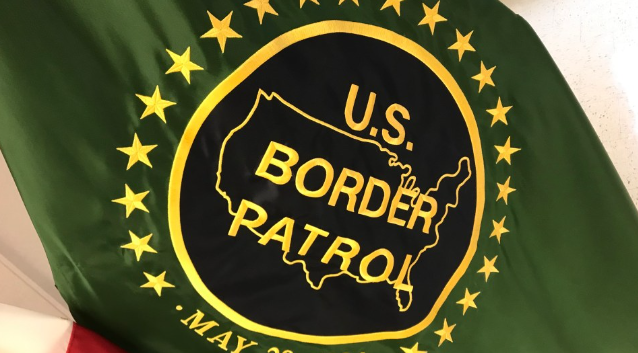
SAN DIEGO (Border Report) — Several Democratic members of Congress are demanding answers about the Border Patrol’s longtime use of Critical Incident Teams, or so-called “shadow units.”
These investigation groups (CITs) had been assigned to incidents involving Border Patrol agents and have been accused of intimidating witnesses and destroying or falsifying evidence as a way to shield agents from civil or criminal liability.
A May 13 report from the U.S. Office of Government Accountability Office states the units “were widespread — used in seven of nine U.S. Border Patrol sectors, including San Diego, on the southwest border — and operated for years with little to no oversight.”
These “shadow units,” which were ordered disbanded in 2022, left U.S. Customs and Border Protection’s Office of Professional Responsibility (OPR) in charge of investigating critical incidents — incidents involving CBP personnel that result in a serious injury, a death, a use of deadly or excessive force, or widespread media attention.
In a letter to Biden administration officials, U.S. Reps. Juan Vargas, Sara Jacobs and Scott Peters, of the San Diego region, and Joaquin Castro, of Texas questioned how these units operated for so long with little to no oversight.
In 2021, Vargas and his colleagues called for an investigation into the CITs after allegations surfaced about the agency having “special, secretive units that worked to cover up any wrongdoing when agents killed someone or otherwise used force in potentially problematic ways.”
The GAO agreed to conduct an investigation.
“This report raises serious questions about how these units were able to operate for so long with little to no oversight,” Vargas said. “The American people deserve nothing less than full transparency — It’s imperative that CBP take steps to ensure that something like this never happens again.”
With CITs recently disbanded and OPR in charge of investigations, the GAO report suggests that CBP needs to take additional steps to strengthen its response to incidents involving its personnel. GAO found that OPR did not have sufficient resources to carry out these activities but has since increased its capacity to include nearly doubling its investigator workforce.
The report also found that while Border Patrol sectors disbanded CITs, their personnel still investigate non-critical incidents such as vehicle crashes with no injuries but they approach them “inconsistently.”
“GAO recommends that Border Patrol implement guidance that standardizes sector approaches to noncritical incident response and monitor adherence to the guidance, and that OPR develop guidance for investigators on identifying potential impairments to their independence and train investigators on how to apply the guidance,” the report states.
“Full implementation of these recommendations is especially important for our constituents who live near the United States-Mexico border, many of whom regularly interact with CBP officials as they make their way between the United States and Mexico to work or visit family,” Vargas said.
Border Report has reached out to CBP for comment on the GAO’s report and is awaiting a response. The GAO report states that CBP concurs with its recommendations.
Read: Read More