



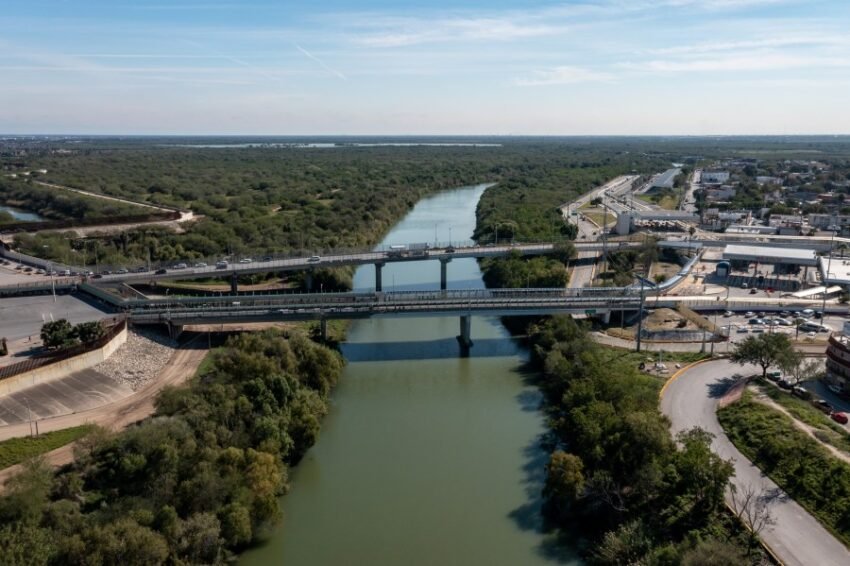
McALLEN, Texas (Border Report) — The lower section of the Rio Grande in South Texas has been named one of the most endangered rivers in the United States.
The section — which spans from Del Rio to Brownsville — was named fifth out of 10 on America’s Most Endangered Rivers list, released this week by the nonprofit American Rivers.
The Top 10 Most Endangered Rivers in America includes:
- Mississippi River in Arkansas, Illinois, Iowa, Kentucky, Louisiana, Minnesota, Mississippi, Missouri, Tennessee, Wisconsin
- Tijuana River in California
- Rivers of southern Appalachia in Georgia, North Carolina, south Carolina and Tennessee
- Passaic River in New Jersey and New York
- Lower Rio Grande in South Texas
- Rappahannock River in Virginia
- Clearwater River Basin in Idaho
- Susitna River in Alaska
- Calcasieu River in Louisiana
- Gauley River in West Virginia
“Severe water scarcity driven by prolonged drought, intensifying heat, and unsustainable water use has left the Rio Grande in a near-permanent human-induced megadrought, threatening all life that depends on it,” according to the report.
This is jeopardizing the source of drinking water for millions of people living north and south of the border in the United States and Mexico, the report found.
Farms and ranches on both sides of the border, which have struggled with a lack of water due to water owed to the United States by Mexico under a 1944 international treaty, also are threatened.
The Rio Grande was not on last year’s Top 10 endangered list at all. Martin Castro, of the nonprofit Rio Grande International Study Center, says this is an urgent call to action to help the river.
“This listing is just that. It’s a wake up call, basically, to demand action to protect one of the most vital waterways in the US, Mexico border region,” Castro told Border Report.

Over 6 million people get their drinking water from the Rio Grande, which runs almost 2,000 miles. But it’s the lower section of the river in South Texas that is facing the greatest threats lately, the report says.
The report cites low federal funding for the Rio Grande and urges binational cooperation with Mexico by engaging a Binational Environmental Working Group, as part of a recent amendment to the 1944 international water treaty. The change — called Minute 331 — was signed by the U.S. and Mexican commissioners for the International Boundary and Water Commission (IBWC), and allows for coordinated conservation efforts, scientific assessments and water management strategies.
Castro says this is crucial right now to save the river. He also says federal funding must increase to help the lower Rio Grande.
“It’s facing multiple threats, but the biggest one is definitely water scarcity, aging infrastructure and lack of investment, I think that’s very important to highlight,” Castro said. “The river’s health directly affects the public health, economic stability and ecosystem resilience, I think, across the entire region.”
The state’s only sugar mill shut down last year due to not enough water in the Rio Grande to sustain the thirsty plants. Now the citrus industry in South Texas is threatened by a lack of constant water flow in the river.
Historic flooding in the Rio Grande Valley last month, unfortunately did not help to replenish river water supplies much. That’s because the rains fell too far east to be captured into the region’s two reservoirs — Amistad Dam near Del Rio, and Falcon Dam in Starr County, water experts say.
The Trump administration has begun pushing Mexico to pay back the water it owes by October, which is the end of the current five-year cycle, under the treaty.
Mexico owes the Rio Grande over 1.2 million acre-feet of water, according to the IBWC.

Mexico has paid just over 512,000 acre-feet of water so far this cycle, but the country has cited drought and overpopulation as reasons it has not paid the 350,000 acre-feet of annual water allotments to the United States, as stipulated in the treaty.
Recently, the United States withheld water payments to Mexico, via the Tijuana River, in retaliation, IBWC U.S. Commissioner Maria-Elena Giner told Border Report earlier this month.
Last week, Mexican officials said they would make “immediate” water payments to the United States.
Sandra Sanchez can be reached at SSanchez@BorderReport.com.
 Read: Read More