



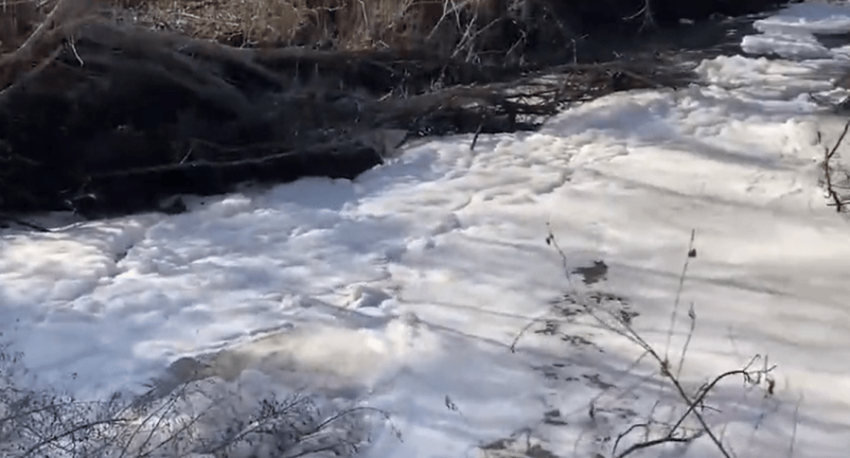
SAN DIEGO (FOX 5/KUSI) — It’s in the water, it’s airborne and it’s getting people sick.
The Tijuana River is not just a nuisance, it’s a health hazard, according to newly peer-reviewed findings published in the journal Science.
“This is the paper that will drop at 11 a.m. in Science, it is focusing on how river pollution is actually affecting air quality across all of San Diego,” said Kim Prather, a professor in atmospheric science from the University of California San Diego.
Scientists from UCSD’s Scripps Institute of Oceanography, in collaboration with SDSU and UC Irvine, have been studying the alarming hydrogen sulfide off-gassing from the toxic waste wafting from the untreated waste flowing from the city of Tijuana down the canyon into the city of Imperial Beach.
The new study found the smells from the waste are the biggest alarm and help identify when the air is most toxic.
“In red, I’ve overlaid the odor complaints, and what you see is they track with a correlation of 0.92, 1 would be perfect. Basically, the community was acting as the sensors, but unfortunately, they were not being heard,” Prather said.

The team of researchers say officials discouraged their findings, but these scientists pushed on.
“We had push back of people who were saying if you tell the people that it’s in the air and they are breathing, then you are going to scare the public. We never scared the public; the public was grateful because they were feeling the effects.”
Now, researchers believe it’s the turbulence and concentration of the waste that can create such unhealthy conditions.
“This is a toxic gas, and so are all the other, now that we’ve determined there are over 1,000 types of gases that are coming out and many of those are toxic, and they don’t even have smells,” Prather said.
Scientists say their newest paper should dispel any doubts that the smells coming from the Tijuana River Valley, especially during the dry season, are harmless.
“This means that it’s not a river at this point, most of this is actually industrial waste and raw sewage that is making its way through the community,” Prather said.
 Read: Read More