



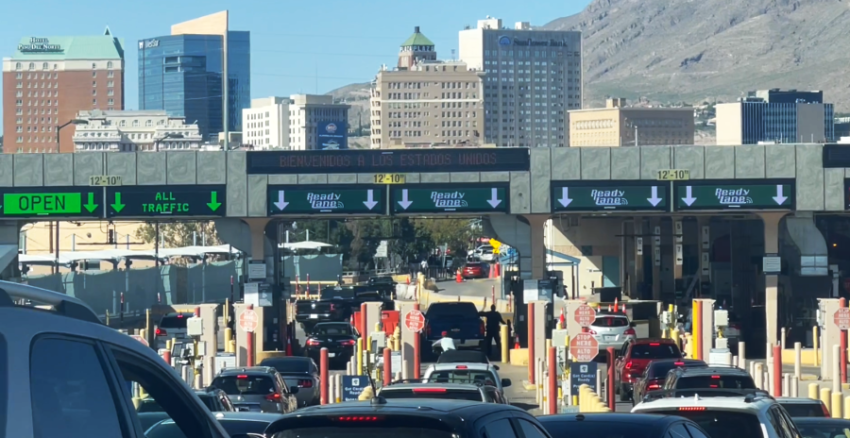
EL PASO, Texas (Border Report) – The City of El Paso and a Mexican University are trying to find out who comes across the international bridges and why. Such data could be useful for researchers and businesses hoping to benefit from binational foot and passenger car traffic, city officials said this week.
It’s important to discern those answers “so that we can quantify how much are Mexican residents spending over here,” said Carlos Olmedo, strategic projects manager for the International Bridges Department. “People cross for different reasons in June than they do in December.”
He said the survey aims to provide reliable user data in place of “anecdotal evidence.”
The joint effort by the city and Mexico’s Colegio de la Frontera Norte (Northern Border College) started in 2019 but was interrupted by the COVID-19 pandemic. Preliminary results from November 1, 2023, to June 30, 2024, show most of the thousands who line up at the bridges every day to enter the United States or walk over to Mexico are locals.
In a presentation to City Council this week, Olmedo said 71 percent of the estimated 10.8 million border crossings in that period involved Mexican residents and the other 29 percent U.S. residents. All but 2 percent of people using the region’s international bridges live outside Juarez, Mexico, and its suburbs, El Paso County or nearby Dona Ana County, New Mexico.
The pollsters asked for place of residence rather than citizenship because many American citizens, especially students, live in Juarez and commute to school or work, Olmedo said.
What the ongoing survey has shown so far is that those commuting to El Paso from Mexico are much younger than the American residents that visit Juarez. The largest cohort of Mexican residents using the bridges are between 20 and 38 years old, while the largest group of U.S. residents crossing into Juarez are 60 or older, Olmedo said.
The economic data gathered so far indicates Mexican residents crossing the border have an average income of $13,000 a year – which is high for Mexico. The American residents visiting Juarez report an average yearly income of $24,000, which is low for Texas and the U.S., but may reflect many are retirees.
The three primary reasons why Mexican residents cross the border are shopping, social (visiting friends or family members) and work; American residents overwhelmingly cross into Juarez to visit family and friends, but one out of seven goes to see a doctor or dentist or buy medication more affordable than in the U.S., the ongoing survey reveals.
“We asked pedestrians, once you cross (into the U.S.), how do you get to your destination? Twenty-one percent use public transportation,” Olmedo said, urging council to keep that in mind when discussing Sun Metro, the city’s bus system.
The Mexican residents typically don’t spend much time in El Paso, averaging six hours. The time Americans spend in Juarez varies, with some reporting staying across the border overnight.
As far as spending, seven out of 10 Mexican residents who come shopping are looking for retail products such as clothing, food or general merchandise in box stores or malls. Only 29 percent say they come to shop for professional or other services.
Some council members asked Olmedo for more detailed economic data, how many motorists on the bridges use electrical cars and whether the city continues to pay U.S. Customs and Border Protection officers overtime to keep more inspection lanes open at the bridges to speed up traffic.
Olmedo explained the pollsters have limited time to conduct interviews with people on the move, so the number of questions asked are limited as well. The survey does not include commercial vehicle crossers or those who use the bridges between 11 p.m. and 6 p.m. He said that time period would pose safety risk for the researchers who are based in Juarez.
Mayor Oscar Leeser said the city continues to operate the Private Public Partnership (P3) CBP overtime program but that the funds come from user fees – tolls that the city collects at the international bridges it manages – and not from the city’s general fund.
The International Bridges Department says the CBP overtime payments are about $1.6 million.
Read: Read More