



EL PASO, Texas (Border Report) – It’s a tragic anecdote that illustrates the chaos President Donald Trump’s on-again, off-again trade tariffs have brought to the U.S.-Mexico border in the past few months.
“One client brought a truck across […] and he got hit with $17,000 in tariffs he can’t undo,” said David Panko, manager of Foreign Trade Zone 68 in El Paso. “Had he waited until after lunch, he would have been fine.”
That was right after Trump slapped a 25% tariff on Mexican imports that he soon took back except for some specific items.
Other industries are rushing to safe heavens until clarity and consistency emerges in a global trade environment turned on its head since Jan. 20.
“I got a call this morning, ‘Where can I find a warehouse?'” Panko shared. “‘I want to hold my material there for five years. I want to bring it out in five years when the duty is low, when there’s a new president in place or something.’”
Still others are ready to explore alternatives now.
“Our phones are ringing off the hook. […] We probably get a new Free Trade Zone client every day when we used to get six a year,” Panko said. “Suddenly, everybody starts doing the math and thinks, ‘that portion of material, if I do it here at the Foreign Trade Zone in El Paso, it’s going to be less expensive than the 25% tariff coming out of Mexico.’”

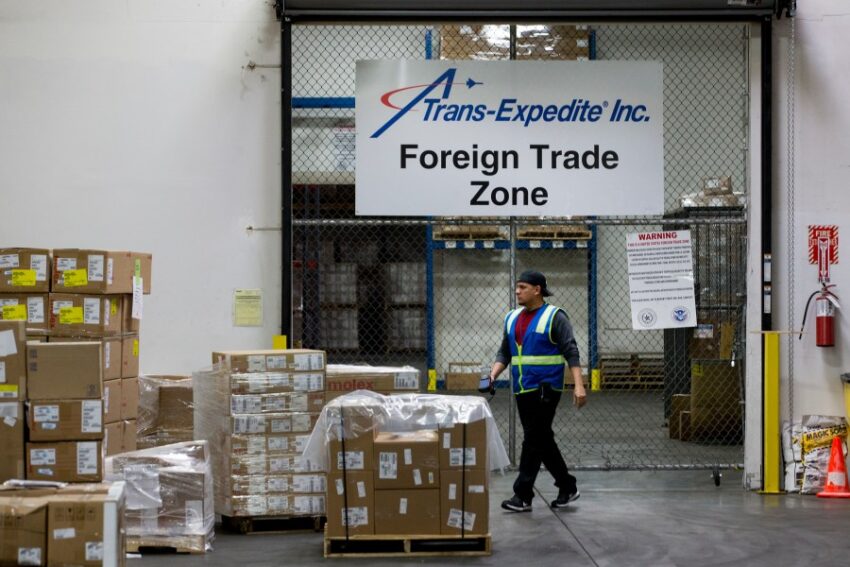
A foreign trade zone is a designated area inside the U.S. where companies can store or manufacture goods from other countries without paying duties until the products are shipped out. FTZ 68 is at El Paso International Airport.
Panko was guest speaker at Thursday’s 2025 Global Border Summit sponsored by The Borderplex Alliance in El Paso. Other panelists shared similar views on how not just the border, but the entire U.S. industrial complex doesn’t know what to expect when doing business internationally.
They fear the administration’s hardline tactics to balance the trade deficit with other nations and bring home jobs sent abroad earlier may cost them future business.
“Tariffs create a fragmented and challenging world, and one of my fears is how this will alienate some of our trading partners,” said Brad Wood, a senior director of the Washington, D.C.-based National Foreign Trade Council.
The council released a statement last month sympathizing with Trump’s stated goal of growing production of manufactured goods, agriproducts and services in the U.S. But it also warned that steep tariffs would not accomplish that objective.
“While the price of imported goods will undoubtedly rise, the president’s tariffs will also tack on added costs to American manufacturing and farming,” the statement said. “Consumers should expect to see higher prices for everything from groceries to home renovations to auto insurance as construction and repair costs rise.”
Wood said he has not seen much pushback from the business community nor members of Congress to the Trump trade agenda.
“As we get closer to mid-term (elections), maybe they can be dialed back. What we need is pressure here in the region, companies talking to their representatives,” he said at the summit.
One local elected official said the political damage caused by the tariffs will take years to wane.
“What I am hearing is even if you get lower tariffs or things get better, countries are not going to forget how vulnerable they were and they are going to start seeking options,” said El Paso County Judge Ricardo Samaniego. “Before, the United States was the option. But now you say, ‘Do I want to go through that situation?’ And they start talking to other countries.”
Samaniego, who helped kick off The Borderplex Alliance summit on Thursday, said he’s also concerned about how the world now sees ordinary Americans.
“Years ago we had the Ugly American syndrome. We had gotten rid of that. People were more accepting of Americans,” Samaniego said. Now Canadians, for instance, are saying, “‘You are the ones OK with this; you elected these people.’ That means if I go to Canada, I may not be liked.”
The Borderplex Alliance’s 2025 Global Border Summit featured a daylong program at El Paso’s Plaza Hotel and a luncheon at the Paso del Norte Hotel featuring Karl Rove and Joe Manchin. Rove is a political strategist and former senior advisor in the George W. Bush administration. Mahcin is a former independent senator from West Virginia.
 Read: Read More