



By Kent Paterson
On a recent sunny day, tourists and locals on Puerto Vallarta’s ocean front boardwalk, the Malecon, watched intensely as a Mexican navy helicopter buzzed the water carrying out practice maneuvers with a patrol boat. The military machines conducted their exercise minutes after a group of four humpback whales had splashed the same waters for different, ancient purposes in this season of mating and birthing. For the humans, however, it was a time of recovery, regrouping and rethinking.
In the days after the Mexican military’s killing of drug lord Nemesio Rubén Osegura Cervantes, aka “El Mencho,” and the subsequent narco rampage that paralyzed Puerto Vallarta and several other regions of the country on February 22, people in this Pacific coastal resort located in Jalisco state were trying to make sense of what brought their city to its knees and return to some semblance of normal life.
Praising Mexican troops and security forces for taking down El Mencho, President Claudia Sheinbaum tried to assure Mexicans that the government was in control.
“Guaranteeing peace and security for the whole population, for all of Mexico, is the most important thing at the moment, and (security forces) are doing just that,” Sheinbaum said at her February 23 press conference. “There is more tranquility today. There is government. There are the armed forces. There’s the security cabinet, and there is a lot of coordination.”
In her post-February 22 daily morning press conferences, Mexico’s first woman president has maintained an upbeat tone, focusing on matters like last year’s tourism growth, the long-awaited congressional passage of the 40-hour work week, electoral reform and highway investments, among others.
Nationwide, an estimated 70 people were killed in the February 22 upheaval that engulfed at least 20 states, including 25 National Guard personnel in Jalisco, according to Mexican government statements and press accounts. So far, three deaths can be attributed to the Puerto Vallarta episode. These include a prison guard killed in a jail break, an escaped prisoner later reportedly gunned down in a confrontation with authorities, and an unfortunate man who was killed by an explosion on the outskirts of Vallarta during an official demolition of a bridge that was attacked and severely damaged on February 22, according to Mexican media outlets.
Within 48 hours of February 22, Puerto Vallarta’s restaurants and bars began reopening and public transportation was moving again. But ominous signs pointed to a difficult rebound- at least in the short to medium term. Three days after what is becoming known as “Black Sunday,” a very long departure line snaked to the airport counter of the Canadian airline WestJet. Cruise ship visits (which mean income for tour guides and select businesses) and sporting event cancellations extended into March. Classes were largely canceled the week after the narco attacks. Garbage piled up on the streets as service was slow to resume normal operations.
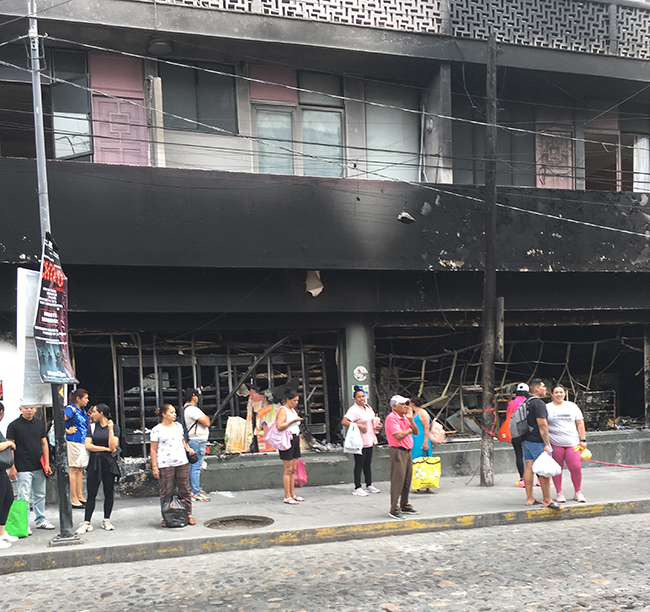
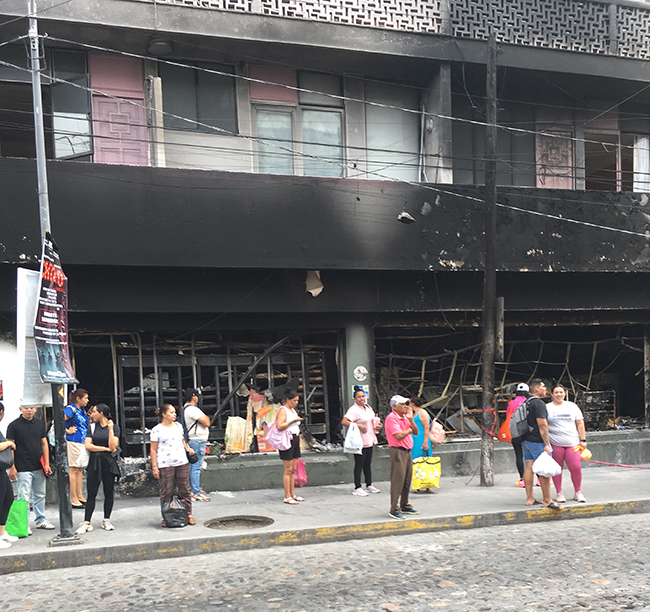
Quoted March 4 in Tribuna de la Bahia, Misael López, chief of Puerto Vallarta’s civil protection department, gave a preliminary run-down of the destruction wrought on February 22. According to the piece, 228 vehicles were burned and 141 businesses torched, vandalized and/or looted. “We’re waiting for some businesses to report to us,” Lopez cautioned. Heavily hit were two convenience store chains, OXXO with 62 affected properties and Kiosco with 59.
(OXXO is owned by the FEMSA conglomerate which also has stakes in Coca Cola, Heineken beer and pharmacy chains. Besides snacks, OXXO stores do a brisk business in liquor and tobacco sales, digital financial services and cellphone recharges. Also enjoying a presence in several other Latin American nations, OXXO has recently been expanding in Texas and New Mexico. A similar but smaller enterprise than OXXO, Kiosco is Mexican-owned with hundreds of stores in several regions.)
Until now, no total monetary losses from the carnage have been released, but the figure is likely to run into the tens of millions of dollars in Puerto Vallarta alone. Hundreds of store workers are now without work. To ease the pain, all three levels of the Mexican government have variously pledged to compensate property losses not covered by insurance companies, assist workers, offer loans and postpone business license fees.
Authorities, meanwhile, issued photos of 23 prisoners who were sprung from the local prison by an armed commando during the mayhem of February 22. Four of the escapees were later reported recaptured and one other killed in a subsequent confrontation. The prison warden was sacked and a former one reinstated, according to the Puerto Vallarta press.
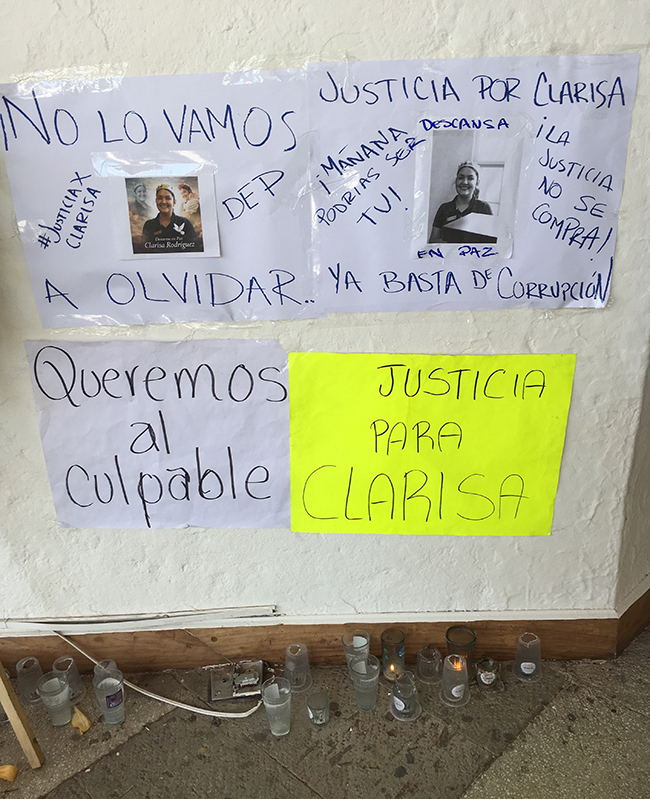
February 22 unfolded in a town already on edge. By January, many locals were complaining of an apparent decline in foreign tourists. The weather and waves were temperamental too, with temperatures hotter than normal on some days and beaches closed several times because of rough waters. For two days in January, air and land transportation were disrupted during a protest by relatives and friends of Clarisa Rodríguez, a mother of a young boy who was critically injured in an ugly traffic accident while driving to her job. The incident became a major local story-and magnet for public angst- as the young woman languished in the hospital for two weeks before dying.
Demanding justice and the offending driver’s arrest, Clarisa’s supporters blockaded Puerto Vallarta’s main boulevard connecting to major transportation, commercial and lodging hubs. Though protests of this nature are common in other parts of Mexico, they’re rare in Vallarta, where upholding a positive tourist image is of paramount importance.
Yet in a larger sense, the Clarisa Rodríguez protests illustrated simmering public discontent over a wide variety of issues, including frequent water service cut-offs, sewage spills, periodic power outages, dangerously overcrowded and rickety city buses, crappy roads, and the outrageous cost of living. As if even the rain gods were not happy, an unusually intense winter rainstorm burst loose on the evening of January 31-February 1, drenching the town and flooding some streets.
Enter The U.S. Military and Treasury
Vallartenses were sucker punched by the widespread narco attacks of February 22, but long-running developments as well as events immediately preceding that day augured that something very bad was in the works. On February 16, U.S. military forces employing “lethal kinetic strikes” killed eight men on two boats somewhere in the Eastern Pacific Ocean. The killings were part of the Trump administration’s ongoing strikes against “narco terrorists” in a vast area of the Americas spanning both the Pacific and Caribbean oceans.
According to press reports, more than 150 people have been killed in the U.S military attacks. Like the other attacks, no physical evidence was publicly presented by Washington to justify its contention that the eight men killed were transporting drugs.
A four-sentence statement issued by the U.S. Southern Command on February 16 declared only that the men killed, labeled “narco-terrorists,” were traveling along “narco trafficking routes” and “engaged in narco-trafficking operations.”
On February, 18 stories in the Puerto Vallarta press began identifying seven of the eight victims as originally from La Cruz de Huanacaxtle, a small town about 15 miles northwest of Puerto Vallarta on Banderas Bay, and one victim from Corral del Risco, a village also located on the bay. For its part, the administration of President Claudia Sheinbaum has been publicly mum about the killings. The first names and initials of the purported victims, along with photos of the men with their eyes covered, were published in social media and Puerto Vallarta press outlets.
Since last year, Human Rights Watch, the Inter-American Commission on Human Rights and the UN High Commissioner for Human Rights have condemned Washington’s boat strikes as a violation of human rights standards.
According to Human Rights Watch: “Under international human rights standards, law enforcement officials can only deliberately use lethal force when strictly unavoidable to protect lives. The fact that the US government is using military personnel to carry out what should be law enforcement efforts does not make this framework any less applicable….The US boat strikes constitute extrajudicial killings—unlawful killings carried out by state authorities without any legal justification or process.”
Three days after the still murky U.S. military strikes, the U.S. Department of Treasury unveiled sanctions February 19 against five Mexican nationals and 18 Mexican businesses allegedly connected to El Mencho’s Jalisco New Generation Cartel (CJNG). A major part of the legal action involves a “time share fraud network” centered around Kovay Gardens, an upscale resort coincidentally situated in La Cruz de Huanacaxtle.
While time share hustles existed long before the CJNG was formed, the U.S. Treasury case lays out an increasingly sophisticated, multilayered fraud model designed to bilk gullible buyers of the greatest amount of money possible.
“These complex scams often target older Americans who can lose their life savings,” a U.S. Treasury press release reads.
Citing the FBI, the press release contended that approximately 6,000 U.S. citizens reported losing nearly $300 million in Mexican time share scams from 2019 to 2023, with another 900 or so complaints accounting for an additional $50 million in 2024.
The Disappeared Don’t Just Go Away
As February advanced, Mexican military patrols on Puerto Vallarta’s streets became more visible. On Sunday, February 15, the day after Valentine’s Day, two army vehicles mounted with high caliber rifles similar to the guns smuggled from the U.S. for cartel use, parked on the edge of Parque Hidalgo in the heart of Puerto Vallarta’s tourist zone.
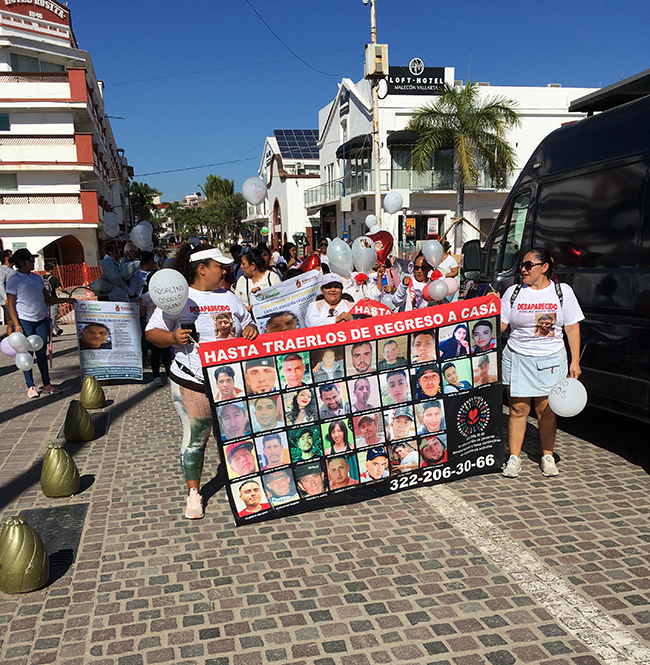
Two hours later, around the corner from Parque Hidalgo and in front of a McDonald’s restaurant, relatives of disappeared persons prepared to stage a demonstration. “We do it for the love of them,” said María de Jesús, spokesperson for the group of mainly women who represented families from Puerto Vallarta and the adjoining municipality of Bahia de Banderas, which now form a growing metro area.
Numbering about 40 people, the protesters carried large posters with photos of disappeared men and women, many of them vanished years ago. María de Jesús’ brother, for instance, disappeared 17 years ago. Presumed victims of forced disappearance by criminals, the photos also included cases from Sinaloa and Mexico states. One woman accused Puerto Vallarta police of disappearing a loved one. “Be careful of the police,” she warned.
According to local press accounts, about 500 people are currently reported disappeared in Puerto Vallarta. The activist relatives are among many in Mexico known as buscadoras who investigate their loved ones’ whereabouts and make sure their cases aren’t forgotten, often incurring grave risks to their own safety in the process.
The principal demands of the Puerto Vallarta-Bahia de Banderas activists are the “finding of every one (disappeared)” and justice for the families, María de Jesús said.
Hoisting a banner with photos of disappeared persons and clutching white and heart-shaped balloons, the relatives marched down the touristy Malecon to the gazes of onlookers and the snapshots of local police.
Family members paused at a popular landmark where a woman with a bullhorn read off the names of disappeared persons. In call and response fashion, the relatives responded with “Now and forever present.” Other chants were voiced. “For how long? Until we find them,” the group chanted.
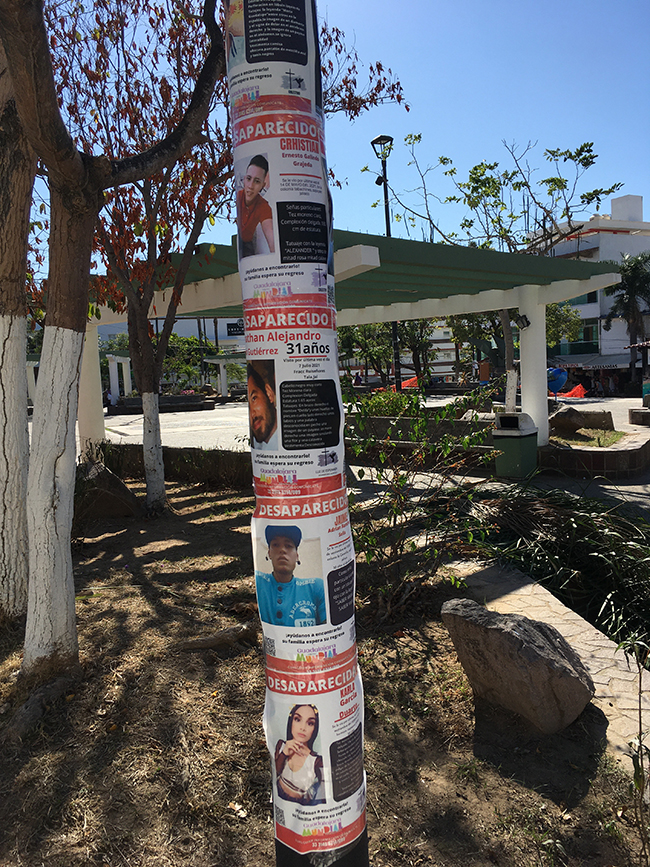
The following week, Puerto Vallarta was plastered with official posters of disappeared persons, many of them from the big city of Guadalajara about a four-hour drive away. Utility poles were covered with photos and basic info about the disappeared. At the same time, the Jalisco state government opened an office in the port city to attend local cases.
Only hours before the attacks unleashed on February 22, marines were seen patrolling a popular Vallarta night club zone. Simultaneously, the operational noose tightened around El Mencho. As the saying goes in Mexico, “the plaza was heating up.” El Mencho was soon killed, and all hell broke loose.
What Next?
In the aftermath of “Black Sunday,” many Vallartenses expressed shock, anger, bewilderment, and fear. Folks were pissed at the cartel for snatching private cars and targeting civilian properties. And they were upset at the government for not showing its face during the Sunday morning chaos.
Many wondered why convenience stores were a primary target. In contrast, bars and restaurants were largely left untouched. Questions lingered in the air. Would more violence follow? Who holds the real power here? Could a February 22 happen again? In a tourist-dependent entity, more than a few feared their jobs and income would dry up and economic ruin come to town, perhaps even echoing 2009-11 when the swine flu scare and the Great Recession whacked the port, or in 2020 when the COVID-19 pandemic hit. Strikingly, the days surrounding February 22 recalled a bit of 9-11 and a slice of the COVID-19 pandemic.
Mexicans have an old saying about February and March- “Febrero loco y marzo otro poco,” which translates as “February is crazy and March some too.” in 2026, that dicho certainly fit Puerto Vallarta.
Read: Read More