



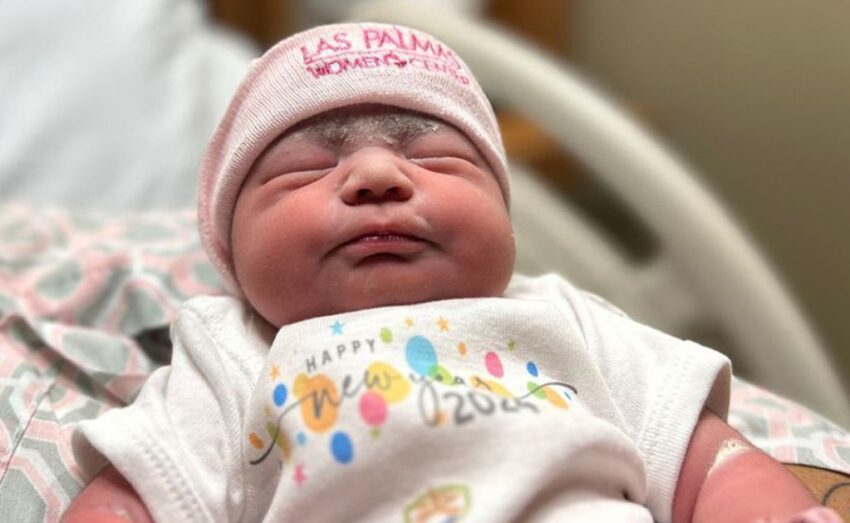

Fewer than 11,000 children were born in El Paso in 2024, continuing a dramatic decline in births that will reshape El Paso’s education system.
According to preliminary data from the Texas Department of State Health Services, El Paso County residents gave birth to 10,792 babies last year. It was the second straight year that El Paso residents had fewer than 11,000 births – a level not seen in El Paso since the 1970s, when the county had about half the population it has today.
The rapid decline in births has multiple impacts in El Paso. School enrollment is the most obvious and most immediate impact. The city’s largest school district, El Paso Independent School District, has seen the largest enrollment drop over the years, which led to a controversial decision last year to close eight elementary schools.
The neighboring Ysleta Independent School District also has faced steep declines and has closed and consolidated campuses in recent years.
Birth trends indicate that the enrollment declines will accelerate in the coming years, creating more pressure on school districts to close and consolidate campuses.
While such decisions up to now have focused on elementary and middle school campuses, some El Paso districts almost certainly will have to consider closing high schools in coming years.
A look at future elementary school enrollment
Birth trends are a helpful but imperfect way to project future school enrollment. Changes in migration – both domestic and international – also shape that trend. But birth rates are usually the most important indicator of future enrollment.
The birth rate impact on enrollment won’t be evenly distributed among the nine school districts and several charter school systems in El Paso. Parts of the eastern, northern and northwestern edges of the El Paso city limits have seen modest population growth in recent years. So have some areas in eastern parts of the county outside the city limits.
But most – maybe all – El Paso County school systems likely will see some level of enrollment decline in coming years.
At the turn of the century, most El Paso school districts were struggling with student population growth – too many students and not enough classrooms. Large numbers of portable classrooms were placed on school grounds because districts couldn’t build new campuses fast enough.
Looking ahead, the challenge will be reversed – too many classrooms and not enough students.
Birth rates first impact enrollment in elementary schools, which is why they have accounted for most of the closures in recent years.
To project elementary school enrollment impact from birth trends, El Paso Matters looked at three cohorts – the children born between 2014 and 2018, who make up most of the enrollment in El Paso elementary schools this year; children born between 2020 and 2024, who will make up the bulk of students in first through fifth grade in 2030; and children born between 1992 and 1996, the peak years for births in El Paso, who would have been in first through fifth grades in 2002.
When children born last year enroll in first grade in 2030, birth trends suggest El Paso County schools will have more than 8,600 fewer students in grades 1-5 than they do today, and more than 12,000 fewer students than in 2002.
Student enrollment at individual elementary schools varies throughout El Paso, but if you use 400 students as enrollment for a typical elementary school, the birth trend suggests El Paso County will need 22 fewer elementary schools at the start of the next decade than they have today.
An elementary school with 400 students has about 25 teachers. So shuttering 22 elementary schools would mean school systems would need about 550 fewer elementary school teachers.
Middle school enrollment projections
Middle school enrollment has begun to decline in El Paso County in recent years, though not as rapidly as elementary schools.
But by the time children born in 2024 enter sixth grade in 2035, birth trends suggest middle school enrollment – grades 6-8 – will be in sharp decline.
The number of births for children who will make up the bulk of the middle school class in 2035 is almost 7,900 fewer than births in the years that make up current middle school enrollment. And it’s more than 14,000 fewer than when kids from El Paso’s peak birth years were in middle school in 2005.
The number of students in individual middle schools varies, but 700 is a typical population. That suggests that El Paso will need about 11 fewer middle schools when students born in 2024 start showing up.
A middle school with 700 students has about 50 teachers, so a reduction of 11 middle schools will mean 550 fewer teachers would be needed.
What about high schools?
El Paso County’s high school enrollment hasn’t yet started to decline, but that’s likely to change in the next year or two. And by the time children born in 2024 start going to high school in 2038, enrollment likely will have declined significantly based on birth trends.
The number of children born in the last four years in El Paso County is more than 12,000 fewer than the number of births between 2007 and 2010, when most of the county’s current high school population was born.
During El Paso’s birth peak between 1992 and 1995 – which would make up the bulk of the high school population in 2006 – the number of births was almost 19,000 higher than over the past four years.
El Paso currently has a multitude of traditional and specialty high schools that vary widely in population. But a population of around 1,800 students is typical for a traditional high school in El Paso County.
Based on birth trends, El Paso would need about seven fewer high schools of 1,800 students in 2038. A high school that size currently has about 115 teachers, so a reduction of seven high schools could result in a need for 800 fewer high school teachers.
Many El Paso residents – and even people who moved away from El Paso – identify by the high school they attended. A decision to close a high school would be among the most fraught arguments to be had in El Paso, but the likelihood is that we may face several such decisions in coming years.
The impact on colleges
A significant decline in high school students means fewer high school graduates, which potentially means fewer students to enroll in college.
A recent report from the Western Interstate Commission for Higher Education found that the number of high school graduates nationally is expected to peak this year and then decline steadily through 2041. That tracks with what is happening in El Paso.
The report said that increasing or even maintaining the number of students seeking post-secondary education will require significant improvement in high school graduation rates and the percentage of high school graduates who choose to continue their education.

“Making such progress may be possible, but it will require collaboration between the federal government and states, continued adoption of evidence-based policies and practices, and a renewed commitment across higher education to providing different pathways that accommodate today’s contexts and students,” the report said.
El Paso County residents make up the vast majority of students at the University of Texas at El Paso and El Paso Community College. About half of the El Paso County high school graduates in 2023 enrolled in UTEP or EPCC the fall after completing their secondary education, according to data from the Texas Higher Education Coordinating Board.
If 3,000 or more fewer students are graduating from El Paso high schools by 2040 – as birth trends indicate – that suggests hundreds fewer local students enrolling each year in an El Paso higher education institution upon graduation.
Local higher education institutions likely will have to get a higher percentage of high school graduates to enroll, and recruit more students from elsewhere, to offset the birth decline in El Paso County.
Why are El Paso births dropping?
A number of factors likely play a role in the 20% decline in births in El Paso since 2014. Birth rates are dropping nationally, though only at about half the rate of El Paso’s decline, as women have fewer babies.
El Paso continues to see a significant loss in people moving from one U.S. county to another, which demographers call net domestic migration. El Paso had a net loss of more than 12,000 people in movement between U.S. counties from 2020 to 2023, according to U.S. Census Bureau estimates.
That net loss is similar to what El Paso has experienced for decades. Historically, that loss was offset by people moving to El Paso from other countries, primarily Mexico. But immigration to El Paso has slowed dramatically. El Paso had a net gain in international immigration of about 4,000 people between 2020 and 2023, according to the Census Bureau.
The majority of people who move from one county to another are between the ages of 18 and 44.That’s the age group that accounts for the majority of births in the United States. So if El Paso is exporting young and middle-age adults, it’s also exporting people more likely to have babies.
People move from one community to another for a variety of reasons, with the top three being housing needs, family situation and employment. El Paso’s private sector wage rates are consistently about 40% below state and national averages, while housing costs are 14-29% lower.
The post As births plunge, El Paso could need far fewer schools in coming years appeared first on El Paso Matters.
Read: Read More