



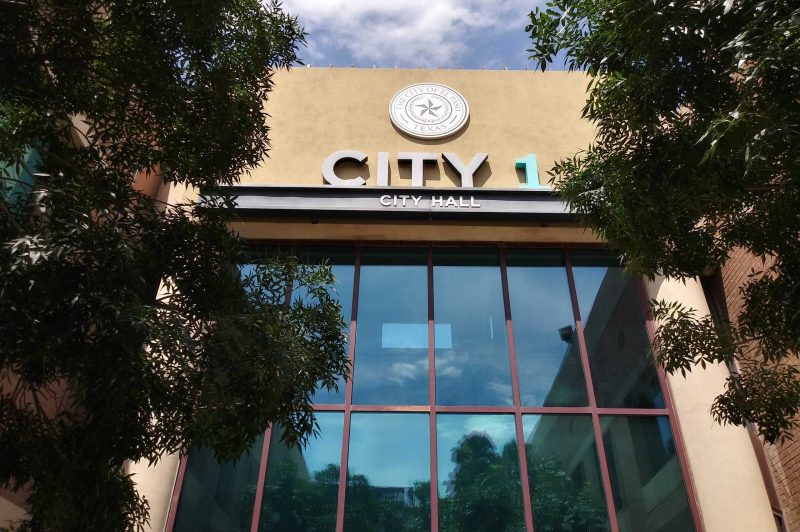

The owner of an average-value home in El Paso would pay about $105 more in city property taxes to fund the first draft of next year’s proposed budget, city leaders said Wednesday.
The El Paso City Council kicked off its budget sessions this week. The budget, and the property taxes needed to fund it, are in the early stages.
Robert Cortinas, the city’s chief financial officer and deputy city manager, presented a preliminary tax rate of 78.3 cents per $100 property valuation at a City Council meeting Wednesday. That means, based on preliminary figures, that the average-value home of $233,549 would pay $1,785 in city taxes next year. This year, the average home within the city limits was valued at $221,191 – putting the city’s tax bill at $1,680.
The preliminary tax rate sits between two key rates used in budgeting, city officials said. One is called the no-new-revenue rate, or what’s needed to collect the same amount of money this year from the same properties that were on the tax rolls last year. The other is the voter-approval rate – the highest rate that can be adopted without an election.
The city didn’t provide estimated no-new-revenue or voter-approval rates used in its calculations.
But Cortinas said adopting an estimated no-new-revenue rate would result in an increase of about $30 on the average-value home.
“The no-new-revenue tax rate does not mean that you will not see an increase in your tax bills, (it’s) all dependent on the value of your home,” he said.
City spokesperson Laura Cruz-Acosta told El Paso Matters both rates will be provided after the city receives certified property values in July. The city began the budget process about six weeks earlier than usual to provide more time for City Council discussion, “increase transparency, and expand communication with the community before final adoption,” a city news release states.

The city’s preliminary overall budget is $1.4 billion – including the $655 million general fund that pays for public safety services, streets and quality of life amenities such as parks and libraries funded primarily through property taxes, sales taxes and city service fees. The rest of the budget includes grants, debt and other special purpose funds.
The proposed general fund represents an increase of about 5% over the current year.
“This really is a balanced budget that takes into consideration the things that we know will happen next year and years moving forward,” City Manager Dionne Mack said during the Wednesday meeting.
Mack said city leadership has taken into account staffing, unfunded state mandates, police and fire contractual obligations, maintaining services and avoiding using one-time funding sources — such as dipping into its reserves — for next year’s budget.
Cortinas said increases to homestead exemptions for disabled veterans and a business personal property tax exemption approved by voters in November resulted in a loss of about $11 million in city revenue.
“Those are fantastic forms of tax relief for businesses and for our disabled veterans,” Cortinas said. “We present that information because it has a financial impact on the city.”

Also impacting the proposed budget and tax rate is the need to issue debt from voter-approved bond measures.
The city had not issued new debt during the last three fiscal years, but anticipates issuing $70 million from the $226 million voter-approved 2022 Community Progress Bond that included park, street and climate action plan initiatives.
The city has completed multiple projects from the $413 million public safety bond approved by voters in 2019. While the city does not anticipate issuing new debt from that bond program for the next fiscal year, operations and maintenance costs for new facilities are expected to grow.
“That debt issuance does have an impact on the tax rate increase that we talked about this morning, so about a penny more or less of the impact is from the debt service that we have,” Cortinas said.
What’s next:
• June 1-11: Community presentations. (Full list here.)
• June 22-23: Budget workshops continue; City Council adjustment requests to be considered, community feedback and a fee study to be presented.
• July 17: Proposed budget to be filed with the City Clerk.
• July 30: Budget workshops continue with certified values; tax rate ordinance introduced.
• Aug. 18: City Council to adopt final budget and tax rate.
The post Average El Paso homeowner could pay about $105 more in city taxes next year appeared first on El Paso Matters.
Read: Read More