




Colorectal cancer was historically considered a disease that afflicted the elderly, but El Paso doctors said they’re seeing younger patients now more than ever before.
Since the 1990s, the median diagnosis age has shifted from 72 to 67. Early-onset colorectal cancer is now the leading cause of cancer-related deaths among people younger than 50, according to a report from the American Cancer Society.
The disease came under national spotlight in February when “Dawson’s Creek” actor James Van Der Beek died from colorectal cancer at the age of 48, as well as in 2020 when “Black Panther” actor Chadwick Boseman died from colon cancer at 43.
Doctors at University Medical Center of El Paso are encouraging adults to be aware of warning signs they might overlook and to talk to their physicians about getting a screening, either through a home stool test or a colonoscopy.
“Lots of patients we’ve had to beg them to get a colonoscopy, even my mom who’s already way over 45,” primary care physician Dr. Taylor Infante said. “They say, ‘I don’t want to do prep and have to take off work and do the whole thing.’ It’s very common for there to be a lot of resistance to the colonoscopy.”
In El Paso County, the colon and rectum are the second leading sites for cancer in both men and women, with an estimated 340 new cases reported in 2023, according to Texas Tech Health El Paso.
At UMC, people under 50 made up 6% of all colorectal cancer diagnoses in 2018. That age group made up 21% of diagnoses in 2025, according to data the hospital provided to El Paso Matters. UMC has diagnosed more than 1,500 people with colorectal cancer since 2018.
UMC spokesperson Estefania Morgan noted that these numbers don’t necessarily reflect the occurrence of cancer in the El Paso community because they’re based on volume of tests – the more diagnostic procedures UMC performs, the more positive diagnoses it will make. There were fewer people diagnosed with cancer in 2020 because of disruptions related to the COVID-19 pandemic.
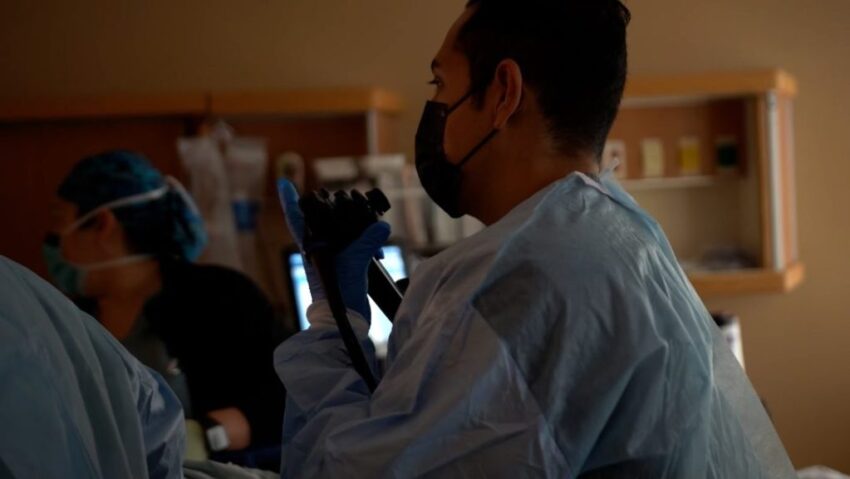
Colorectal cancer often starts as benign polyps in the large intestine or rectum that turn cancerous over time. The purpose of screening is to find and remove the polyps before they become cancerous, said gastroenterologist Dr. Jesus Guzman.
“When you start before 50 looking for polyps, we’re not expecting to see cancer,” Guzman said. “The problem is we’re seeing cancer at that time. … Actually nowadays, incidences, how often we find something, and mortality from this disease was lowering in older age groups, but we saw the trend uptick in younger age groups.”
Guzman said researchers studying the gut microbiome haven’t pinpointed the exact reason why there’s a surge in colorectal cancer in young adults, but suspect a diet of highly processed foods, obesity, sedentary lifestyle and antibiotics exposure are associated.
When should I get a colon cancer screening and which test should I get?
The U.S. Preventive Services Task Force lowered the recommended age for a first colorectal cancer screening from 50 to 45 to address the rising rate among younger adults, who are more likely to get a diagnosis for an advanced stage of cancer because of delayed detection.
People who have a family history of colorectal cancer should start screening when they’re 10 years below the youngest family member’s age of diagnosis, Infante said.
There are pros and cons to taking a stool test at home versus getting a colonoscopy at a clinic, Infante said. A colonoscopy requires a referral to a gastroenterologist, while a home test consists of collecting a stool sample at home and dropping it off at a lab, or mailing the sample if it’s a mail program. Home tests are typically more convenient, cheaper and don’t have a copay, so patients tend to choose that option more often because they don’t have to take time off work or prepare as much as they would before a colonoscopy procedure, Infante said.

People can take stool samples in the privacy of their own home and any test that convinces people to get screened at all is a good thing, Guzman added.
A colonoscopy is the gold standard way to screen for colon cancer and depending on the results, a patient could be good for five to 10 years before their next exam, Infante said.
A home stool test has to be repeated every year or three years depending on the type of test, she said.
The fecal immunochemical test, or FIT, detects blood in stool samples and must be repeated yearly. The DNA-based test Cologuard detects both mutated DNA and blood in stool and can be repeated every three years.
These tests have different sensitivities, Guzman said. The FIT finds microscopic amounts of blood that can be from anything, such as inflammation or a hemorrhoid, and has around an 80% accuracy rate for detecting colorectal cancer. The Cologuard test has a higher accuracy rate, though there is the possibility of a false positive, he said.
One con for the home tests is that if they find something, the patient should follow up with a colonoscopy that may not be fully covered by health insurance because it’s no longer considered a preventive screening, Guzman said. The Affordable Care Act requires insurance companies to cover colonoscopies after abnormal stool tests as preventive, but companies may classify the follow-up as diagnostic because of billing error or the patient’s medical history.
Guzman said he’s a proponent of colonoscopies because if doctors find polyps, they can diagnose and remove the growths at the same appointment depending on their size.


Infante said the most common questions she gets from patients about colonoscopies are how long it will take and whether the procedure will hurt. The prep, procedure and monitoring period afterward take about two hours, she said. The patient has to adhere to a clear liquid diet the day before and drink a solution to clear out the intestines.
Since the patient will undergo anesthesia that makes them sleepy, they need someone to drive them home afterward, Infante said. Sedation is not recommended for pregnant people, so those patients should hold off on screenings, she added.
What are the risks and symptoms of colon cancer?
Infante said a diet in processed foods and meats, such as deli meat and hot dogs, has been linked to cancer. Alcohol and smoking, as well as a low-fiber diet, can increase the risk for colon issues, she said.
Then there are risk factors that people can’t modify – age, genetics, the sex they’re born with, Guzman said. Hispanic people and men are more prone to develop colorectal cancer. Symptoms of colorectal cancer include bloody stool, unexplained weight loss, change in bowel habits, fatigue and abdominal pain.
“We are seeing an uptick in younger people getting colon cancer and the problem with colon cancer is patients don’t have a lot of symptoms,” Infante said. “That’s the scary thing. You don’t have symptoms until it’s very advanced.”
This is why screening is so important, Infante and Guzman said.
“In our community we wait to get screened,” Guzman said. “I grew up here. My tías and tíos, speaking from my family perspective, end up going to the doctor when something is wrong instead of focusing on prevention.”
The post El Paso doctors diagnose more colorectal cancer in younger adults appeared first on El Paso Matters.
Read: Read More