




Congress passed, and President Trump signed, the “One Big Beautiful Bill Act,” allocating over $170 billion for border security and immigration enforcement. Increased funding means more ICE agents on the streets, more arrests and detentions made, and more people incarcerated as they await legal proceedings.

In fact, $13.5 billion is allocated to reimburse states and localities for immigration and border-related enforcement activities. For a community like El Paso, which claims to stand for dignity and justice, this influx of federal enforcement dollars should prompt resistance. Yet, for a county quietly dependent on jailing migrants for profit, it may serve as a budget lifeline.
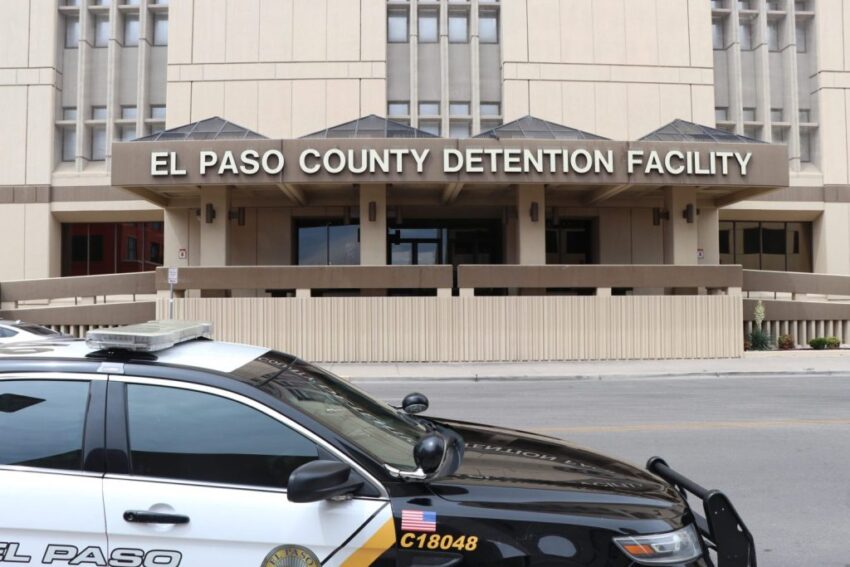
For years, El Paso County has treated its jails as revenue centers by contracting with the federal government to house federal detainees for cash, turning human freedom and dignity into a $110 per person, per day revenue stream.
As a criminal defense lawyer in El Paso, I regularly visit inmates in county jails charged with immigration-related offenses that carry criminal penalties in the federal system. Many are parents seeking to reunite with family, asylum seekers fleeing violence, or individuals just trying to provide better futures for themselves and their families. Yet, they are jailed in county facilities as a result of a broken immigration system, all the while county officials publicly complain about their inability to maximize the county’s profits off each day of their detention.
During the Nov. 4, 2024, El Paso County Commissioners Court meeting, the agenda included a presentation from county administration regarding factors impacting the jail population. The data presented indicated a significant decline in federal inmates housed at El Paso County jails, dropping from 829 in 2019 to only 65 in 2024 and a reduction of federal detention revenue from over $20 million in fiscal year 2022 to $5.6 million by FY24.
County officials attributed this sharp decline in large part to arrests under Operation Lone Star, Texas Gov. Greg Abbott’s 2021 border security initiative. Because county jails must take people arrested by state officers, the increased rise in individuals apprehended for state-level smuggling of persons and riot participation has shifted beds from revenue-generating federal detainees to state defendants who are budget expenses.
Last year, county officials estimated a loss of approximately $63,000 per day in jail revenue due to Operation Lone Star arrests. As County Judge Ricardo Samaniego put it, “It’s not only the loss of revenue. … Now that they’re state, we take care of the entire cost of an inmate.”
Now, a looming $18 million budget shortfall is on the horizon for county government. As elected officials wrestle with budget considerations for the upcoming fiscal year, possible tax increases and cuts to health, library and community services are all once again on the table.
Without federal detention dollars, the county faces the limits of its fiscal model while clinging to however much federal detention revenue remains to continue patching its budget.
This crisis, however, is also an opportunity. El Paso County can use this moment to wean itself off these compromised dollars by building a responsible budget that aligns policy with principle. Instead of treating people as line items, El Paso can chart a path forward that invests in its communities while rejecting the false necessity of for-profit jailing.
And it shouldn’t be that difficult; El Paso County officials claim to oppose harsh immigration enforcement. Samaniego told Congress in 2023 that El Paso’s approach to migration is rooted in dignity and safety. Last month, the Commissioners Court passed a resolution demanding transparency after ICE detained migrants following court proceedings. And just last week, El Paso County along with other parties scored a victory at the Fifth Circuit to block Texas’ Senate Bill 4 from taking effect, arguing the law’s harsh, unconstitutional enforcement would harm migrant families and erode trust in the community.
This legal victory is significant. It demonstrates that El Paso County is willing to fight harsh immigration enforcement in court to protect its residents, but it also highlights the hypocrisy of a county that profits from the system it claims to oppose.
One could even look at the litigation cynically and recognize that implementation of SB 4 will lead to more state-level arrests, which the county must pay to house, with zero federal reimbursement, further reducing the inventory of jail beds available to the county to rent out for federal detainees.
But this litigation can also mark a turning point. If El Paso is serious about fighting harsh enforcement, it must also confront its quiet complicity with the very system it claims to oppose.
Glendale, California — joining El Paso as one of America’s safest cities — solved a similar moral quandary by ending its own federal detention contract, recognizing that accepting federal dollars to jail migrants undermines its core values. Glendale shows it is possible to align public safety with community trust without selling out to increase revenue. El Paso can, too.
El Paso County is faced with a choice. Do we stand for dignity and justice even when it costs us financially? Or will we remain complicit in participating in for-profit jailing while claiming moral high ground?
These are not abstract debates; they are human lives, traded for budget stability under a system we claim to oppose as a community.
If we don’t confront this contradiction, these fraught times will expose the truth: El Paso’s compassion ends where the budget begins.
But it doesn’t have to be that way. El Paso can lead by proving that safety, justice and fiscal responsibility do not require profiting from migrant detention. This is our moment to align principle with policy — and to prove who we are.
Octavio Dominguez is an attorney and Partner at Castañon Dominguez Law, PLLC, where he practices criminal defense and civil litigation. He is a lifelong El Pasoan.
The post Opinion: El Paso County should stop profiting from detaining people on immigration charges appeared first on El Paso Matters.
Read: Read More