



By Frances Gunn
In late June, the El Paso Independent School District announced it would have an $18.5 million budget deficit for the coming school year, mostly due to falling enrollment. As the district revises spending, they have an opportunity to rethink the necessary services they offer to students.
Nearly 74% of students in EPISD are low income, meaning the district cares for some of the most impoverished students in the nation. And they often do it well. They take measures to keep students happy, healthy and in school. Free-lunch programs and after-school meals help students access the nutrition they need. Students have opportunities to exercise through PE and sports teams. Schools also provide mental health assistance through free in-school therapy sessions with licensed therapists.
The school district genuinely attempts to alleviate the burden of poverty; however, it fails in one aspect. Period poverty is as serious of a health concern as malnutrition, yet is completely unaddressed by EPISD. I know this because I’ve been working to address this problem in my schools for three years.
Nationally, one in four women and girls experience period poverty, which means they are unable to buy menstrual products. This ratio is likely much higher in El Paso. A lack of period products leads to girls missing school or work and the possible contraction of illnesses and infections, including the potentially fatal septic condition toxic shock syndrome.
This isn’t good for girls – or schools.
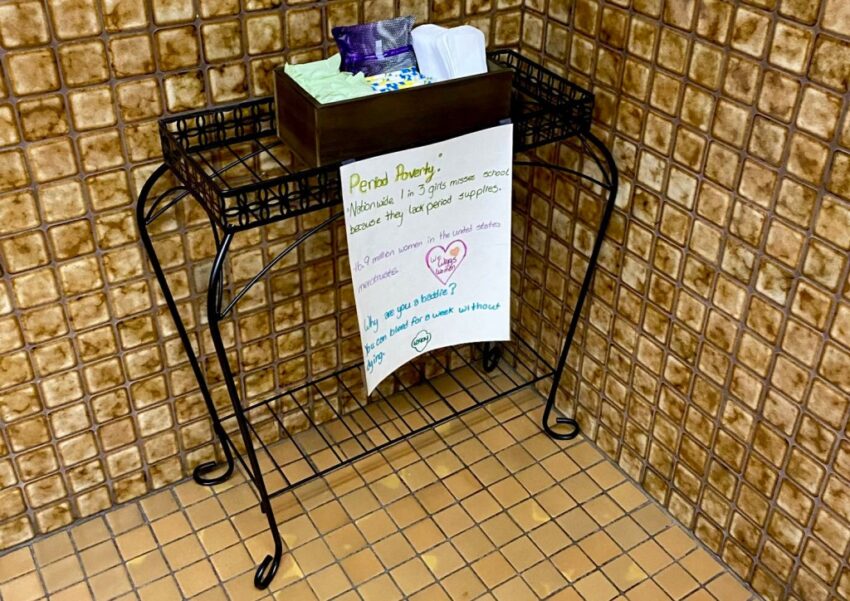
To address this problem, my Girl Scout troop, which includes me, Lucia Haugh, Leslie Anne Rutledge and Janna Safa, created a “menstruation station” program at both Wiggs Middle School when we were students there and El Paso High School for the past two years.
Starting in eighth grade, we stocked the schools with menstruation products that we distributed in bathrooms. To do so, we counted on private and community donations. We took action after learning about period poverty and because of our own experiences of feeling stigmatized.
We soon realized how much it was needed and appreciated when students, teachers and administrators would thank us for the stations.
One major reason why schools don’t provide this for girls already is because of stigmatization and inequality. In the past, periods have been considered unhygienic, embarrassing and sometimes even unnatural. These stigmas still exist, but more people have been adopting a different view of menstruation thanks to feminism.
Seventeen states and the District of Columbia have made it a requirement to provide menstrual products to students. While Texas is not one of them, Austin ISD provides students with products. It wouldn’t be radical or unheard of for EPISD to do this. In fact, they are late to the party.
So what would it require for EPISD to do this? Money – a lot of money in a time where they’re experiencing a deficit.
In total, EPISD serves 28,544 middle and high school students. (Elementary students would be exempt from this program as the number of elementary students menstruating is minimal.) Forty-nine percent of those students are female, meaning almost 14,000 students could benefit from the program.
According to a study by Harvard Medical School, the average woman spends $100 a year on menstrual products. This means that the program would cost roughly $1.4 million per year. However, there are two things to take into consideration. EPISD would buy products in bulk, which would significantly reduce cost.
Secondly, they may not have to pay for some supplies at all. My Girl Scout troop supplied two schools solely from the donations of community members and businesses. Among our sponsors, we had donations from Costco and Albertsons. Many large corporations will donate money to help communities and improve their public image. Typically, they work with nonprofits to address areas of need or poverty — a category this program would fall under.
There are ways to make this work, if the district is willing to explore every avenue. While it will be a challenge, the rewards will be greater than the cost. Providing female students with menstrual care would be consistent with EPISD’s other student wellness initiatives. Now is the time for EPISD to make sure that all students have a safe, healthy place to learn.
Frances Gunn will be a junior at El Paso High School this fall. In addition to being a Girl Scout, she is a section editor of the El Paso High School newspaper, The Tatler.
The post Opinion: EPISD should address ‘period poverty’ appeared first on El Paso Matters.
Read: Read More