




By Daniel Acosta Jr
Memories come to me in bits and pieces, as if jagged edges of glass cut into my mind, and flood me with images of my early life in El Paso.
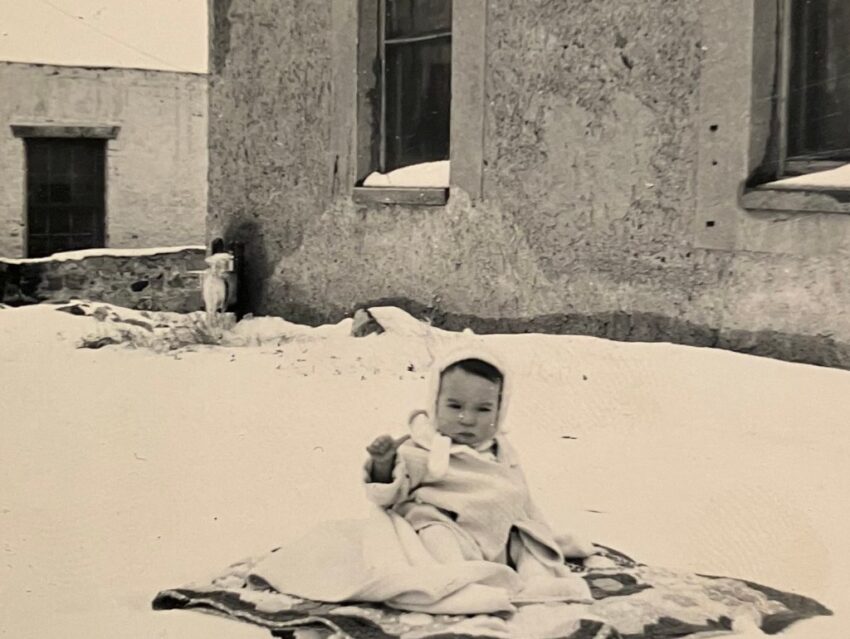
I remember when I was 3 or 4 years old and was playing in the front porch of Nana Cuca’s house, my mother ran to her and exclaimed in a loud voice: “Mira los colores de Danny en el sol” (look at the colors of his skin and hair in the sunlight). In other words, she was admiring how “white” I looked.

At that early age, I had light brown hair and fat white cheeks. At a very young age I saw how Anglos complimented my mother for my good looks, asking her of my heritage. I later learned that they really wanted to know if I was white and not a Mexican.
Before I started first grade I refused to converse in Spanish with my family, friends and classmates. When I was spoken to in Spanish, I always responded in English, and that continued throughout my life. I never became fluent in Spanish. I desperately wanted to make it in America’s predominantly white society. I undertook as a small boy to acquire at all costs those American traits or characteristics of my white classmates who were most successful in the classroom.
There was always that tension between my wanting to be considered white and not Mexican and the love of my Mexican family. Although Cuca teased me about not speaking Spanish well, she had a great sense of humor and told me wonderful stories of her life in Mexico. From her I learned much of my mother’s side of the family. I did not know much of my father’s side of the family; I picked up pieces here and there as I was growing up as a boy in El Paso.

Tía Babe, my mother’s sister, was the one who really made me laugh and have fun. We’d watch TV together in the summer; she liked the soap operas and explained to me in simple terms what the adults in the various series were doing with their tangled lives of affairs, divorces and scandals.
We’d also go to drive-in movies where I first encountered her favorite movie star, Frank Sinatra, who we saw in such movies as “The Man with the Golden Arm” and “The Pride and the Passion.” I do not remember if my mother knew that I was seeing films about drug addiction and wars and torrid romances between men and women.
As I grew older, my light brown hair became darker and by the time I began high school my facial features turned more Mexican-like. I realized that I could no longer hide my Mexican identity as I tried when I was in grade school. Throughout my grade school and high school years, I was recognized by many of my teachers as that “smart Mexican boy” and was given special encouragement and support to excel in school.
These early phases of my life have haunted me for years – that my attempt to become “Americanized” led me to be ashamed of my heritage and to not stand up for my Mexican identity. I believed that competing successfully as a “non-Mexican” at educational and professional levels was more significant than accepting one’s own cultural background. A person of color should never corrupt one’s own identity to make it in white America.
This past fall, while I was walking the halls of the University of Texas, I saw a research poster in the History Department. There was a table on the number of lynchings of Mexicans from the late 1800s to 1930. The data showed about 27 killings of Mexicans per 100,000 population.
These stark statistics reminded me of the hardships my father experienced as a carpenter working under the hot sun in El Paso. I sensed as I grew older that there had been incidents in his life that influenced his interactions with whites as he progressed from carpenter to deputy sheriff to, finally, a bailiff in a state district court.
Affirmative action and DEI policies have come under attack by some white Americans who believe that they are the ones who have suffered from discrimination because of their beliefs that people of color have received unfair advantages in hiring, raises, promotions, and college admissions and assistance.
Because many third- and fourth-generation Mexican Americans have successfully assimilated into American society, perhaps our attention should be directed to the rising numbers of first-generation Latino immigrants from Central America and Mexico.
Their plight reminds me of the book by James Agee “In Praise of Famous Men,” who asked what America should do about the tragedy of white tenant farmers living in the South during the Great Depression. Will these new immigrants have successful and meaningful lives in their new country and will America even care?
Daniel Acosta Jr. is retired and lives in Austin. He is a former professor of pharmacy at the University of Texas, dean emeritus of pharmacy at the University of Cincinnati Medical Center, and former deputy director at Food and Drug Administration’s National Center for Toxicological Research.
The post Opinion: Growing up in El Paso, and becoming comfortable with my Mexican heritage appeared first on El Paso Matters.
Read: Read More