



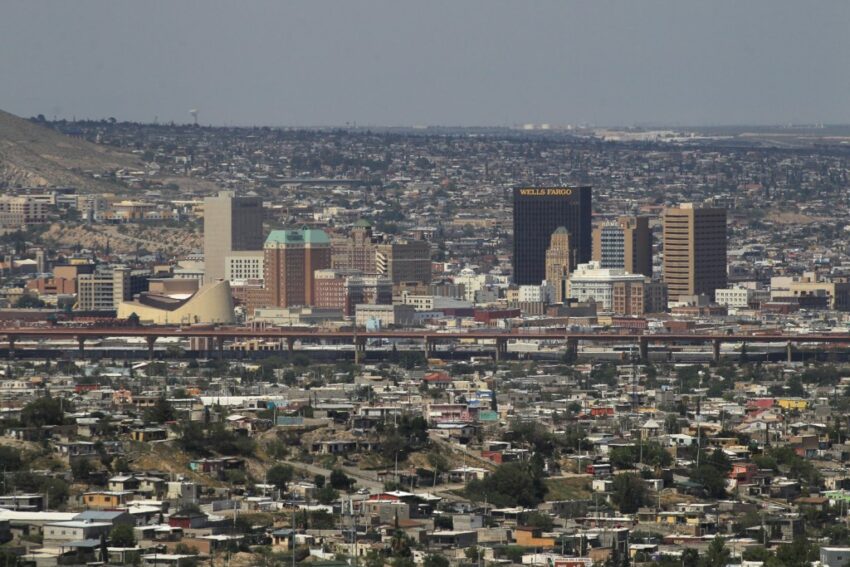

What El Paso’s slowing population growth means for | RSS.com
Diego Mendoza-Moyers: El Paso is facing a demographic challenge. It’s a slow-moving problem, but one that could imperil the future of our city.
We’re only starting to see the negative effects of stagnating population growth in El Paso. And it can be hard to see day to day, as new neighborhoods continue to crop up at the city’s edges along with ongoing construction of highways and new commercial areas in places like Cimarron and Eastlake.
But, the unfortunate reality is that, unlike the other major metro areas in Texas, El Paso is more so spreading out than truly growing. And new projections published this week by Texas’ state demographer show, even in the most optimistic scenario, our population is likely to grow at a much slower pace than it did in the 1990s or in the 2000s.
My name is Diego Mendoza-Moyers, a reporter with El Paso Matters, and for me, this is a topic that’s important, personally. I was born and raised in El Paso, and like a lot of my friends and people I know, I left town after high school. Leaving made me appreciate El Paso more, and after I spent a decade in other cities, I decided to move back home with my wife, and we’re expecting a child in the coming months. I know that our story is the exception more than the norm, though. And the demographic trends we’re seeing in El Paso raise a question: can young adults envision a promising future in our city?
Other questions come to mind. Will El Paso’s stagnating population make it even harder to bring in new employers and good-paying jobs to the city? What will fewer children mean for the school districts in the region, especially when you consider that we already see empty, unused school campuses in the core of the city as people have moved outward? And as we see El Paso sprawl out further while the population stagnates, that means more miles of roads for the city to maintain, more water, sewer and electric lines for our utilities to build, and a bigger burden on existing taxpayers to fund the sprawl.
In a moment, I’ll talk with Bob Moore, the founder and CEO of El Paso Matters, about his reporting on our stagnating population growth and what numbers published this week indicate about the path ahead. And I’ll ask Bob what our elected officials can do to stanch the outflow of people from El Paso and reverse our demographic trends.
First, this El Paso Matters Podcast episode is sponsored by Tawney, Acosta and Chaparro: truck crash and injury attorneys. Their team of local, seasoned trial attorneys are ready to help if you’ve been injured in a crash.
And I also want to mention that El Paso Matters is hosting a Trivia on Tap event on October 9th at Old Sheepdog Brewery, where you can connect with the El Paso Matters team. Admission is free, and Old Sheepdog is offering deals on food and drinks. And you can also join us at San Jacinto Plaza on December 7 for El Paso Matters’ 9.15K run. You can register for our events and read all our reporting at el paso matters dot org.
Now, on to our conversation.
Bob, welcome to the show.
Bob Moore: Thanks for having me.
Diego: So, I talked about your kind of gloomy population trends at the top, but I just wonder if you can walk us through the story you published this week about what El Paso’s population might look like out into 2060?
Bob: So, gloomy is one word for it. Other people may find the trends promising for reasons we can talk about. But, essentially, the Texas Demographic Center released a series of projections for the state and all 254 counties this week that used modeling to determine, OK, we have so many people today, what’s that going to look like in 2060 if these trends continue?
And, so, I really focused heavily on El Paso. And the short answer is that the projections show El Paso growing either modestly over the next 25 years or not at all. I mean, those are kind of the extreme ranges, which is a major change for El Paso. Since the arrival of the railroads in 1881, we have generally experienced pretty solid growth of 10%, 20%, 30% every decade as we move from census to census. The only exception to that was during the Great Depression in the 1930s where people weren’t moving and we saw a population decline in El Paso.
But, we began to really see a change again in the decade between 2010 and 2020, where our growth slowed quite a bit. So, whereas in previous decades, as I mentioned, we were growing by 20% or 30%, between 2010 and 2020, we only grew by 8% countywide, a little bit less than that in the city. And it’s worth noting that almost all of that growth was in the first half of the decade. Kind of one of the real marking moments for El Paso is 2013, when Fort Bliss finished its build-out, when the Army moved the 1st Armored Division back from Germany to Fort Bliss, the population of Fort Bliss almost tripled. El Paso had a lot of population growth as a result of that, but then that stops at 2013.
So, since 2013, each year our population change has been flat to barely noticeable. And within the city of El Paso, we’ve seen years where our population has actually declined. And, again, that’s not something we’d seen since the 1930s. So, these projections basically looked at what happened over the past 10 years and basically say, “If this trend continues, this is what we’ll look like.” And, so, it’s worth noting that these are just projections. They’re not a guarantee of where the future is going to take us. There are things that could change in El Paso that could make our population grow faster, could make our population shrink. So, take all of these numbers with a grain of salt.
Right now, in El Paso, as of 2024, which is the last year we had population estimates for, we have about 870,000 people living in El Paso County. The projections from the state demographer show that by 2060, we’ll have a population somewhere between 900,000 and a million. It’s a pretty big range in there. But, basically, that means that over the next 25 years, these projections show us from not growing at all, to maybe growing by 10% or 12% over 25 years. And a reminder, we used to grow that much every five or six years at one point. So, it’s a big, big change for El Paso. And we can talk a little bit about what those changes are.
Diego: Yeah. And immigration was a key factor kind of determining the range of outcomes that the demographer put out, I guess. Can you just kind of talk about what their findings were as it relates to immigration?
Bob: Yeah. So, again, they basically take a look back at the last decade and say “If immigration trends in the United States look like they did for the last decade over the next 25 years, this is what our population change will look like.” And that sort of makes the mid-range of their estimate. If we continue on this path, El Paso winds up with maybe 950,000 people. If immigration picks up, a place like El Paso may have a million people instead. But, if immigration is more slow than it has been in the past 10 years, then El Paso doesn’t grow at all. And that’s also true for Texas, really is true for the United States.
All of the population growth that we’ve seen in this country in recent years has been due to immigration. We’ve seen declining birth rates, the native-born population is aging, and so the only replenishment of the population has come through immigration. We all know that the Trump administration has a far more aggressive approach to stopping immigration than prior administrations.
So, the one thing that these projections don’t take into account as a possibility is that what’s happening in 2025, which is basically a negative immigration growth – we have more people leaving the United States than coming in – this doesn’t project that continuing. If it were to continue, El Paso’s population numbers may drop down below 800,000, for example. Texas, which now has 31 or 32 million, may only have 37 or 38 million 25 years from now instead of 45 or 46 million. So, immigration is a really important part of our demographic future in this country one way or the other.
Diego: Yeah, I thought that was interesting. And I guess I wouldn’t have figured that immigration was such a key factor really driving the population trends. But I wonder if you can talk about sort of the, I guess, internal population growth in El Paso as far as births and deaths. And you’ve done quite a bit of reporting, and I’m curious sort of how those trends are looking from within El Paso?
Bob: Yeah. So, El Paso has always viewed itself as a young community compared to the rest of the country. And that’s been largely accurate. We still are younger than the national average. One of the things that happens when you’re a young community is you have higher birth rates than the rest of the country and you have lower death rates. But El Paso is aging pretty rapidly for a variety of reasons.
So, the peak year for births in El Paso occurred around 1993, where we were having around 15,000 children born every year. In the last couple of years, that’s dropped below 12,000. So, we have 11,000 and it’s creeping down toward 10,000. So, we’ve seen a real sharp decline in the number of births in El Paso, even though our total population in El Paso now is like 30% bigger than it was in 1993.
So, El Pasoans are having fewer children. Women are delaying birth. Women are having fewer children. Some of these are good, healthy things that are a result of better health care, higher education levels among women. So, it’s not all bad news that the number of births are going down. But the other big reason that the number of births are going down in El Paso is because young adults, when they finish high school or college, increasingly are leaving El Paso for economic reasons. So, they’re starting families in Dallas or San Antonio or Phoenix or someplace like that. So, we’ve seen that decline in birth rates.
At the same time, we’ve seen an increase in deaths. That is particularly true during the pandemic. We had lots and lots of people in their 50s, 60s, and 70s who died because of COVID who otherwise would not have died. Before the pandemic, we would see the number of deaths in a given year, 5,800, 5,900, all of a sudden during the pandemic, that shoots up to more than 9,000. A lot of deaths occurring. That’s started to settle back down a little bit.
But one way to put it is I always like to look at the ratio of births to deaths to see how we’re doing. So, as recently as 10 years ago, in 2015, we had two-and-a-half births for every person who died in El Paso. That is a sign of a young community. In recent years, that ratio has dropped at the height of the pandemic down to about 1.5 to 1.
Now it’s back up to about 1.7 to 1, but going down. And it will continue to go down. The number of deaths will continue to approach the number of births every year until, at some point in the 2040s, we’ll reach a tipping point where we’re going to see more people dying in El Paso every year than are being born.
Diego: Yeah. And I’m curious what you think that means for our school districts, just kind of broadly speaking? We’ve already seen El Paso Independent School District pursuing this district redesign and sort of planning the closure of numerous school campuses. And that’s before these trends you’re laying out have really set in, I guess, or it’s kind of the early stage. And, so, I just wonder, kind of generally speaking, what you think this will mean for our school districts here?
Bob: So, the schools really are the canary in the coal mine here, and we focus a lot on what’s happening in the schools because that’s where these demographic changes are showing up first. They are going to ripple throughout El Paso into our workforce, and then eventually into our aging system too.
But, right now, we’re focused on schools. Right now, in particular, we’re focused on elementary grades, because that’s where this rapid decline in birth rates is really showing up right now. So, it means that we have fewer students enrolling in schools every year. And that means, among other things, we have fewer teaching jobs. Teaching jobs are among the best paying jobs in our community because of the way our economy is structured. According to Census Bureau data I’ve reviewed, about one out of every 10 women with a college degree in El Paso works as a teacher. That is a huge proportion. So, as the number of teaching jobs begins to decline, it’s going to disproportionately affect women.

That also means that it’s likely to accelerate this trend we’re already seeing of young adults having to leave the community for economic opportunities. So, instead of finding a teaching job in El Paso, women graduating from college are going to have to look elsewhere for it. So, that’s where we’re seeing it show up initially. And, right now, it’s really concentrated in the elementary schools. In the next two years, it’s going to start to be concentrated in the middle schools. And then about five years from now, it’s really going to be concentrated in the high schools.
And that’s where we’re going to see something that we’ve never seen before in El Paso. It’s going to be one of the most painful conversations we can have, because we’re going to have to start talking about what high schools we’re going to close, because we won’t need the number of high schools that we have now. And, as you know, as a proud Franklin alum, people identify themselves by the high school they went to. It is such a big part of individual identities. To suggest that a high school is no longer needed is going to be a very, very brutal conversation.
Diego: Yeah, and it’s something that I think you’ve kind of highlighted early, but I think we’ll see those conversations intensify in the next few years with the school district.
You mentioned offline this project you worked on, I think, 25 years ago when you were with the El Paso Times that you had some reporters look at patterns of growth and development in El Paso and project it out a couple of decades. And, so, I’m just wondering sort of how growth actually played out compared with the expectations in the late 90s, early 2000s when you were looking into this?
Bob: Yeah. So, first of all, full credit where it’s due, my wife actually was going through some old papers a few weeks ago and found this special section we’d done in the El Paso Times in the year 2000 that looked 25 years into El Paso’s future. And I realized, “oh, my God, that’s now.” And, so, we kind of looked through some of the projections, and again, from the same office we’re talking about now, the state demographer’s office made these projections. And, in 2000, they were projecting that by 2025, the city of El Paso would have more than a million people. And that was just a common assumption back then, that pretty soon we were going to be like San Antonio, Dallas, other big cities, and we’re going to hit a million people.
Right now, El Paso in the city limits has fewer than 700,000 people. So, a huge miss in that. And, again, it was because they were assuming that a lot of these trends we were seeing in 2000 would continue into the future.
The biggest trend, frankly, was immigration. I don’t think even people who live in El Paso really understand how important immigration has been to building our community.
Our community has grown over the years because we’ve had a constant influx of people coming from Mexico that were largely replacing people who were leaving to other cities because the wages here were so low. And it kind of masked that real basic economic structural problem we had of being a low-wage community. We couldn’t retain the people that we were educating in the community, and we constantly had to replenish with people coming from Mexico, which brought a lot of beautiful things to El Paso. Lots of great families came here, really helped define the culture of who we are. But that’s all begun to change now, and we don’t have high levels of immigration coming to El Paso anymore.
As a matter of fact, our immigration rates are approaching net zero, which means that we have almost as many people returning to Mexico every year as we have moving here. So, we’re not replenishing those people who are leaving for jobs elsewhere, and that’s really reshaping our economy.
But going back to 2000, everything was rosy and we were going to have this really great future, but we were going to have all of these challenges with natural resources, finding water and keeping our air clean. And it turns out that even without the population growth that we foresaw then, we still have these challenges. And one of the things that’s happened in El Paso is that we’re in this unique situation where El Paso has continued to grow as a city, meaning building more and more toward the fringe of the city while the population hasn’t gone up. So, we have this interesting dynamic here where we have population stagnation and urban sprawl at the same time, which creates an enormous set of problems.
Diego: Yeah, and I mentioned that at the top, but just that it’s sort of like we have more infrastructure to maintain and build and not a growing number of people to absorb that cost. And, so, it’s this added burden on the existing residents that could become unsustainable at some point.
I wonder, and you kind of touched on this, but are there any benefits to a stagnating population, right?
Bob: There can be, and especially in a place like El Paso, where you have very finite resources like water in particular, population growth, can drain down those resources much more quickly. Now, El Paso has actually been kind of creative, especially with water, in finding ways to reduce consumption while still being able to grow the population. But, obviously, if you have more people tapping into resources, they’re going to deplete more quickly. If you have more people in an area driving cars, the pollution is going to get worse.
So, we, by the population not growing as fast as had been projected, that somewhat mitigates those problems. It doesn’t make them go away. It also makes, for some people, El Paso a small pond and they can be a big fish in it because there’s not as much competition for the higher level jobs here. So, it is easier for people to reach pinnacles in El Paso, where other communities, they might have more competition for those jobs.
So, I mean, there are some benefits like that, but there are also very obvious drawbacks. If your population is stagnating, you may not have the workforce talent to attract new businesses. And one of the results of that is that there’s not much competition for workers, which is kind of the situation we’ve been in for a long time here. And, so, when there’s not much competition for workers, wages are very, very stagnant. And, so, we wind up where we are today and have been for a long time in El Paso. where the average private sector wage is 60% of where it is in the state and the nation. So those are the trade-offs that we’re looking at by having a stagnant population.
Diego: Yeah, and I think if you were to talk to, for example, executives at El Paso Water, they would say that the thinking that, “Hey, our population stagnating means, oh, we don’t have to worry as much about water resources,” I think they would say that’s kind of a dead end, and really, growth and innovation and finding new ways to supply water and sort of meet demand from new employers is something they want to do. As opposed to not having to worry about it.
Bob: And it’s something we have to do no matter what. And it becomes more financially viable to do if we have more money sloshing around in the community, too.
Diego: Sure. And also, how do the projections for growth in El Paso going forward compare to the other major cities in Texas?
Bob: So, just big-picture wise, Texas is projected to continue growing fairly rapidly over the next 25 years. Basically, depending on immigration levels and which projection winds up being true, the rest of Texas is going to grow about three to nine times faster than El Paso. What that means – it has lots of implications – but, among other things, it means that El Paso will be even less influential in state politics than it is today.
In recent years, we’ve made-up, say, around 3% of the total state population lives in El Paso. In the coming years, that’s going to be down to 1%, 1.5%. So, we have less influence on that. Hard to imagine El Paso having less influence on, say, politics than we do today, but that’s the way it’s going to be borne out. And, because political representation is determined by population, that means, for example, that El Paso probably will have fewer seats in the state House of Representatives over the next 25 years. So again, less influence that way.
Diego: And, so, last question here, Bob. I guess, what do you think that our government officials or the private sector can do to change this trend of stagnating population in El Paso, if anything, right?

Bob: It’s a big challenge. First of all, once you’re well down a path, it’s harder to change direction. And I think we’ve made our way down this path, even with lots of warning signs, because people have been comfortable here, and the rhetoric around election time is always “El Paso is a growing city”, and it’s not true, but we’ve kind of deluded ourselves.
And, so, moving from an economic structure that has said 60% of state and national wages is OK for El Paso requires a massive shift. And, ultimately, that’s what’s going to have to happen to break this. El Paso has to be attractive enough to compete for people, which means holding the people who are born here and then bringing others in. And, so, that’s going to involve creating jobs that are attractive to people. And a minimum part of that attraction has to be good wages.
We also have to be a city that people want to live in. So, we’ve got to be a clean city. We’ve got to be a safe city. So, we have to kind of focus on all of those things while recognizing that the rest of the world’s not just staying put. They’re moving, too. Other cities are competing with us. So, I think we’re going to have to figure out what makes El Paso unique, what we can really focus on, and really get a commitment from leadership at all levels, which I don’t, I still don’t think we have, that we do need to do something different with our economic structure, with the amenities we have. But it’s difficult to do because that requires investment. And one of the problems we have is we don’t have enough money in El Paso to do the kinds of things that we need to do to make the community move forward.
Diego: Yeah. And you mentioned that growth sort of fell off or declined in the second-half of the last decade midway through the 2010s. And, so, it seems like over that time, there’s been kind of different schools of thought about sort of the best path ahead for El Paso where, now we see this idea around particularly this deck park over I-10, right? That, I think some people think, “Hey, if we build this kind of amenity in the core of the city, it’ll sort of make El Paso cooler and more hip.” And, so, maybe more young people want to stay here or young professionals are less inclined to leave. And then also at the same time, you’re maybe incentivizing or creating more demand for housing in downtown. And so, more young people (think) “Hey, we can live Downtown and that’s cool and we don’t have to sprawl out.” And so there’s that kind of thinking.
I think there’s other people who think, “Hey, if we really limit government spending, either property taxes stay flat or maybe even decline, that will sort of make people not want to leave or more people want to come here.” And then also others say, “Hey, if we bring in big projects, right, like this, maybe this amphitheater in Northeast El Paso or Project Jupiter data center campus in Santa Teresa, like, if we have these big projects that either are amenities or provide jobs, that’s another way to, you know, stanch the population declines or decline in growth rate in El Paso.”
And, so, I just wonder what you make of these different schools of thought that we’ve heard over the last decade or so kind of competing for a vision of El Paso?
Bob: Yeah. And, so, with any complex problem, there’s no single answer. And this is a very, very complex problem. But at the end of the day, what’s really going to matter is “Can I raise a family in El Paso? Can I be economically successful in El Paso?” And if the answer to that is yes, then people may not even necessarily stay, because then you have to look at other things like is there a place where it might be safer to raise a kid? Or is there a place where it might be more fun to do things?
Diego: Or the quality of schools are higher or something.
Bob: Quality of schools. So, I don’t want to diminish the importance of amenities. But at the end of the day, if the price for staying in El Paso is that you make 60% of the wage of other Texans or other Americans in the private sector, it’s not going to matter. The deck plaza may be a beautiful amenity and it may have people playing on it. But it’s also what people are going to be driving under to move to Phoenix for new jobs. I mean, that’s kind of the reality that we may be facing.
So, these are very, very complex problems. And on the issue of property taxes, I don’t want to diminish the importance of property taxes, because if people feel they pay too much in property taxes, it’s going to diminish El Paso’s reputation. But, I think it’s worth noting that all of the major destination cities that El Pasoans are going to are communities where you pay higher taxes in exchange for living there. But, people are willing to make that exchange because they’re making more money at their jobs to do it too.
So, just keeping property taxes low isn’t going to turn the corner for us. We’ve done this experiment over the years. The 1980s was a time when El Paso didn’t invest very much in El Paso because the city leadership at the time wanted to keep property taxes low. And it was part of a decade where El Paso got really hollowed out, not just because of that – Mexico’s peso collapsed during that time, there were other difficulties – but we’ve been down that road and we know it doesn’t work by itself.
So, it’s going to take this concerted effort where you keep the people’s ability to pay taxes in mind, you make strategic investments, but at the end of the day, it really is up to the private sector to begin to create the kinds of jobs that people will want to be successful. Government can play a role in that. But government’s not going to be able to drive that. That’s going to be – we have to be part of a community where innovation can flourish. The best way to grow El Paso’s economy is to allow entrepreneurs here to succeed and grow businesses. And I don’t think we give enough attention to that.
Diego: Yeah. We’ll leave it there, Bob. But, I’ll just say, I think you’re reporting on our demographics and population trends and so forth, I think they inform our city leaders and civic leaders, right? I don’t think there’s much awareness about this issue. And it’s emerging, right? But it’s been interesting to see. I think people have been learning about this from your reporting.
Bob: Thanks. I think one of the things that I’ve noticed, we used to have demographers in El Paso. The city had a demographer. UTEP had some really strong demographers. And being able to see where the community was growing was really an important part of that. But today, you’re not seeing that kind of investment in those kinds of skills. Although I will say the schools have kind of scrambled to hire demographers when they suddenly realize, “Oh my goodness, we don’t have many kids. We have to find out where they are.” So, there are some new jobs in there.
So, I am not a demographer. I’ve been trained by some very good demographers, but I don’t claim to be a demographer. But, it’s an important role where we have to understand what’s happening to our population, how things are changing, and then kind of starting conversations about what does that mean for where we’re going? I don’t proclaim to have the answers, and you may have even seen me sidestep some of your questions today, because they are very difficult questions to answer. But, if we don’t have these conversations as a community, we just stay on the path that we’re on. And we’ve seen where that leads.
Diego: Yeah. Well, we’ll look to you to keep us informed on this, Bob, and continue to recommend readers check out your reporting on this and periodically to see kind of what’s going on with our trends. So thanks for joining me, Bob.
Bob: Thanks for having me.
The post Podcast: El Paso is facing a declining population growth. Could it imperil the city’s future? appeared first on El Paso Matters.
Read: Read More