




How a secretive data center deal could transform E | RSS.com
The future backbone of El Paso’s regional economy may be staring us in the face: big data centers.
I know to some listeners, that’s bad news that means a lot of water consumption, air pollution and too-few jobs to meaningfully raise wages for El Pasoans. To others, though, big tech companies investing hundreds of billions into El Paso to build data centers would have been inconceivable a few years ago and is something worth celebrating.
However you feel, the reality is that three giant data center campuses are under development in (the El Paso region): Meta’s facility in Northeast, Project Jupiter in Santa Teresa, New Mexico, and now an even bigger campus planned on federal land within Fort Bliss.
They’re expected to total almost 6.5 gigawatts of electricity demand. Words like “massive,” “huge” or “giant” don’t really describe the scale of these data centers. To put it in perspective, El Paso Electric has about 2.9 gigawatts of generation capacity, and the highest demand the utility has ever met at once was about 2.3 gigawatts.
So, to power just three data centers, we’re talking about supplying them with twice as much electricity as every home and business from Hatch, New Mexico, to Van Horn uses.
It’s hard for me to wrap my head around. But it’s happening, and these investments could generate tax revenue, lead to some job creation and change the course of El Paso’s economy. They could also threaten the region’s water supplies and produce astronomical amounts of air pollution all to enable artificial intelligence technology that seems likely to bring huge changes to our world that are scary to some, and promising to others.

For this episode of the El Paso Matters Podcast, I’m going to talk with longtime Las Cruces journalist Heath Haussamen, about the data center buildout in El Paso. But I want to focus on Heath’s in-depth reporting about Project Jupiter, the $165 billion data addcenter under construction in the New Mexico desert just west of El Paso. It appeared suddenly on a Doña Ana County Board of Commissioners meeting agenda last fall, and has progressed steadily since then even as major questions and concerns about its air pollution and water usage persist around the mysterious project.
Heath has focused on the lack of transparency and shifting commitments by Project Jupiter’s developers. He’ll walk us through the history of how the deal came together in secret, and also share the complexities and nuances of covering the data center boom in the Borderland.
But before I talk with Heath, I want to mention that this El Paso Matters Podcast episode is brought to you by our podcast title sponsor, Tawney, Acosta and Chaparro, truck crash and injury attorneys. Their team of local, seasoned trial attorneys are ready to help if you’ve been injured in a crash.
And you can sign up for El Paso Matters’ newsletter and read our free reporting at our website, elpasomatters.org.
On to the show.
Heath, thanks for joining me.
Heath Haussamen: I’m happy to be here.
Diego: We’ll just get right into it. Can you just kind of bring us up to speed on where Project Jupiter is at, I guess, about seven months since it was – the incentives were approved by county commissioners last September?
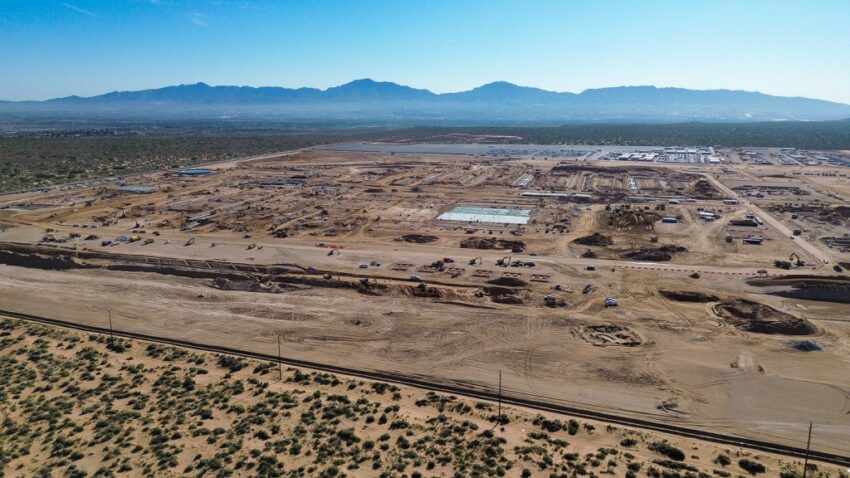
Heath: Well, it’s a big construction zone. I’ve been told, I haven’t verified this, but I’ve been told that it is currently the largest construction site in North America.
Last week, Oracle, which has sort of taken over being the public face of Project Jupiter, for whatever reason, in the last couple weeks announced that they were ditching their plans for these really polluting, gas-fired power plants and a diesel backup, and replacing that with gas-powered fuel cells.
I’m still trying to get answers to some questions from them about this, but my general understanding is that this is an unprecedented use of fuel cells in its scale. It’s slightly less polluting. I think it reduces emissions from their power plant, their previous plan, by about 30%. It should use less water, but again, I’m still trying to get numbers from them on water use. So, I’m not sure that’s true. And that’s where we are. They had two construction sites, and I think they’re abandoning the smaller one because it was going to be one of their two gas-fired power plants, and now they’re not building that.
Diego: So, bottom line is the project is very much advancing, is that fair to say?
Heath: Pretty rapidly. There’s a gigantic paved parking lot on the site. There’s a paved road that’s at least a half a mile long out to it. Hundreds of acres that used to be hills are flattened.

Diego: Wow. Yeah, and I just want to get into the Bloom Energy deal that you mentioned. Because I think that’s really the newsy part of this, right, is that there was a lot of concern and uproar about this potential plan to power this really massive facility with just natural gas turbines that I think their air permits were seeking tens of millions of tons of allowable emissions per year of pollution that would take place here locally, right?
And, so, it was really interesting. There was a lot of uproar over that. I think the New Mexico officials were going to approve or deny that permit in the months ahead. And, so, before that, it seems like Oracle is getting out ahead and saying, “Hey, actually, let’s change this plan up. We’ll use these fuel cell power systems provided by Bloom Energy.”
And the capacity is massive. I mean, you refer to it, but it’s 2.45 gigawatts, which El Paso Electric, the highest demand they’ve ever met was about 2.3 gigawatts. And, so, 2.5 gigawatts almost of electricity capacity is, like, just almost mind-boggling, hard to wrap your head around. And I think that’s more capacity than Bloom Energy currently has installed globally.
So, the scale is massive. It seems like Bloom Energy is kind of maturing as a company. They’re expanding their manufacturing capacity. Their stock price has increased exponentially. And, so, it seems like maybe – it’s not a total, like, moonshot unrealistic plan. But it seems like it could take multiple years to build that much generating capacity.
But I thought it was interesting that they’re trying to get out, maybe, ahead of those concerns of a really large amount of pollution resulting from Project Jupiter.
Heath: Yeah, I think there’s been such a scramble to build data centers across the U.S. I mean, construction on data centers is sort of propping up the U.S. economy all by itself right now. There was an op-ed in the Wall Street Journal about this yesterday, I think. And some data centers are pulling old airplane turbines out of warehouses that were decommissioned just to get something, power generation up and running quickly.
That wasn’t – I don’t think that was going to fly in New Mexico. There are many reasons that this is super controversial, but that was one of them. And their permits asked for the ability to emit a little more than 14 million tons of greenhouse gases into the air every year. This reduces it to, I think, 10.1 million.
For some people, that’s, “Hey, great, you’re being responsible.” And for others, it’s “10.1 million is still more than the city of Albuquerque. It’s still huge and unacceptable.” So, I don’t think it satisfied critics. I think to the extent that there might be some people on the fence about this, it might have satisfied them.
I think critics want to see them build a solar array. And one of the questions I have that I’m still trying to get an answer from Oracle is that, from what I can tell, fuel cells are really expensive. It’s more expensive to generate, just per watt, to generate electricity with fuel cells than it is with solar. And, so, I do have a question about why not solar here? When there’s all this land in Santa Teresa right around where Project Jupiter is being built I don’t know the answer to that one.
Diego: Well, and I know that when this project was being pitched to the public last fall, one of the statements from the developers was like, “Hey, we’re going to have a massive battery storage array” to, ostensibly, capture solar energy and store it and power the campus. And then it quickly switched to very, very massive amounts of turbine generation capacity and now these fuel cells.
Just one point I’ll make on this that’s kind of interesting – and we can talk about the broader, like, region and how all these data centers are under development beyond Project Jupiter.
There’s also this Meta facility that’s smaller, right? It’s only one gigawatt, but that’s underway in El Paso. And just a point on that is that, while we’re seeing Project Jupiter try to implement what I think you could call a novel generation solution at that scale, right, at almost 2.5 gigawatts of using these fuel cells, El Paso Electric to power Meta’s facility, they’re building a dedicated power plant for Meta that’s less than, like, a traditional generating station and more like a collection of a bunch of small natural gas generators.
It’s, like, over 800 of them stacked together. And they’re working with a company called Enchanted Rock that has never built a facility that size before. And in the documents to sort of seek approval to build this, El Paso Electric says that this power plant would produce energy at a cost of $40 per megawatt hour, which is twice the cost of the energy they produce at some of their other major generating stations like Newman 6 and then the Rio Grande generating station in Sunland Park. And it’s also a $500 million facility. Again, this is for Meta.
But the point is I think it’s interesting that, for the data center developers, they don’t really want the cheapest, most efficient form of generation. Like, they just want whatever power they can get right now to get on the grid. And they’re not really looking to save dollars or have the most efficient technology. So, it’s just been interesting.
And I think you, just as a citizen of the area – I think we can look at these as a little bit maybe unproven and novel. So, we’ll have to see how they perform and everything. But just an interesting note that the developers are taking different strategies. And also Meta wants to connect to the grid eventually, unlike Project Jupiter. But just the kind of almost grasping at straws that the developers are doing to find a generation solution I think is interesting.
Heath: I think it’s fascinating to watch these different technologies play out. And I don’t mean to say for a minute that fuel cells are bad. It is a new technology, especially to use on this scale and in this way. And it seems like Oracle’s strategy is “Let’s build a proof of concept here with Project Jupiter. And once it works, we can replicate it other places.”
I assume that makes it cheaper in the long run and brings the cost of it down. It is not going to satisfy critics in New Mexico. But at this point, the regulatory question in New Mexico of whether this power generation strategy gets approved is about “Did you meet the legal requirements?” It’s not a political decision of “Do we like this or not?” Or “Do New Mexicans like it or not?”
And, so, there was real concern with the first one. They were proposing emissions that were so high that that’s why they were building two microgrids, because one application was probably not going to go through. So, they split it into two.
And that just – there was a legal reason then to say, “No, you can’t build this.” And it does seem like they tried to get ahead of that and say, “OK, this will fit into one application.”
It’s a lot more expensive for them, but maybe they weren’t going to get approved otherwise, and maybe there’s a reason they don’t want to build solar. It’s certainly unpopular with this federal administration, and using natural gas is what the Trump administration wants to see. I don’t know if that factors in, but I think with a lot of these data center companies, all these tech bros sort of have been in the room with the president where he’s asked them for help. And then here they are building all these data centers that are propping up the economy. So, I do think that’s a factor.

Diego: Yeah. And I’ll just say too, similar to Project Jupiter, when the project was being pitched, the Meta deal, the expectation was that would be powered by solar as well. And now here’s El Paso Electric building a natural gas generating station. And, so, certainly it seems like initially it’s like, “Hey, we’re going to run this on solar and it’ll be great.” And then all of a sudden it becomes very polluting technologies.
And I’ll just add something, too. We’re talking about Project Jupiter, huge, huge scale, probably going to be one of the biggest data center campuses in the country. We’re talking about Meta’s in El Paso, also a very large campus, smaller, but very large. And then now, recently, I have to mention Fort Bliss, the Army installation in El Paso, is talking about partnering with this private equity firm, Carlyle Group, to build a three-gigawatt data center that they say will most likely be powered by natural gas turbines as well.
READ MORE: Proposed Fort Bliss data center could use more power than all of El Paso
And, so, that is kind of – I don’t think that’s as far along as these other two data centers. We’ll have to have the details worked out. But, man, you’re looking at this as like, I mean, 10 million tons for Project Jupiter, and then we’re talking about Meta probably having pretty sizable pollution. Now maybe Fort Bliss. Maybe the power source for Fort Bliss is built elsewhere. We have to figure that out.
But we’re just talking about 6.5 gigawatts of new generation capacity coming online to meet just for data centers. It’s kind of unprecedented and just a scale we’ve never seen before. I just want to reiterate, El Paso Electric across its entire system maintains 2.9 gigawatts of generation capacity. So, it’s just a ridiculously mind-boggling scale of construction going on here.

Heath: I think it’s almost difficult to wrap my mind around that, within a few years, if all three of these happen, there will be three data centers in our region that are generating and requiring twice as much power as every community from Van Horn, Texas, up to Hatch, New Mexico, through El Paso, through Las Cruces. All the people, all of us who live here, these three data centers will use more than twice as much electricity as all of us combined. That is mind-boggling.
I think that’s one of the reasons that it’s hard for people to swallow this. Like, are we really using the internet so much? Are we really using data on our phones and AI and all these things so much that we have to accept that and the pollution that comes with it?
And the other thing is the shifting expectations. You brought up that Meta was going to be solar and now it’s not. And Project Jupiter was only going to use 20,000 gallons of water per day and now they’re going to use more. And we’re sold one thing and then it’s like, “Well, we actually found a way to do it this other way.” And ratepayers in El Paso were told “You’re not going to pay for this power generation.” And then you get the filing and we find out that’s true for five years, but it may not be true after that.
Diego: Exactly. And these deals are so complex that these key details shift over time. And, so, it really changes the impact on the public and so forth.
So, we’ll move on from the electricity side. Heath, you kind of touched on the water side. And, so, I just wonder if you can – you’ve done a lot of reporting on the potential water usage of Project Jupiter. The commitments that were made when it was approved, or the incentives were approved last fall by Doña Ana County Commissioners, the water usage was very small, right? Like, that was the claim from the developers, right?
Heath: And I think to the county commission’s credit, this is one thing they tried really hard on because water is scarce here, was to limit that use. And, so, the public promise was we’re going to use 20,000 gallons a day on average after the construction phase. And we won’t need any for these beyond that.
I think you can look back now and see that they very conveniently left a few things blank so they could say later they didn’t lie, but it’s at least a lie of omission. The county commission believes they were promised that it would be 20,000. The public believed that. You can look at Project Jupiter’s website today and it still says that.
But, in the meantime, they went and entered into a private transaction agreement to buy water from a nearby sod farm. It’s literally a sod farm. It’s a guy who owns water rights, didn’t want to lose them. He waters grass. My understanding is sometimes he sells it, like, if a park in Las Cruces needs the sod replaced. I have been told a story that once he provided sod for an NFL team for after their field was destroyed. He didn’t talk to me when I called him because he signed a non-disclosure agreement with Project Jupiter’s developers. So, I can’t verify any of that.
But those are the stories that get told about him. He’s watering grass to not lose his water rights. In comes Project Jupiter saying, “Hey, we actually need your water. We’ll pay you. We’ll be a stable source of it.” It’s a great deal for him. And the county commission was told publicly that this water would be used for construction, but that it was temporary. And their understanding was, once this is operational, the cooling systems for the data centers and whatever cooling system there might be for power generation would be filled up one time and then it would be disconnected. And that’s not the case now.
And, so, we don’t know because they haven’t said yet. I’m still trying to push them on answers to this, but how much water from the sod farm are they going to use on a regular basis? Whatever it is, it’s beyond what the public was promised.
Diego: Yeah, and obviously I think that that carries extra weight, especially when we’re seeing right now, like, our river season in the region of El Paso and Las Cruces, we’re going to get very little water flowing through the river from Elephant Butte. Which doesn’t have to do with the data center, but the point being we’re in a period of big water stress. And when there’s less water in the river, it means pumping more groundwater. That’s, I think, the main source that the data centers anticipate using for cooling, right, is pumping from groundwater. So, there’s sort of the lack of transparency. We’re already experiencing water stress. Doesn’t paint a great picture.
Heath: No, it doesn’t. And the context for it is that Texas and New Mexico have just entered into a settlement agreement that is pending approval from the U.S. Supreme Court, which could come any day, that New Mexico has been pumping too much groundwater. So much that it’s impacting the surface water, right? We’re not delivering as much water to Texas and then to Mexico because it’s soaking into the ground because we’re taking too much water out of the ground.
And, so, in this settlement agreement, New Mexico is legally required to retire 18,000 acre-feet of water rights in the lower Rio Grande. That’s between Elephant Butte and Caballo Dams and Sunland Park. They’re going to have to buy out farmers, mostly, is what they’re going to do. The state Legislature has already appropriated, I think, $80 million as a start towards that. I don’t know that that’ll cover it. There might be more money. I’m not sure on that.
But we have to retire these groundwater rights so that more river water that comes out of those dams flows through and reaches El Paso. So, the surface water and the groundwater really, they’re all just water. It ties in. And, so, it’s a big deal to have a big data center, especially because data centers, historically, use so much water, say, “We’re going to limit the water use.” This was the one thing about Project Jupiter that made it look so much better than other data centers across the country, better than the Meta data center in El Paso, was that it was going to have such low water use. And now it doesn’t. It doesn’t have to.
That water right for the entire sod farm is, I think, 2.2 or so million gallons a day that they can pump out of the ground. I don’t know how much of that – because it’s a private transaction – that the developers of Project Jupiter are allowed to use. But it’s a substantial amount of water.
Diego: Yeah. And I just want to note, I believe the owner of that sod farm that did that transaction is a guy named Lane Gaddy, who also serves on the board of El Paso Water, kind of a local business guy. So, anyways, just interesting relationships there.
Heath: The political connections on all of this are fascinating.
Project Jupiter’s developers, the initial team at BorderPlex Digital Assets included a former New Mexico Cabinet Secretary of Economic Development and includes former President Bush’s nephew. Those are some of the investors in BorderPlex Digital, which then convinced Oracle and OpenAI to do this project here.
Diego: Yeah. Anyways – and I’ll just touch on, too, just kind of the broader region. Meta, I think that their contract allows usage of around a million and a half gallons a day of water consumption. El Paso Water says their consumption will be something like 400,000 gallons a day. And then, we have no idea at the moment about the water consumption of this proposed Fort Bliss data center. The Army says it’ll be water neutral. Meta says the same thing about the data center they’re building.

And, so, we’ll have to see if there are some sort of strategies or techniques or something that sort of allow them to replenish water or whatever.
But I will say, one concern I have, right, is you’ve got Project Jupiter in New Mexico. You’ve got Meta, you’ve got Fort Bliss coming, maybe other data centers. We all, in some part, rely on the same groundwater sources, right? And, so, I don’t know that the developers of these different data centers are talking to each other and coordinating over water consumption.
Heath: I don’t know that they are. I don’t think the states have done a very good job coordinating. I know one of New Mexico’s strategies now is to put meters on well users in the middle Rio Grande, up south of Albuquerque, in the hopes that more water will flow downriver into Elephant Butte and Caballo and can reach El Paso and Mexico.
I’ve also talked to people who say that might have worked 30 years ago, but we’ve so depleted the groundwater that, yes, we should meter them now, but it’s not going to flow all the way.
And, so, we’re trying all these things. And there’s this brackish aquifer, the Mesilla Bolson that runs from somewhere around Las Cruces down into Chihuahua that is big. We don’t know exactly how big it is, but it has probably tens of millions of acre-feet. At current use in Doña Ana County, I think they estimate there’s, like, 800 years worth of water. Obviously, it won’t stay that way because Santa Teresa is growing, Sunland Park is growing, Las Cruces is growing a little slower than further south in the county.
And the plan on the other side of the border is to grow up as – I mean, what’s happening here is that El Paso is trying to transition more into an urban center and less industrial right in the middle, right? And that’s why we’re moving commercial traffic to the east and we’re closing commercial traffic at the Bridge of the Americas and into the west, which means into New Mexico. And the federal government is recommending expanding the number of lanes at the Santa Teresa Port of Entry from, I think, three to 14. It’s a massive expansion.
And, so, the industrial growth in Juárez is going to grow to the west, too. And they’re going to need all the water on that side of the border, too. And, so, we could say we have all this extra water if we just build a desal plant. But the growth is going to come with that water, especially once you have the capacity to clean that water. And we don’t know how much water we have, is the reality. We don’t know.
Diego: Yeah, the lack of clarity over the groundwater levels and sort of, like, how much water is in the aquifer always is kind of interesting to me. How it’s like we’re kind of flying blind there a little bit.
And I’ll just make one other point on the Mexican side. When this Project Jupiter was up for a vote last fall here in Las Cruces, there were several representatives from Ciudad Juárez that came over to speak in support of it. And, so, I think they’re supportive.
So, I want to move on to the transparency side of it that you’ve been really, really focused on. But just to tie that back to water and transparency, like, can you just talk about how the word “potable” appeared after the agreements were signed months later as it relates to the water sources that would be tapped for this project?
Heath: Yeah, absolutely. I mean, so in New Mexico, we have an open meetings law that requires public policy-making bodies like the Doña Ana County Board of Commissioners to take all votes in public. Every vote has to happen in public. And with a few exceptions, every discussion of a quorum of them has to happen in public. A legal threat, a lawsuit, whether they’re going to buy some real estate, those are some of the types of things, a personnel issue, that they can discuss behind closed doors. But If they’re going to fire the county manager, for example, they can go discuss it behind closed doors, but then they have to come out and vote to do it publicly.
So, they voted to approve these agreements on September 19 last year to give tax breaks to the developers. And that’s the agreement where they asked for a limit on water. And the version of that agreement that was approved that day limited it to an average 20,000 gallons of water, period. But then that resolution that day authorized the county commission chairman to finalize these agreements later.
And, so, the county kept negotiating them in secret behind closed doors. A transparency group in New Mexico says this was illegal, but we don’t have a lawsuit challenging it, I don’t think. That could happen.
But we didn’t see actual final versions of these agreements until 11 weeks later. They had grown from 300 and something pages to, I think, more than 1,500 pages in those 11 weeks. Some of that is just financial numbers getting plugged in. And there is some standard language that comes from banks at the last minute when there’s a closing on a financial transaction. But there were also some changes that had substance behind them, and the word “potable” had been added into the agreements in secret.
State law intended that that discussion happened in public so that the public could at least know why their commissioners added that. It didn’t happen. And, so, that’s what’s letting Project Jupiter now buy water from the sod farm, is it’s a non-potable well. All that means is it’s drilled at a depth, and there are some other technical specifications that make it for watering a field instead of drinking water. But it’s coming out of the same water table. It’s the same water.
So, the intent of the county commission was to limit their total water use, and they believed that’s what they had done. But somehow this word got added, and we don’t know how that happened. And now Project Jupiter could say, “Well, we can use up to a million or two million gallons a day of this non-potable water, and the agreements don’t prohibit us from doing that.”
Diego: Yeah. I just wanted you to explain that, because that was an interesting example of the transparency.
Could you talk a little bit more, Heath, and maybe take us back to last fall or even last year when really this project came together, I think, before there was a broad public awareness. There were some non-disclosure agreements. Can you just talk through what happened there?
Heath: This was first announced publicly in February of 2025 during our state legislative session. Our Legislature meets 60 days one year and 30 days the next. They’re not full-time. The governor held a news conference along with one of the executives from BorderPlex Digital. They announced it as a $5 billion project, which several billion-dollar projects get announced in New Mexico all the time. So, it didn’t come across as super remarkable.
Yeah, this is another piece in the Santa Teresa efforts. That’s great. But it would later become a $165 billion deal. So, I think the transparency issues start with them intentionally announcing a number that wouldn’t get a whole lot of media coverage. It’d get some first day stories, but not, like, a bunch of investigative journalism or anything.
At the same time, Project Jupiter’s lobbyists were pushing a bill through the Legislature to allow them – New Mexico has a law in the books right now, the Energy Transition Act, that requires power generation to be carbon neutral or net-zero carbon by 2045.
And this microgrid act put into law that they can build a power generating source that’s off the grid, that’s separate from El Paso Electric in this case, and it slowed down the timeline. They still have to be net-zero carbon by 2045, but they don’t have to meet the same benchmarks along the way that El Paso Electric does, for example.
The bill died, but then it was stuffed on the floor of the state Senate, it was proposed as an amendment at the last minute to a different bill, and nobody knew what it was. Because our Legislature is unpaid and we have these short sessions, the clock is ticking at that point. It’s a very bad way to form public policy, by the way. And our Legislature needs a lot of reform. But there weren’t a lot of questions asked. And it sailed through the Senate, and then it went through the House just on a concurrence vote without any discussion. And that’s how this microgrid bill became law.
Project Jupiter had been talking to El Paso Electric for like a year before that, we learned from your reporting. So, they had a different plan, right, to plug into the grid, just like Meta’s is. But then they got this law that lets them do whatever they want, and it was like Christmas for them. Great. And, so, they ditched their partnership with El Paso Electric and went this route instead.
Then they started signing NDAs with the government agencies they were going to have to work with. The first was with NMSU to help them think about a desal plant and some other things. But they signed one with Doña Ana County. The county manager signed it. And, so, what that did was keep the whole thing secret that they were even talking to the county. It didn’t have to go to the county commission to say, “Hey, can we discuss with you in secret?” Which would have told the public it was happening because that would have had to happen at a public county commission meeting. No, the county manager just signed it in secret.
The most important thing there is that then required county staff who were negotiating this to keep it a secret from the county commissioners. The only elected officials through this entire process who would have had a real say in how this went were kept out of the framework for the agreement until the last minute, several weeks before the votes.
And, so, it was all negotiated in secret by county staff, by state economic development staff, and the developers. Some commissioners were let in that this was happening, but not told details, and some were left out of it until it was going to appear on a public county commission agenda. And then they were told “Take it or leave it. You approve this massive $165 billion project and these tax incentives for us, or we’ll go somewhere else.”
Diego: With some of the questions still unanswered, right?
Heath: With unanswered – I mean, there were blank pages in these documents the day they voted. There were questions about water use. There were questions about emissions. There were questions about job numbers. And the chairman of BorderPlex Digital appeared at that county commission meeting and said, “Take it or leave it today. This is the day that this deal is in front of you. It is what it is. It will go somewhere else if you don’t approve it.”
Diego: And by the way, we talk about BorderPlex Digital, which is kind of a fake company, and really it was Oracle and OpenAI behind it the whole time. That was also obscured, right?
Heath: I mean, they’re an actual corporation. I think they’re incorporated in Delaware. And I do think they saw the vision to get it here. They convinced Oracle to come here. They pulled Stack Infrastructure in to build it. They put the team together. But that’s what they do as a company, right?
And, so, they’ve now announced this Project Green initiative to build solar generating capacity or some green energy capacity – I think they’re also looking at geothermal – by 2032 that’s equivalent to one gigawatt. I don’t know if that’s still happening, because now they’ve transitioned to these fuel cells. That’s one of the questions I have pending, is Project Green still happening? I don’t know the answer, but BorderPlex Digital is behind that, and they were initially going to be behind the power generation. They were going to build the power plants.
But now Bloom is doing that, and Oracle has taken over that. So I’m not – another one of my pending questions is what is BorderPlex Digital still doing with this project? It’s not clear to me right now.

Diego: Yeah, and maybe I was a little flippant in calling them fake. But I guess it was Lanham Napier, the chairman of BorderPlex Digital, was put up as, like, the front man, as the guy to go up there and get chewed out by commissioners and face the public scrutiny.
And then as soon as the deal was approved, they sort of stepped aside. It’s, “Oh, it’s actually OpenAI and Oracle the one’s putting up the money.” Of course, you hear a dollar figure of $165 billion investment, that leaves very few companies in the world that could fund that. And, so, I always assumed BorderPlex Digital was more of a front company to grease the wheels.
Heath: I think they do that in part so that the public doesn’t know who the big companies are until it’s too late. It’s one of the ways in which these multinational companies are managing public opinion because data centers are so controversial.
Diego: Yeah. And, so, Heath, one thing, too, that I was hoping you could just touch on just briefly is the lawsuits? And the reason I ask is because they’re kind of connected to the public transparency issues and the open meetings and so forth that you touched on. Just curious if you can kind of talk just a little bit about the lawsuit that’s underway?
Heath: The process of approving these tax incentives was so bad. It really was. It’s hard. I mean, I think that’s – I feel confident just objectively saying the process was not done in a way that – when you’re approving agreements that the public hasn’t seen, and that some of the county commissioners hadn’t seen. They voted on things they hadn’t yet read. I know Congress does that all the time, but that’s not how the law in New Mexico requires business be done, and yet, we did it that way this time.
And, so, there’s an environmental group in southern New Mexico that has filed one lawsuit, and then there’s a citizen of Las Cruces who’s filed another lawsuit challenging that process, saying that process didn’t follow the law, and so the tax incentive should be thrown out. They’re invalid. And I don’t know if they’ll be successful in the end or not. They’re going up against companies that have all the money in the world to defend the process. The county is defending the process.
It’s not a matter of whether these lawsuits will kill the project. It’s a matter of whether it will kill the tax incentives. And sure, the developers, if that did happen, could say, “Well, we’re not going to build here then” and make good on their threat from last September to go away. But as we started out in this discussion, we’re seven months in. Construction is substantial already. They’ve spent a lot of money. They’re spending more money every day. And, so, I think the more time passes, the less likely it is that they will go away, even if the tax incentives are undone.

Diego: Yeah. And as much as these data centers, and particularly Project Jupiter, are an environmental story, I think we’ve both seen it as also, like, a story about power dynamics, right? And just the idea that these companies with almost infinite resources and the highest-paid lawyers and law firms can come in and sort of do these things that I think they can sort of outmaneuver, maybe, some of the local elected officials. It’s just a big power imbalance, right? When you come into a community, you’ve got endless resources and you can kind of do things in a way that are to your benefit, right, as a big company.
Heath: And I think that’s illustrated by how caught off guard the county was, the county commissioners were, when they discovered that Project Jupiter was going to use non-potable water past construction. It was like, “Wait, that’s not what you promised us.” Well, guess what? It turns out that it isn’t what they promised you, but they can do it because your agreements that you thought you had are not – they don’t say what you thought they did.
Diego: Yeah. Just a couple more things here, Heath. I appreciate your time here. I just wonder, can you envision an upside of Project Jupiter, right? Particularly for Doña Ana County, Las Cruces.
And part of the reason I ask this is because I think it depends like where you – maybe your social circle or whatever. Like, (to) some people, this is universally a bad thing. One of the worst things that could happen, how did our elected officials allow this? This is going to be really bad.
But then, when I was at the meeting where the county commissioners approved these incentives last fall, there were probably almost as many people speaking in favor of Project Jupiter and about not only the construction and trades opportunities, but then sort of more long-term like signaling Doña Ana County is open for business. “We’re not just the Breaking Bad state. We’ve got more going on here. We want to have our opportunities for kids to not leave New Mexico.” So, as charged as it’s been, there are people that say, “Hey, this is good for us. We want this investment.”
Heath: Absolutely. And I probably would be irresponsible if I didn’t stick a little disclosure in here that I’m married to a state representative in New Mexico, Sarah Silva, and she’s a supporter of Project Jupiter. That doesn’t make me one. I’ve actually tried to stay very neutral on this.
But she is, and she’s played an active role in it. She, during the county commission’s three weeks that they were considering the tax incentives and the other things that came with it, the community benefits agreement and the water restrictions, she went into a meeting and asked for $50 million for water and wastewater infrastructure in Sunland Park because of the arsenic issues and all the problems they’ve had down there. And they agreed to that.
And, so, the other thing she’s done – and I bring this up to talk about, to answer your question – but the other thing she’s done then is, obviously, the construction unions are overjoyed about this project. And she represents Chaparral right next to the Meta data center in El Paso. She does not represent Sunland Park. But folks there need jobs and they have – there are three community college branches in her legislative district. And everyone always talks about “It’d be great if we could connect the trade unions with the community college.” No one had ever done it.
And, so, she actually organized, she’s a community organizer, so she organized people in power to all sit down in a room together and they created an agreement and they signed it a few weeks ago. That’s going to make it much easier to get people into the construction jobs at Project Jupiter. And, so, there are absolutely people who see only negatives to this. There are also people who see only benefits.
And you talk to folks who work in economic development in El Paso like Jon Barela and in Santa Teresa and Doña Ana County, like Jerry Pacheco, who this is their whole life. This is what they do. And this is all upside to them. And “We’ll figure out the pollution and we’ll figure out the water, but we’ve got to build.”
And in New Mexico, our state budget is so dependent on the oil and gas industry. And we have made efforts over decades in Santa Teresa to, since the early 1990s, to build an industrial economy here. It’s taken a long time to have it make a real impact, but it is making a real impact that puts money into our state budget and reduces the reliance on oil and gas. And that’s partly an economic thing. It’s partly a climate change issue, right? We should leave some of our oil and gas in the ground and not burn it all, right?
And, so, there’s an environmental argument for reducing our dependence on oil and gas as well as a state. And, so, I think these things are kind of running into each other in terms of do we still have enough water? Can we even build the industrial development in Santa Teresa and sort of the spillover from El Paso that we envision to reduce our dependence on oil and gas? Is there enough water for that? I don’t know. But this state desperately needs jobs.
Our per capita income is 25% or so lower than the national average. And Doña Ana County’s is even lower than the state of New Mexico’s. We need these jobs. One of the criticisms that people have of Project Jupiter is, “Yeah, but down there it’s El Pasoans who get these jobs.” And that’s true to some extent. The state estimates that half the jobs will be El Pasoans and half will be New Mexicans. It is not that right now. And part of the reason that my spouse and others have been working quickly to negotiate these partnerships between the building unions and the community college is to get people ready to do these jobs more quickly who are New Mexicans.
But I talked to Chris Erickson at NMSU. He’s an economics professor. He does a lot of the regional economic development studies we see around here on Spaceport and Project Jupiter and other things. And he talks a lot about any economic activity is good. So, yes, when New Mexico residents hold jobs that are in New Mexico, that’s the highest level of benefit to the state and to the residents here.
But if El Pasoans are doing these jobs, they’re driving in, they’re driving through Sunland Park every day. Restaurants are catering food to the construction site. And my understanding is Project Jupiter’s making sure those are New Mexico restaurants. But then you drive somewhere on the way home. Maybe you stop and buy some cannabis in Sunland Park on the way home because you can’t buy it in El Paso. Maybe you fill up your gas tank. Maybe on Friday night you think, “I’m going to head through the Santa Teresa port of entry to visit my grandma in Juárez instead of driving into El Paso through all that traffic.” And you go through that port. Maybe you come back up that way to work on Monday.
People live across three counties in three states and two countries here, and any economic activity benefits all of them. And, so, it’s not, in my mind, a bad thing if El Pasoans are working in New Mexico. That’s fantastic. Some of them are going to like things they see here, and they’re eventually going to buy a house here, just like some people who might live in Las Cruces and work at Project Jupiter might eventually buy a house in El Paso because it’s closer and they like living in the city. But none of that’s bad. I’ve been talking for a long time.
Diwgo: No, I mean, I think that – I appreciate that. I think it’s important to note, like, whether there are sort of deleterious environmental effects, that’s a separate question. Maybe there will be. But the likelihood that Project Jupiter’s development will create economic benefits to some people I think is likely.
And the other thing that I’ll say, I mean, I grew up on the Westside of El Paso, going to Sunland Park all the time. And, so, I’m very familiar with the community. And I know that there are serious water issues that have been persistent for a long time and I think came to a head a couple of years ago when residents were getting slimy water and it was just a mess because of – largely because of operator failures at the utility there in Sunland Park, CRRUA.
And, so, as I heard Project Jupiter, the proposal go through and be heard by the commissioners, and one of the key things that I heard was $50 million from the developers for water infrastructure. Now, that’s not $50 million cash down up front, right? They’re sort of funding that through the tax savings over time, right?
But one of the questions I had is, I hear the concerns, which I think are very valid. But I go, well, where else is this community getting $50 million to improve the water system that desperately needs to be rehabilitated? Sunland Park is setting up its own municipal water utility, the county is setting up one. The water situation has been a mess. And, so, you hear $50 million in funding, that’s great.
Now, I’ve talked to the mayor of Sunland Park. He’s had mixed opinions on Project Jupiter. And he says, “Well, look, it’s a one-time shot in the arm funding. It’s not going to change the whole picture, but it’s significant.” And, so, that has always been a key figure in my mind is, look, for all the downsides, all the concerns, $50 million bucks to fix water to some extent in that region is very significant for the people who live there.
Heath: Right. And I don’t know that Project Jupiter on an economic level is a game changer all by itself. It might be. Chris Erickson thinks it can be, actually. But It brings in construction money, roads get built privately, which is great. Infrastructure gets upgraded. CRRUA desperately needs upgrades.
A desal plant will be built more quickly, I think, because Project Jupiter is there. And it will serve people, it will serve Sunland Park. It will serve residents who move into Santa Teresa, because it’s going to become its own city in the future, too, if this growth continues. They’re planning 5,000, I think, homes there right now, a Texas developer. in the next decade.
And, so, that’s as many people as live in Sunland Park right now. So, it may be its own city, too. And industry attracts industry, right? So, if New Mexico needs a big shot in the arm, that shot in the arm is then the argument for recruiting the next company and the next one after that. And you could see this happening on the Westside of El Paso in New Mexico, on the north side of El Paso in New Mexico and Chaparral, which is the fastest-growing community in New Mexico right now. I think the estimates are that like 14 people move there every week. And most of them are coming in from Texas and they want to get out of the city and it’s close and it feels sort of rural. And there’s really a lot of potential there, too, for what kind of growth can we do here?
And I think if you look at, from Sunland Park in Santa Teresa up to Anthony, New Mexico, and then over to Chaparral, New Mexico, as El Paso grows in this direction, that is New Mexico’s opportunity to reduce its dependence on oil and gas and build a different kind of economy. It’s not happening in Albuquerque to the extent that it’s happening in El Paso, and that’s largely, I think, because Texas can build things at scale more quickly. But then the flip side, and the construction unions argue that, “Look, we can build something in New Mexico that’s subject to New Mexico’s environmental regulations. We can do it as quickly as El Paso, as can happen in El Paso, and we’ll do it better. And that these things are going to be built anyway.”
This is the counterargument to the people who say “no” because of the environmental concerns, that it’s going to be built anyway. Look at the one that may be built on Fort Bliss. And if we build it in New Mexico, it’ll have fewer emissions. We’ll build it to environmental regulations that New Mexico requires, which is better than Texas. It’ll be New Mexico jobs, New Mexico union workers, families that are building homes here that have health care that didn’t have it before. And, so, we can make it less bad for the environment and also benefit our economy a ton.
Diego: Yeah. And I’ll just add one comment on that. The desal plant, I think the Doña Ana County and southern New Mexico planners there can look to El Paso, which has a very, very kind of cutting edge and innovative and sophisticated desalination plant. Also a brine waste system out in the corner of El Paso County that kind of some geological conditions allow for that. I don’t know if that would be – if New Mexico would allow for the transport of the brine over there.
But anyways, the point is we’ve kind of figured it out in El Paso. And, so, that would give me some optimism that southern Doña Ana County could figure that as well.
OK, I’ll get to the last question here, Heath. I appreciate all your time, and I’ve kept you a little longer than I wanted to.
But I just want you to talk about the politics of Project Jupiter in Doña Ana County, right? I think there are some interesting factors. We saw one of the county commissioners that approved this, Shannon Reynolds, left office shortly after the vote, maybe a few months later. And, so, it just seems like this is a very charged political issue, much like data centers are in El Paso, but up here in Las Cruces and in Doña Ana County.
It’s a big issue, I would assume one that will play into local elections and be a big factor. But I just wonder just kind of how you think about the politics and some of the characters that have been involved and maybe the pressure they might face at election time?
Heath: It’s very interesting. I don’t know that it’s too different than the debate that’s playing out across the entire country. But to watch it on a local level is fascinating, because you’re right: two of the four county commissioners who voted to approve the tax incentives have left or are leaving office instead of running for re-election. And there’s new candidates coming in. One of the candidates is Daisy Maldonado, who’s one of the main activists fighting against this. And she’s running on an anti-Project Jupiter platform.
And, so, we also had a guy file for the other county commission seat, the other open seat, who was one of Project Jupiter’s lobbyists. Then he withdrew his name. He’s not on the ballot after all. But it’s definitely a factor in the races at a county level. I do expect it to be a factor at a legislative level.
And it started out as a ton of anti-Project Jupiter energy. And I think overall the energy is sort of mixed now that the dust is settling a little bit. There are very strong environmental concerns. You’ll see that playing out with young people in particular who are like, climate change is one of their biggest issues, understandably. I have a 14-year-old daughter. I feel the same way. With retirees in Las Cruces, who might have really strong environmental concerns.
But then the voice you’ve seen growing louder is more blue-collar Democrats. They’re like, “Wait, we need the jobs. Other people had jobs that let them build their lives and have health care and buy houses. Why can’t we?” And they’ll look at some of the retirees in Las Cruces who might be opposed to this and say, “You had a turn, why don’t we get a turn to do this?”
And, so, even among some of the more left-leaning nonprofit organizations in New Mexico that work in politics, you see them really split. Some erring more on the side of the environmental concerns and opposing it. Some hear their bases saying, “We’re excited about these jobs.” And so they support it. And some that are just kind of sitting it out because their bases might be both of those at the same time.
And I think the Democratic Party in particular has a real split right now between unions and environmental groups and on data centers across the whole country. And, so, it’ll be interesting to see how that plays out.
On a public opinion level, Democrats and Republicans alike tend to be opposed to data centers in their communities, but they’re all using the tools that require data centers. So, I don’t know how we’re going to resolve this. It is really heated. It is still very heated in this county. There’s a consistent group of people that shows up to every county commission meeting to criticize them for this and ask them to kill it, change their mind on the tax incentives.

Diego: It got very heated in the chambers last fall after this was approved. And shortly afterward, it became kind of a little bit of mayhem, right? Where sort of security guards were blocking protesters from the dais. I don’t know that any protesters were going to attack anyone, but it was a heated moment of shouting and things like that.
Heath: It’s very heated on both sides, I think. And yeah, the politics are fascinating. And I don’t – the way I look at it now is it’s under construction. It’s being built. It is probably going to be built. Now, I could be wrong. And the folks who are trying to kill it, more power to you. I believe in democracy above all else. And if they really believe that that’s what should happen and they’re successful at it, that would be quite a flex of democracy for citizens to rise up and make that happen.
So, there are some folks – and I think even within that movement, there’s a split between “Are we trying to kill this or are we trying to make it less bad? What if we organized around pushing them to do solar instead of fuel cells?” But then there’s others saying, “No, we’re just going to kill it. We need to kill it. We need to kill it. We need to kill it.” And, so, there’s some lack of cohesion on that side that they might be more effective if they got on the same page, one or the other. But it’s also hard to figure out what to do about this.
And the fact that it was hidden from public involvement until the last possible step, I think, begged for that kind of resistance. It was going to happen. You’re not going to get buy-in when you do things the way that this was done. And, so, that’s – I understand why people oppose it. I also understand the people who support it.
I have always tried to be a journalist that doesn’t just cover the environmental stuff because you have environmental groups calling you and saying the CO2 will be bad. That’s true. But then you get on the ground in some of these communities and you hear from folks who just need a job, right? And they’re not thinking about that because they don’t know how they’re going to buy groceries next week for their kids. And, so, all of these things have to weigh against each other.
Diego: Yeah, it’s a very complex and nuanced sort of situation with Project Jupiter as well as with Meta and now potentially with the Fort Bliss data center and kind of data centers broadly around the U.S. Just a lot of differing minds, a lot of opposition, a lot of people saying “Hey, we need this. It’s essential for our economy” and so forth. So, just interesting. But anyways, we’ll leave it there, Heath. I appreciate all of your time and insights, man, and all your reporting.
Heath: You, too. You’ve done good work on this as well. And I read all your stuff about the Meta data center, and that’s how I learned about that one. And we just got to keep plugging away at this.
Diego: Yeah. We’re doing our best, man. So, anyways, appreciate your time, Heath.
Heath: Thank you.
The post Podcast: How a secretive New Mexico data center deal came together, and what it will mean for El Paso appeared first on El Paso Matters.
Read: Read More