



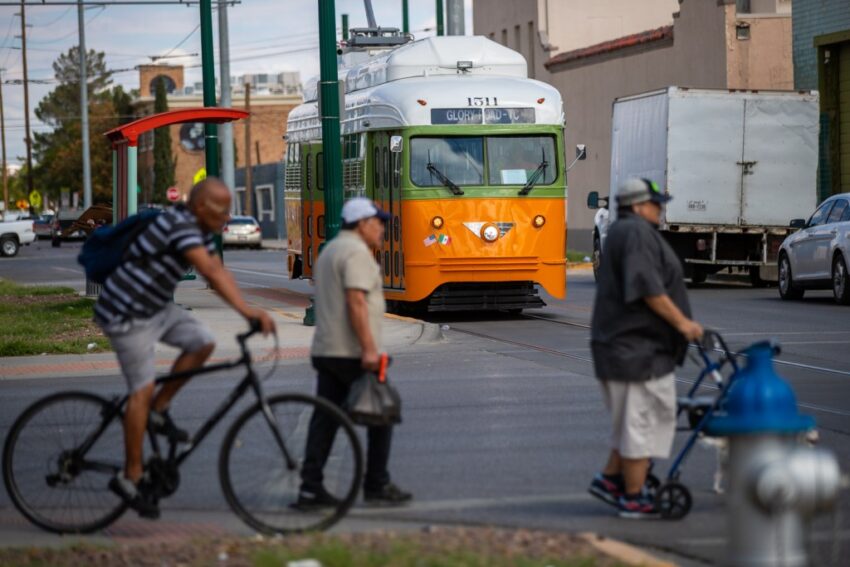

More bad demographic news for El Paso
Diego Mendoza-Moyers: Today: more bad demographic news for El Paso.
New data from the U.S. Census Bureau show the city of El Paso lost about 2,200 residents between 2024 and 2025. It’s a small decline, but alarming compared with the strong growth other Texas cities, such as Fort Worth and San Antonio, are experiencing.
El Paso’s population has stagnated over the last decade. But the new figures suggest El Paso’s population may be shifting from a period of stagnation to now outright decline. This is an existential issue for El Paso, one that will determine where we’re at as a city in 10, 20, 30 years from now.
Will El Paso be hollowed out and firmly declining? And will my son, who’s just a few months old, be able to build his own life and future in El Paso? Those are open questions.
In a moment, I’ll speak with El Paso Matters CEO Bob Moore in a wide-ranging conversation about his extensive reporting on the population trends in El Paso, what has driven the decline in population recently, and what the city and our elected leaders can do to reverse the trend El Paso was on.
First: this El Paso Matters podcast episode is brought to you by our podcast title sponsor, Tawney, Acosta & Chaparro, truck crash and injury attorneys. Their team of local, seasoned trial attorneys are ready to help if you’ve been injured in a crash.
And you can sign up for our free newsletter and read our reporting at our website, elpasomatters.org.
Now, on to my conversation with Bob.
Bob, thanks for joining me.
Bob Moore: Glad to be here.
Diego: So, you have some more bad demographic news for El Paso, nothing new. I think you found that the latest data out is that, between 2024 and 2025, the city of El Paso lost about 2,200 residents. So, just curious your thoughts on that headline number and just kind of what you found in your story that you’re reporting?
Bob: Yeah. So, I always like to start data conversations with the caveats, right? So, these are just estimates. This is not a census where they counted everybody.
So, basically every year the Census Bureau, building off of the most recent census numbers, gathers a lot of information, birth and death data. They look at tax returns, they look at immigration numbers. There are some population surveys they do during the course of the year, and they kind of make their best estimate on county level populations, city level populations, and then the state and the nation.
So, we saw the county numbers earlier this year. You and I talked about those. And those also showed an overall decline of about 2,000 people. After having seen that, I kind of knew what the city of El Paso numbers would look like, because obviously most of the population of the county lives in the city limits of El Paso. And when they came out on Thursday, it confirmed my suspicion.
And, so, we lost an estimated 2,200 people. That’s a rarity for El Paso. That’s the biggest loss we’ve ever had in these estimates. A few years ago, the Census Bureau estimated a loss of about 1,700 people, and then it kind of bounced back the next year. So, these things fluctuate up and down.
And, so, rather than getting too hung up on one-year figures, it’s really helpful to look over longer-term trends, and we’ll talk more about that. But, that 2,200 number is very significant for a lot of reasons. One, it was the largest decline among any urban area in Texas. Dallas, which is a much bigger city, was second, and they lost about 1,800 people.
And then when you look at all of the cities in the United States, only six of them lost more people than El Paso. New York and Los Angeles were on that list. Memphis, which is having all kinds of economic struggles, was on that list. And, most significantly for us, I think, Albuquerque and Tucson were also just above us on that list. So, I think there are some commonalities among those national cities on the list. A lot of it deals with immigrant populations.
The cities that lost significant amounts of people tended to be cities where a lot of immigrants have congregated over time. So, that’s sort of where I think we could start the conversation.
Diego: Yeah. And I want to talk about some of the factors driving this near-term population change, I guess. But just to zoom out, Bob, I mean, we’ve talked about how after the Great Depression, El Paso really boomed for a really long period of time. And we’ve seen now in the last decade-plus a real stagnation that has persisted, right? Even beyond just the one-year numbers, the one-year decline this year, it’s really persisted now for over a decade.
Can you just kind of talk about the shift we’ve seen from having a long time – many decades of strong growth here, and it’s really shifted quite a bit?
Bob: Yeah. So, one of the most important years to point to in El Paso’s history is probably around 1940. We are coming out of the Depression. During the decade of the ’30s, El Paso shed population. Some of that was immigration-related. You had a lot of people who’d come from Mexico moving back because of economic uncertainties. People weren’t moving around as much. And the whole country was struggling economically.
Then, the 1940s hit, and you start to have the recovery from the Depression, but then you also have World War II, which really thrusts Fort Bliss into more prominence as a military base. You have, after the war, this relocation of the garment industry in El Paso and the growth of the garment industry.
So, basically from about 1940 to roughly 2015, you had this 75-year period where El Paso experienced either rapid population growth or very rapid population growth. And it was kind of this unbroken string. But that all wound down in the middle of the last decade.
Really, El Paso’s current population conversation starts in 2013, which is the year that Fort Bliss finally – the Army finally finished building out Fort Bliss after the relocation of the 1st Armored Division. That brought in an influx of tens of thousands of soldiers and their families. And from that moment forward, El Paso’s population has essentially stopped growing.
And there’s a lot of factors behind that, but I think it’s important to start by looking at – there are three factors that really determine population change. One is the gap between births and deaths, which we call natural population growth. If you have more babies born than people dying every year, your population tends to grow.
The second big area is what demographers call net domestic migration, which is the difference between people moving from your city to another or from other cities to you. And then the third, which is really important for the United States, is immigration. So, people moving from other countries to the United States. Much of the U.S. population growth in the last 50 years has been due to immigration, and that’s certainly been true of El Paso.
So, while we had this 75 years of uninterrupted population growth, there’s also something going on below the surface that we didn’t pay enough attention to. And that was that net domestic migration category. So, over those 50 years, basically from 1960 forward, El Paso was an exporter of human talent. A lot of people who grew up in El Paso left to get jobs in other communities, and not as many people moved here.
So, in a typical year, we had a net loss of 5,000 to 10,000 people moving out for economic reasons. We were able to replenish that human capital, that human talent, through two factors. One was a very, very high birth rate, and because we had a young population, a really low death rate, so we had lots of babies coming into the system every year. And then we really benefited from strong immigration from Mexico.
Mexico had significant problems in the 1960s. Their economy wasn’t growing very fast, and there were a lot of babies being born. And, so, there’s a lot of outward pressure for people to leave Mexico. And a lot of them came to El Paso as their first step.
So, our population continued to grow, even though under the surface we had this really big problem. And that was the economy we built was not competitive for maintaining or growing the human talent base, the native human talent base we had here. And because of the immigration factors, we were able to keep pay levels fairly low, because while they may not be high by U.S. standards, they were very high by international standards, so we attracted a lot of immigrants.
And, so, we kept growing and growing and growing until we didn’t. Around 1993, as it turns out, is another really important year. That was the peak year for births. We had about 15,000 children born that year in El Paso. And then after that, births just started to decline. There were a couple of years where it blipped back upwards, but we’re in the midst of a 35-year decline in births.
And at the same time, our population is aging. We have more and more people dying. So, combine all of these factors together: we continue to export people, and there’s less and less replenishment. And that’s how we get into this situation where we’ve been for roughly the last 15 years, where our population has been stagnant for the most part. And we now have – I think we’re going to increasingly see this decline in population.
Diego: Yeah, thanks for that kind of long-term history, I guess, of our population trends.
So, in the near term, right, in just the year-to-year that you reported on, this change, it seems like you’re saying immigration policy could be affecting growth in the near term, right? So, we have these long-term trends that are in place, but even just policy changes you think are affecting growth in El Paso?
Bob: Yeah, immigration obviously plays a big role. And we were able to see that a little bit in the county numbers we looked at because the Census Bureau releases what’s known as components of change for county level data. And the net population growth for immigrants declined by 95% between 2024 and 2025. Huge drop. So, there are fewer people coming in and a lot of people either voluntarily returning to Mexico or being deported.
It’s important to remember the cutoff date for the numbers of these estimates is July 1st of every year. So the numbers we’re talking about are for July 1st of 2025, which is just four months into Trump’s tenure, roughly. So, I think the trends that we started to see at the beginning of 2025 have certainly accelerated now. So, I would suspect the immigration declines are going to continue.
Tom Fullerton, the economics professor at UTEP, also pointed out that there are trade issues, tariffs in particular, that have slowed El Paso’s economic growth. And that probably also adds to the acceleration of people needing to leave because so much of our economy here is built around international trade.
Diego: I think those are two interesting examples of federal policy that can sometimes feel far away, right? We’re in this isolated part of Texas, but I think that’s an interesting example of federal policy having a real tangible impact on El Paso.
Bob: Absolutely, and that’s why we have to pay attention to national and international developments, because there are things that happen in Mexico City that also affect all of this, too.
Diego: Sure. So, I’m curious, Bob, what are the population dynamics like in the rest of Texas? You mentioned Dallas lost population, so it’s not like El Paso is the only city losing population to the suburbs, right? Just talk about what other cities in Texas experienced over the last year.
Bob: So, by and large, Texas continues to grow. It has been, just in terms of raw numbers, the largest adder of people among the – that’s not a really pure demographic term and not very grammatical either, but Texas has been able to grow its population more than most other states. And that’s continued, although the rate of growth is declining for a lot of reasons.
But you have these individual pockets in Texas. Fort Worth, San Antonio in particular, had very strong population growth in the past year. One interesting note is that the Dallas-Fort Worth metro area had both the fastest growing cities in the state and the fastest declining cities in the state other than El Paso. And, so, that’s a real illustration of something the Census Bureau noted kind of nationally: that there’s a lot of movement from the main big city in a region to other surrounding cities.
And, so, you think about it, Dallas has always been the big player in the Metroplex. Now people are leaving Dallas, but they’re generally heading toward other communities in that region. Fort Worth is the biggest beneficiary. But a lot of the suburbs of that area, Arlington, places like that, also are losing population. But they tend to be losing it to either Fort Worth or other surrounding suburban areas there.
Diego: Yeah, my in-laws live in McKinney, and anytime I go out there, it’s kind of the master-planned oasis for some people, right?
Bob: Yeah, if you’re a road builder, you’re making some bank out there right now.
Diego: Yeah, and a lot of driving and highways and so forth going on out there.
So, Bob, I wanted to touch on – I think the throughline that we’ve seen in all of our discussions and your reporting on the population and demographic challenges of El Paso is the wages and economic situation not being good enough.
Maybe there are shifts in migration or birth rates or things like that. But I think the consistent throughline I’ve seen is not competitive wages in El Paso. And, so, you found the most recent data for that. And I’m just curious what you can tell us about the job growth and wage growth in El Paso that we’ve seen compared to Texas?
Bob: When I look at wages, I like to focus on private sector wages because government wages tend to be fairly standard across cities. But the average private sector wage in El Paso is 38% below the state and national averages. That’s huge. So, we’re basically – if you work in the private sector in El Paso, on average, you’re making two-thirds of what people in the rest of the country are making. That obviously is not sustainable.
And El Paso development leaders over the years have stressed, “Well, we have a lower cost of living here.” That’s only partially true. Housing costs have tended to be lower, but gas costs as much or more than other places. Same with groceries. So there’s only a minor benefit to that.
And then at the end of the day, especially young families, young couples, young adults have to look around and say, “How can I make a living? And how can I feed my family or how can I start a family?” And increasingly, the only choice is, “I have to leave. Whether I want to leave or not, I have to leave because that’s the option.”
This ties into the birth rate, by the way, too. So, it’s not that El Pasoans are having fewer babies. They are to some degree. But to the degree that they’re having them, they’re often having them somewhere else because young adults have moved on. And, so, babies that would have been born in El Paso if the parents had figured out a way to make it here economically wind up being born in Fort Worth or Houston or Austin or Phoenix or someplace like that.
So, these issues kind of all tie together. But that 38% gap has been consistent across decades. And, so – and I want to be really clear that I’m not pointing the finger of blame at small business owners. The people, especially the people who run mom and pop shops, restaurants, stores or whatever, they’re not setting out to say, “I want to pay my people crap.” They’re like, “I need to feed my family, too, so I’m trying to do the best I can.”
And, so, there’s a lot of economic dynamics that come into play, which is one of the reasons that the problem has been so persistent. There’s not a magic wand that we can wave that’s all of a sudden in the next 20 years going to get us up to 100% of the national private sector wage. But we do need to start chipping away at it.
Diego: Yeah. And I always tell people, I’m 30, and most of my friends that I went to Franklin High School with live elsewhere, right, and make significantly more than they could here. And I try to be the example, come here and move with my wife and have a child and everything. But I’m certainly the exception more than the norm.
Bob: I think you’re deliberately just trying to disprove all of the theories I outline all the time.
Diego: Yeah, Bob. Hopefully more people do as well.
But OK, so on this topic, though, you spoke with Mayor Renard Johnson, who’s been in office for a year-and-a-half or so. And he acknowledged the population trends. They are what they are, right? But he kind of expressed some optimism that I thought was interesting, right?
Like, I think when we have these discussions, it can come off as pessimistic and paint a negative picture of the future of El Paso. But the mayor was more optimistic, and I’m just curious what you thought of his comments?
Bob: Yeah, so it’s important to note that the first thing he said was he acknowledged that the declining population is an important economic indicator of whether or not you’re competitive as a city and you’re providing for your people. So, he does not in any way diminish the significance of this.
And I’ve had a number of conversations with him going back to when he first started running for office when, frankly, like many people in El Paso, he was sort of blissfully unaware of a lot of these trends that I’ve been talking about now for 15 years. And I understand why people aren’t familiar with it. Like, we see all of this construction going on around here. It’s like, “Of course El Paso’s growing.” So, he understands the issue, I think.
He is an elected official. And one of his jobs is being chief cheerleader for El Paso. So, this is not meant as criticism. But he kind of polishes the apple as best he can. And he says that, recently we’ve announced we’re adding thousands of jobs, and there’s pockets of optimism here, pockets of optimism there. And as soon as I got that from him, like, all right, I’m going to look at the numbers. I want to see what this is.
And, so, I went to the Bureau of Labor Statistics, looked up the employment numbers, and indeed, over the last year, El Paso has added about 1,500 jobs. That is a growth rate that is about twice the national job growth rate, pretty good, but also about half of the Texas job growth rate. So, not so good.
So, we are adding jobs, but jobs is not our problem, right? Wages are our problem. And that’s when I went back and looked at a database called QCEW, which really tracks county-level and metro-level wages. And that’s where I look at the private sector wages and see, yep, we’re still at that 38% below the national and state averages. So, creating more jobs that pay two-thirds of the state and national averages, which is essentially what we’re doing. We’re on a treadmill here. And, so, it’s not moving the needle significantly enough to make El Paso competitive for human talent that’s already here.
Diego: Yeah. And I will note, too, I think there are some people that say, “Look, Bob, look, Diego, fewer people living in El Paso isn’t a bad thing. We need fewer people. We’re already taking too much water and we’re creating bad environmental outcomes or things like that. And, so, fewer people isn’t a bad thing.”
Bob: Absolutely. Those are solid points. Also, having fewer children born, a lot of that is for very positive reasons. The main reason that childbirth rates have gone down in El Paso and nationally is because women are much more empowered to control their own lives. Fewer teen childbirths, all kinds of great reasons. So, all of that. So, there’s nothing magical about population growth. Growing population does not automatically equal good. So, those are very valid criticisms.
Diego: Sure. But I would say also the pernicious threat is that we have sprawl and we’re spreading out further while our population’s stagnating. And, so, you have more – and we’ve said it many times – more roads, more water infrastructure, more electricity infrastructure, just more things to maintain, and not a growing amount of people to spread that cost over.
Bob: And what’s the biggest complaint you hear from people? Property taxes, right? So the property taxes have to go up to maintain these expanding services, and we have fewer and fewer people paying the property taxes.
Diego: Exactly. So I just, as an anti-sprawl enthusiast, I have to make that note that it’s not outright bad if our population isn’t growing. But it becomes bad when you’re spreading out and you’re increasing the burden of maintenance cost that people have to bear.
Bob: We have the worst of all possible worlds here from an urban planning standpoint. We have sprawl without growth. Not good.
Diego: So, on that topic of property taxes and growth and everything, Bob, it would be remiss of me as our resident data center guy for the last nine months or so to not ask a data center-related question.
And you hear Mayor Johnson and other elected officials speak of the solution is to both bring in companies and corporations to invest in the area, create jobs as well as pay taxes so that the commercial entities bear a bigger portion of the city’s costs, and so residential taxpayers pay less. Some people think, “Oh, maybe if the taxes are lower, that’ll make it more attractive, and if there are jobs, people want to stay here.”
But the primary industrial investment we’re seeing right now is data centers, right? Many, many billions of dollars in data centers, whether it’s Meta, that’s actually within the city, but Project Jupiter across the state line.
The point is, that’s really where the investment is at right now in El Paso, is data centers. That’s what outside corporations are investing in. And I guess also detention centers as well, right? A little bit different, maybe not as many billions, but that’s also, I guess, the industrial development going on here.
MORE: ICE says detained 23-year-old is not candidate for ovarian cyst surgery, denies humanitarian parole
And, so, I just say that to ask you, like, is that the solution, right? Like, are these particular – the industrial development trends that we’re seeing of data centers and detention centers, is that the approach to raise wages, create jobs, and keep people in El Paso and reverse this population trend?
Bob: First of all, we have to recognize El Paso faces a number of economic challenges. So, arguably, I mean, the data centers are a partial solution to this property tax situation we’re talking about. You need more capital investment to take the pressure off the homeowners. You don’t help things by abating a lot of the taxes, which is what happened with Meta. That’s an argument for another day. But clearly – and you’ve got some reporting coming out on this – Meta is going to pay a lot of property taxes in El Paso.
Diego: They’ll be the number one taxpayer in the city.
Bob: I didn’t want to step on your line there, so I’m glad you could share that.
So, from a property tax relief perspective for El Paso homeowners, that is part of the solution. It is not a solution to what I consider the primary economic challenge for El Paso, and that’s a low-wage structure. Because data centers are capital intensive, they’re not labor intensive, so they’re not going to create a number of high-paying jobs that will allow thousands of people to experience economic mobility.
It’s going to be a few hundred at best. Maybe if you consolidate all of the data centers together, maybe a thousand jobs or something like that. Maybe enough to get us from 38% below the national average to 35% below. So, still not enough.
I mean – and as I said earlier, this is not a problem we’re going to solve in the next five years, right? This is probably a generational issue that will take some time to build out. So, in that sense, it’s a small step toward the problem. But it’s probably not going to really address the primary factor.
So, are the data centers by themselves going to be enough to keep large numbers of people in El Paso who would have left otherwise? Not in the long term. Maybe in the short term.
We talk about these construction jobs. I saw an interesting number from a state representative in New Mexico, Sarah Silva, on what’s happening with the construction project on Project Jupiter across the state line. She went out and looked at 1,200 construction workers that are on that project right now. Twenty percent of them are from New Mexico. They’re having to import construction workers to do that project. That’s almost certainly going to be true with Meta.
So, one of the promises is, “Hey, we’re going to create all of this short-term work for construction workers, and we are, but it’s not for El Paso construction workers.” I mean, it’s for some of them. So, hotel owners who can rent out the rooms to these construction workers that are coming in, people who do service to temporary workers, they may benefit from this. But there’s not even a short-term benefit from an economic standpoint from this influx of construction that we’re seeing.
Diego: Yeah, and of course, there’s the opportunity cost of what could the incentives or benefits that were awarded to Meta in particular, what could they have gone to? What other projects could have potentially used that? And then, of course, there’s the resource usage questions, which I won’t get into, but that’s also a whole other …
Bob: And the air pollution issue, which you and I have talked about a lot, but I don’t think enough other people are talking about. That air pollution issue could be a big disincentive from people either coming to or staying in El Paso in the future.
Diego: Yeah, it’s a great point. And I’ll be reporting more on that. But, to me, that’s one of the big threats of the data centers, is a potentially large increase in air pollution in El Paso.
But, as I know, I can get on to data centers and talk forever, so I’ll move on.
But I wonder, Bob, what do you think that – you mentioned Fort Worth and San Antonio saw big growth. I just wonder, are there things that other cities that are growing are doing that we’re not doing here? Obviously, every place is different and the geography and so forth. But are there any general themes of what cities that are adding people are doing that is not happening here?
Bob: So, the most important answer to give to that question is all of those cities you mentioned are located near other cities. So, I think we have to acknowledge what’s evident to everybody here, but we don’t talk about it enough, El Paso is geographically isolated. That creates a lot of problems with economic development, keeping people, bringing people in.
When you go over to the Metroplex, you’ve got all of these other cities, Dallas, Fort Worth, the major suburbs, they’re all there, real close by, creates a lot of amenities. You can kind of choose where you want to live and drive to work. San Antonio is near Austin, also has a pretty strong suburban structure. You can go live in the Hill Country if you want.
So, the geography plays a huge role there, too. And also because of the huge concentration of people, there’s a lot of opportunities for service industries to grow and things like that that just simply don’t exist here. So, they do benefit by the fluke of geography.
But that’s not the sole reason, obviously, that they’re thriving. They’ve made some economic development decisions over time that have paid off. And you can talk a little bit about your time in San Antonio, because you’ve made some observations about what you saw there that’s different from here. But I think these cities that are showing economic growth – and I want to focus on that more than population growth – who are creating opportunities for economic mobility, the one thing they tend to have in common is that all of the centers of power and government and business are sort of rowing in the same direction. And we do not have that here.
Diego: Yeah, and I worked in San Antonio at the newspaper for several years and lived there. And one thing that has struck me since coming back to El Paso now three years ago is that exact point about the leadership being a bit disjointed here, I think.
And there’s a certain level that this is subjective. And, so, maybe some people would disagree. But I think that in San Antonio, there was real evidence of – during the pandemic, the county judge and mayor every single day were on press conferences, always in lockstep. And not just during COVID, but there was a job training program the city used tax dollars towards. They were both aligned on that. They’re both aligned on any large initiative like that.
Bob: As well as the business leadership in town, too.
Diego: Exactly. Yeah, the business leadership. And I also wanted to mention in particular the president of UTSA, Taylor Eighmy, was completely on board. They never had any public disputes or any disagreements on anything. UTSA built a school of data science in Downtown San Antonio, and the county was kind of involved with that and building a nice river walkway in conjunction with that.
And, so, those are just some small examples. But I think that one thing I’ve been seeing is how the leadership in San Antonio was so aligned. And I think lately they’ve got a new mayor, and there’s some different dynamics. But, generally, over the last decade, there’s been a real alignment on the vision and the industries we’re trying to attract and where we’re trying to go and not a lot of infighting and so forth.
And I think it’s not a secret that some of our elected officials and the president of UTEP, Heather Wilson, have some disputes, right? And I just don’t know that you see the same level of coordination, and just like you said, rowing in the same direction here. And again, it’s a bit subjective. I don’t want to put too much weight into that. But I just think it’s something that holds El Paso back as far as, like, a collective vision of where are we going and what are we trying to do as far as jobs and wage growth and so forth.
Bob: So, the one thing I want to say about sort of having everybody aligned, at least in positions of power, is what gets left out of that a lot of time are the people who don’t have power and their voices don’t get listened to. So, I don’t want to celebrate oligarchy here.
But I don’t think that’s what we’re talking about. I think there are ways where you can have coalitions build and you can have people get on the same page that can be inclusive and can create economic mobility opportunities. That doesn’t always work out that way. But I think your point about what’s happening in El Paso is spot on. We have people in leadership with very different thoughts, and by leadership I mean both in government and in business, very different thoughts about what the path to an economic future is for El Paso.
And, most notably in 2024, El Paso, through the university, was awarded this massive grant from the National Science Foundation. It was worth up to eventually $160 million if all went well. And not all of the business leadership was on the same page with that. A lot of them actually had supported another proposal for an earlier grant that also had gone to this aerospace collaborative.
So, the federal government winds up putting a total of about $200 million in potential grant money into this aerospace collaborative that Congresswoman Escobar was very supportive of. Ahsan Choudhuri, the principal investigator at UTEP, was the main visionary behind this. The county government was behind it for the most part. The city never totally bought into it, and the business community didn’t. And I think most importantly, I don’t think the university leadership ever did either.
And, so, you had these tensions in there. The university raised some concerns about whether Choudhuri had falsified information on the grant application. The Inspector General – we’ve done a lot of reporting on this at El Paso Matters – the Inspector General for the National Science Foundation investigated this for a year-and-a-half and said there’s no evidence to support any of these claims that UTEP had made.
But the National Science Foundation canceled the grant anyhow. And we’re not sure why. Some of the speculation that we’ve printed deals with basically saying “There’s obviously tension in El Paso over this, and we don’t think everybody’s behind it, so we don’t think this can succeed.” And poof, the money goes.
So, we had this plan, and this was not just an economic development plan. This really was meant to go at what we’re talking about here. How do we create more economic mobility for people? How do we create a job infrastructure that allows people to build their income levels, raise families here? And, so, it was decided that this aerospace manufacturing, which is really primarily defense manufacturing, was a way to do that. And that just never got off the ground.
And, so, if you were to ask me today: What is El Paso’s economic development plan for the future? I couldn’t identify it for you. And I don’t know that anybody really can. And, so, it tends to be ad hoc. I think I can safely say that the leadership of El Paso does not have a united plan for where we’re going to go.
Diego: I think if we could identify one major economic development strategy, it’s to bring data centers here.
Bob: That is. And again, there’s some property tax revenue benefits to it. There’s also all of these risks that are involved with it, too. But I don’t think even the biggest supporters of data centers really would point to it as, like, the cure-all.
But the bag we’re left holding right now is this plan – some of which has been forced to us on the outside – but the big play right now is for data centers and detention centers. And the detention center is all The Trump administration, I don’t think anybody in El Paso is really particularly embracing it, but that’s where we are. And I don’t get the sense that anybody’s excited about that.
But I think probably more dangerous right now for the moment is I think the people of El Paso largely feel left out of these conversations. That there’s been a real democracy deficit, I think, with data centers in particular, and certainly with the detention centers too. We have more control over the data center issue right now. And I do think, and you’re doing some reporting on this too, there is an effort by the city and the county right now to, at least going forward, be a little bit more inclusive, a little bit more democratic in this process.
But, as of today, between Project Jupiter in Santa Teresa, Meta here, and then this big Fort Bliss thing, you’re reporting on this has just been – you and I talk about this all the time. We just can’t even wrap our minds around some of the numbers we’re seeing. But, basically, these data centers are going to consume three times as much electricity as El Paso Electric is producing across its whole network today.
These are massive changes that I think people were never asked about. And that’s going – I think that’s going to create a lot of mistrust issues with local government. I think if I was an incumbent city council member on the ballot in November, I would be very concerned right now. And the data centers are just one component of this. The rising utility bills is another thing that people feel they don’t have any control over.
So, this whole issue of “I don’t have a voice in my own future” is really, really echoing out there. And I think we in the media need to pay a lot more attention to it. And I think the leadership in both business and government have to pay a lot more attention to it.
RELATED: Proposed Fort Bliss data center could use more power than all of El Paso
Diego: Yeah. I think the perception is that these things are happening and I don’t have power and also everything’s getting more expensive and I’m having a harder time making ends meet.
And I just want to make one comment as it relates to San Antonio. I don’t want to make it seem like they’re perfect and they have no issues and they’re this utopia, right? And they’ve figured everything out. I know San Antonio has major challenges. But just one observation I’ve seen is kind of the cohesion there seems to be a little bit more present as opposed to here.
Bob: So, San Antonio wages are, by the way, I think 90% of state national averages. So, they’re on the lower side of things, too. So, yeah, it’s not a utopia. And the running joke in San Antonio forever was USAA was calling the shots. And there’s some truth to that. But there was a deliberate attempt over the last 50 years in San Antonio to make sure that the business and political leadership was aligned.
As I mentioned earlier, there are some bad things that happen with that too, that we don’t want to lose sight of. But it’s definitely – it’s not something they woke up yesterday and started doing. They’ve been doing it for a long time.
Diego: Yeah, sure. So, all right, we’ll end here, Bob. Just last question. I just wonder, you follow this consistently, the population trends. I wonder, is there anything you’re looking at over the next year or two about maybe coming data, certain demographic shifts that you’re keeping an eye on? Just what are you looking at as far as the medium to near term, as far as population trends in El Paso?
Bob: So, schools are always the canary in the coal mine. So, we have to watch what’s going on there. And it’s not just that we’re having fewer kids coming in. But when you look at women with college degrees in El Paso, like, one out of every 10 women with a college degree in the workforce works as a teacher. And, so, as you have fewer students, you have fewer job opportunities for teachers, which aggravates the pressure for people to leave. If I can’t get a teaching job in El Paso, and this is an occupation that’s 80% women, right, I’m going to have to leave. And, so, that sort of keeps turning the problem a little bit, so we have to kind of keep an eye on that, and there’s budget issues with that too, but this is not – the picture is not going to change much in the next one or two years.
I think if we start looking five or 10 years out, there’s a couple of things to watch for. One is some interesting work nationally going on in studies of birth rates. And what they’re discovering is that it’s not so much that women are foregoing childbirth, it’s that they’re delaying childbirth. And again, that’s part of the empowerment as women’s economic strength improves, as their education levels improve, and as their ability to control their own lives improves, they get to make more decisions about when they have kids. And, so, you are seeing an increase in women having babies in their 30s and 40s. So, it could be that women in El Paso are part of that, too, and they’re delaying childbirth.
So, it could be in five years from now, 10 years from now, that you may start to see births tick back up. I’m not sure. I want to watch that. But I think longer term, here’s the thing that when I saw this, and I’ve talked about it before, this data point really jumped out at me from the state demography office that sometime in the next 20 years, El Paso is going to be in the position where we have more people die every year than are being born. That’s a huge issue. So, I want to continue kind of watching how those lines are coming to intersect. Because once we hit that point, the really only way to replenish human talent here is going to be through domestic migration or international immigration. And, so, we have to think about how we’re going to be competitive for that.
Diego: I think we’ll leave it there, Bob. I wish sometimes that when we spoke about demographics in El Paso, there was a little bit more cheeriness and optimism, but it is what it is. And I think the important thing is not being pollyannaish and pretending that the trends aren’t what they are, right? Because then we could be in an even worse position in 10 or 15 years if we ignore these trends, right?
Bob: Yeah, we do. We have to. And, as I keep saying, this is not something that we’re going to solve overnight. But I think we have to begin to address it. We have to begin more conversations about it. That’s something that I hope to facilitate in the coming months to help people understand this.
And again, we have to be really careful, as you mentioned, not to equate population growth and good, right? That there is an advantage, especially in a desert area where you’re resource-limited. You want to be careful that you don’t grow too fast and deplete the resources. And that 75-year period between the start of World War II and the middle of the 2010s, arguably, we grew too fast, right? And we put strains on the environment and all of that, and that wasn’t healthy either.
So, we need to find that sweet spot here where we can create opportunities for economic mobility for people that would allow them to stay here if they choose, while also managing the resource strains out there, too. And we’ve got a lot of smart minds here. We can figure this out, but it’s going to take a lot of work and it’s going to take sort of an acknowledgment that what we’re seeing is real.
And I think we’re still in a bit of denial. I think if you ask most El Pasoans, they’d say, “Yeah, we’re a growing city.” And I think we need to make it more clear to them that what they’re really seeing is a sprawling city, not a growing city. Those are, as you mentioned, two very, very different things.
Diego: Sure. Well, thanks for your time, Bob, talking through this with us, and we’ll have you on soon to talk through all the demographic challenges El Paso faces.
Bob: Yep, and maybe we’ll talk about something more fun in that, too. So, I’m open to it.
Diego: I appreciate your time.
Bob: Thanks a lot.
The post Podcast: Why El Paso’s population decline could become an economic challenge appeared first on El Paso Matters.
Read: Read More