



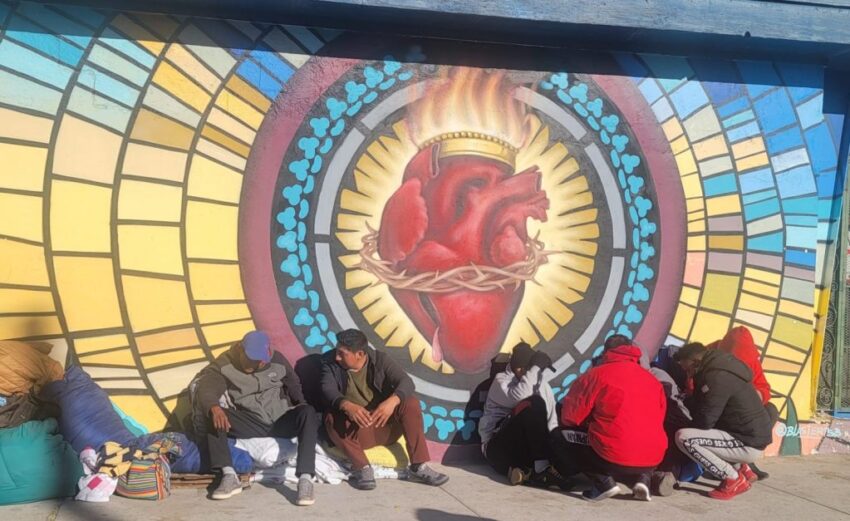

Sensitive areas such as churches and schools, which have largely been off-limits to immigration enforcement actions since 2011, will no longer have such protections, the Trump administration announced Tuesday.
“Criminals will no longer be able to hide in America’s schools and churches to avoid arrest. The Trump Administration will not tie the hands of our brave law enforcement, and instead trusts them to use common sense,” Acting Department of Homeland Security Secretary Benjamine Huffman said in a statement Tuesday, a day after issuing directives to Immigration and Customs Enforcement and Customs and Border Protection ending the protections.
Canutillo Independent School District communications director Gustavo Reveles said the DHS has not reached out to the district to inform them of the policy change.
“At the moment we continue to prioritize high quality teaching and learning, and creating safe spaces for our students. That can’t happen if there is no sense of security,” Reveles told El Paso Matters. “We try to create a relationship and, we figure, that’s still going to continue.”
Spokespersons for other area school districts, medical facilities and other organizations affected by the policy change didn’t immediately respond to requests for comment from El Paso Matters.
The announcement from Huffman does not say the Trump administration is planning enforcement actions at sensitive sites such as schools, churches and hospitals – only that immigration officers won’t be bound by prior policies limiting such actions.
El Paso churches, particularly Catholic parishes, have long been used as shelter for migrants. Most of those receiving shelter had been released to non-governmental organizations by CBP and ICE after being screened and processed.
The Border Patrol also has a controversial history in El Paso of immigration enforcement actions around Bowie High School, near the U.S.-Mexico border.
A 1992 lawsuit by students, staff and alumni of Bowie challenged the Border Patrol’s actions, saying stops were made solely because people looked Hispanic. A federal judge issued an injunction barring Border Patrol agents from stopping people without reasonable suspicion involving more than Hispanic appearance.
The incoming Trump administration in December telegraphed that officials would end protections accorded in or near sensitive areas, a policy begun in the Obama administration and continued in the first Trump administration and the Biden administration, which expanded the policy in 2021.
“We can accomplish our enforcement mission without denying or limiting individuals’ access to needed medical care, children access to their schools, the displaced access to food and shelter, people of faith access to their places of worship, and more,” an October 2021 memo from then-DHS Secretary Alejandro Mayorkas said.
The “protected areas” listed in Mayorkas’ memo included schools, medical facilities, places of worship, playgrounds and childcare centers, food banks, domestic violence shelters and homeless shelters. The order included areas near such facilities.
The idea behind the policies of limiting enforcement actions in some areas was to protect undocumented immigrants in areas where they access services that benefit them and the broader community, officials have said.
John Martin, director of the El Paso Opportunity Center for the Homeless, said the order lifting those protected sites raises questions about the rights and responsibilities of organizations like his that also provide temporary shelter for migrants who have nowhere else to stay.
“Typically we allow any law enforcement officer to come in if they have a warrant or are looking for a specific person,” Martin said. “But what implications does the rule change mean for us now? It raises questions because we provide services for the homeless population in general and many tend not to have ID or other documents.”
He said he’s concerned people who are homeless – even those who are legal residents and citizens but might have lost or not have access to their identifying documents – might be targeted based on their appearance.
Martin said the organization, as well as the Welcome Center that provides migrant services, typically ask for identification but don’t require it.
El Paso Rescue Mission CEO Blake Barrow, a former trial lawyer, said the move is clearly unconstitutional when it comes to churches or other religious organizations.
“We spread the gospel to the poor, the homeless, the disenfranchised and the addicted,” he said of the organization he has headed for nearly 30 years.
Barrow said the Rescue Mission has always helped migrants who have no other place to stay, but said its population shifted starting in September 2022, when record numbers of migrants began arriving at the U.S.-Mexico border, including throughout the El Paso region. Thousands of migrants were processed by the U.S. Border Patrol and allowed to remain in the country to await their immigration hearing.
“We are a shelter for people who are homeless, we always have been,” he said. “What’s changed in El Paso since September 2022 is the characteristic of homeless people, not our mission.”
This is a developing story and will be updated.
The post Trump lifts protections against immigration enforcement at schools, churches, hospitals and other protected areas appeared first on El Paso Matters.
Read: Read More